
Views: 0 Author: Site Editor Publish Time: 2026-06-10 Origin: Site


Acquiring plastic bottle manufacturing equipment demands significant capital expenditure. A misaligned machine choice quickly damages your overall equipment effectiveness (OEE). It drives up scrap rates and severely erodes profit margins. Purchasing a Blow Molding Machine is never a one-size-fits-all process. You must carefully balance your daily production volume requirements against specific resin types. Long-term operating costs also play a massive role in your final decision. You need a structured approach to evaluate machine specifications properly. This article serves as your comprehensive decision-stage guide. We will help you match distinct manufacturing processes to your precise business goals. You will also learn how to identify hidden implementation risks before they derail your production line. By understanding your exact parameters, you can confidently secure the best equipment. Read on to optimize your procurement strategy and maximize your production uptime.
Material Dictates the Method: Your choice between PET, HDPE, or PP strictly narrows down your viable machine technologies (e.g., Stretch vs. Extrusion).
Evaluate Total Cost of Ownership (TCO): Initial machine price accounts for only a fraction of TCO; energy consumption and auxiliary equipment (chillers, compressors) dictate long-term margins.
Automation vs. Flexibility: High-cavity, fully automatic machines maximize output, but semi-automatic or modular machines offer faster mold changeovers for low-volume, diverse product lines.
Vendor Support is a Feature: Evaluate manufacturers based on mold testing availability, spare parts localization, and compliance standards (CE, ISO).
Successful procurement starts long before you look at equipment brochures. You must first frame your exact business problem. Establishing clear baseline success criteria prevents costly purchasing mistakes. Many manufacturers fail because they buy a machine based on price rather than production reality. You must define four critical parameters to narrow down your options effectively.
Resin Compatibility: You must identify your exact plastic material. Different plastics behave radically differently under heat and pressure. Polyethylene Terephthalate (PET) strictly requires Stretch Blow Molding (SBM). Conversely, High-Density Polyethylene (HDPE), Polypropylene (PP), and Polyvinyl Chloride (PVC) typically require Extrusion Blow Molding (EBM). Mixing these up is mechanically impossible on most systems.
Target Output Capacity (BPH): Calculate your required Bottles Per Hour (BPH) based on true annual demand. Never base your purchase on a machine's theoretical maximum speed. Always factor in a standard 85% operating efficiency. This buffer accounts for planned maintenance, operator breaks, and minor jams. If you need 10,000 bottles daily, calculate your BPH using the 85% rule to avoid bottlenecking your supply chain.
Bottle Specifications: Map out your exact bottle geometry. Consider the total volume, ranging from 50ml cosmetics to 5-gallon water jugs. Neck size dictates the preform dimensions you will use. Design complexity matters immensely. For example, integrated handles usually mandate an extrusion process, as standard stretch processes cannot form hollow handles.
Quality and Compliance Standards: Define your regulatory requirements early. Food-grade production demands specific hygiene standards. Pharmaceutical compliance often requires cleanroom-ready machines featuring enclosed blowing stations and sterile air filters. Industrial packaging might prioritize wall thickness and drop-impact resistance over visual clarity.
By locking down these four parameters, you eliminate dozens of incompatible machines. This structured approach simplifies conversations with equipment vendors. They can immediately recommend the right technological tier for your needs.
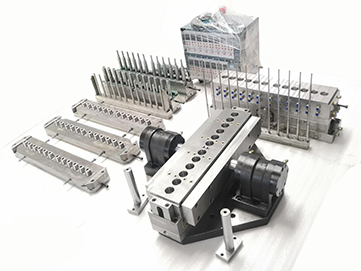
Once you define your parameters, you must match them to the correct molding process. The industry relies on four primary methodologies. Each solution category maps to specific operational use cases. Choosing the wrong process ruins product quality and inflates cycle times.
Extrusion Blow Molding drops a hollow tube of melted plastic, called a parison, into a mold. The mold closes, and air inflates the plastic against the mold walls. This process handles opaque plastics exceptionally well. It is an industry standard for many consumer goods.
Best for: Dairy jugs, household chemical containers, automotive fluid bottles, and cosmetics. It primarily utilizes HDPE and PP materials.
Key advantage: EBM easily forms highly complex shapes. It is the only practical way to create integrated hollow handles. Furthermore, initial mold costs remain relatively low compared to injection methods.
Injection Blow Molding first injects melted resin over a core pin to form a precise preform. The machine then transfers this pin to a blowing station. This method guarantees exact dimensions. It caters to industries requiring flawless sealing surfaces.
Best for: Pharmaceuticals, small medical bottles, and high-end personal care items. It typically produces containers under 250ml.
Key advantage: IBM produces zero scrap or flash. You do not need secondary trimming operations. It creates highly precise neck finishes, preventing leaks in chemical or medicinal packaging.
Single-stage ISBM performs both the initial injection of the preform and the final stretch-blowing inside one continuous machine cycle. The plastic never completely cools between steps. This retains exceptional material clarity and surface finish.
Best for: High-end cosmetics, luxury beverage bottles, and specialty PET/PP containers where visual appeal is paramount.
Key advantage: The single-stage process prevents preforms from touching each other. This eliminates transit scratches entirely. It delivers maximum visual clarity and pristine container aesthetics.
Two-stage SBM separates the process. A distinct injection molding machine creates the preforms. Later, a dedicated Blow Molding Machine reheats and blows these pre-purchased preforms. This is the global standard for high-volume liquid packaging.
Best for: Mass production of bottled water, carbonated soft drinks (soda), and edible oil PET bottles.
Key advantage: SBM offers unmatched speed and high-cavity output. You can purchase bulk preforms from external suppliers, dramatically lowering your initial equipment investment and simplifying factory operations.
To further clarify these distinctions, review the summary chart below. It compares the primary attributes of each technology to guide your shortlisting process.
Process Name | Primary Material Focus | Ideal Production Application | Standout Feature |
|---|---|---|---|
EBM (Extrusion) | HDPE, PP, PVC | Dairy, Chemicals, Detergents | Integrated hollow handles |
IBM (Injection) | HDPE, PET, PP | Pharmaceuticals, Medical (under 250ml) | Zero scrap, perfect neck finish |
ISBM (Single-Stage) | PET,PP,PC,TRITAN,PCTG,PETG,PS | Premium Cosmetics, Specialty Beverage | Scratch-free, high visual clarity |
SBM (Two-Stage) | PET | Water, Soda, Edible Oils | Maximum speed, high-volume output |
After selecting the correct process, you must evaluate specific vendor features. Do not simply look at the sticker price. You must map machine features directly to your operational outcomes. Focus on energy utilization, mechanical flexibility, labor requirements, and build quality.
Power consumption accounts for a massive portion of your ongoing manufacturing expenses. You must compare traditional hydraulic systems against modern all-electric or servo-hydraulic models. Standard hydraulic pumps run constantly, wasting immense energy. Servo-driven machines only draw power during active mechanical movements. Upgrading to electric or servo systems reduces energy consumption by up to 30%. Furthermore, all-electric machines eliminate oil contamination risks, making them ideal for food and medical manufacturing.
Downtime kills profitability. You must evaluate the clamping system and mold-changing mechanisms closely. Older machines require hours of manual unbolting and realignment. Modern systems utilize tool-less or quick-change setups. These advanced clamping systems reduce changeover times from hours to mere minutes. Quick-change capability becomes critical for facilities producing multiple distinct SKUs daily.
You must map local labor costs against machine capabilities. Semi-automatic machines require human operators to load preforms manually into the heating ovens. They offer a cheaper initial purchase price but maintain a high labor dependency. Fully automatic machines handle preform loading, heating, blowing, and bottle ejection without human intervention. Fully automatic models integrate seamlessly into downstream inline filling operations, ensuring continuous production flow.
Best Practice: If you operate in a region with high labor costs, always prioritize fully automatic systems to protect long-term margins.
A machine is only as reliable as its weakest part. Scrutinize the origin of all critical components. Check the brands behind the pneumatics, PLCs, heating lamps, and valves. Reputable brands like Festo, Siemens, and Rexroth indicate vastly superior reliability. Standardized components also guarantee easier global parts sourcing. If a valve fails, you can buy a replacement locally instead of waiting weeks for an overseas shipment.
Common Mistake: Buying machinery featuring proprietary or unbranded electronics. This traps you into relying on a single vendor for costly, slow-to-arrive replacement parts.
Procurement choices must align tightly with your company's current growth stage. Over-equipping drains cash reserves. Under-equipping stifles revenue potential. Tailor your Blow Molding Machine selection based on your true operational scale.
Emerging businesses face distinct challenges. Cash flow is tight, and production demands fluctuate. Startups should prioritize multi-purpose, lower-cavity linear machines. Linear platforms push molds in a straight line. They operate slower than rotary systems but offer incredible versatility. Focus heavily on ease of operation. Look for machines featuring intuitive touchscreen controls. Seek out suppliers offering robust operator training programs. Lower initial capital expenditure allows startups to allocate funds toward marketing and distribution.
National brands and enterprise bottlers operate on entirely different metrics. Seconds of downtime translate to thousands of lost dollars. Enterprise producers must focus on high-speed rotary blow molding machines. Rotary systems spin continuously, ejecting bottles at blistering speeds. Prioritize deep data integration. Look for Industry 4.0 and IoT capabilities. These systems monitor wear and tear in real time. Predictive maintenance features alert engineers before a catastrophic breakdown occurs. Minimal cycle times remain the ultimate goal for these large-scale operations.
Your business will grow, and your equipment must keep pace. Assess whether the manufacturer offers clear modular upgrades. Avoid machines trapped in closed ecosystems.
Evaluate Heating Zones: Can you add infrared heating lamps later to process thicker preforms?
Assess PLC Flexibility: Can the software easily integrate downstream leak testers or labeling equipment?
Check Cavity Expansion: Does the clamping unit allow you to switch from a two-cavity mold to a four-cavity mold as demand spikes?
Selecting equipment with a defined scalability path prevents premature technological obsolescence. It ensures your initial investment continues paying dividends for years.
Many buyers focus exclusively on the primary blowing machine. This narrow vision creates severe implementation risks. A production line relies on a complex ecosystem of supporting machinery. Ignoring these requirements leads to delayed launches and blown budgets. Real-world deployment requires expert facility planning.
A blow molding line cannot operate in isolation. You must build a comprehensive budget mapping strategy. You will need High-Pressure Air Compressors to inflate the bottles. PET bottles often require blowing pressures up to 40 bar. Standard factory air lines cannot achieve this. You must also purchase dedicated Water Chillers and Cooling Towers. Fast cycle times demand rapid mold cooling. If the mold runs hot, the plastic distorts. Additionally, Air Dryers are mandatory. Moisture inside high-pressure air lines destroys valves and creates cloudy spots inside clear plastic containers. Plan for these auxiliary costs early.
Your factory floor must support heavy industrial equipment. Ensure your facility can handle the electrical power load. Voltage stability is absolutely critical for infrared heating lamps. Even minor voltage drops cause uneven preform heating, leading to blown out bottles and high scrap rates. You must also account for vibration requirements. High-speed clamping units generate massive kinetic energy. Your concrete floors must possess the correct thickness to anchor the machinery safely.
Never accept delivery based on a generic test video. Insist on rigorous validation protocols. You must demand a Factory Acceptance Testing (FAT) session. During the FAT, the vendor runs your specific molds using your exact resin. This proves the machine performs to your standards before it ever leaves their facility. Following delivery, require Site Acceptance Testing (SAT). The SAT validates that the machine survived shipping and integrates properly into your local power and air systems. These dual testing layers protect your financial investment.
Choosing the appropriate manufacturing equipment is an exercise in reverse-engineering your end product. You start with the perfect bottle and work backward to find the machine capable of producing it. A methodical approach removes guesswork and protects your operational profitability.
Your actionable shortlisting logic should follow a strict sequence. First, determine your material. Next, calculate your necessary BPH using the 85% efficiency rule. Select the corresponding process, whether that involves extrusion or stretch technologies. Finally, filter your remaining vendors by component reliability and energy efficiency metrics. Focus heavily on machine origins, servo capabilities, and localized support networks.
Take proactive steps today to secure your production future. Advise your engineering and purchasing teams to request detailed return-on-investment calculations. Demand a sample mold test from your top three vendor choices before initiating procurement. Seeing your physical product emerge from their machine remains the ultimate proof of capability. Thorough preparation guarantees a smooth installation and years of profitable manufacturing.
A: No. PET requires a stretch-blow process using preforms, while HDPE typically relies on melting raw resin directly via extrusion. You must choose a machine based on the primary material.
A: With rigorous preventative maintenance and quality auxiliary air/water filtration, a tier-one machine can operate efficiently for 15–20 years. However, technological obsolescence (especially regarding energy efficiency) often prompts upgrades sooner.
A: Footprints vary wildly, but always account for a 30-40% buffer around the main machine for auxiliary equipment (chillers, compressors), preform storage, and safe operator access.
A: Servo-driven machines only consume power during active movements, drastically lowering energy bills. They also offer faster cycle times, higher precision repeatability, and reduced noise levels.
