
Views: 0 Author: Site Editor Publish Time: 2026-10-19 Origin: Site


Do you struggle to balance high-volume bottle production with strict medical standards? Choosing the right mold cavity count is a notoriously tough challenge for packaging engineers. While more cavities theoretically promise greater output, they often introduce longer cooling phases, extended cycle times, and accelerated machine wear.
In this comprehensive guide, we will explore the precise relationship between cavity count and cycle time. By understanding these thermodynamic and mechanical dynamics, production managers can accurately calculate lead times, maintain zero-defect quality, and configure the ideal machinery setup for their specific pharmaceutical packaging needs.
Direct Correlation: Increasing the cavity count generally extends the individual cycle time due to longer injection, cooling, and mechanical movement phases, even as overall hourly output rises.
The Output vs. Time Trade-off: Maximizing total throughput requires precise mold flow analysis and advanced cooling systems to prevent cycle times from ballooning out of control.
Material Matters: Processing temperature-sensitive polymers requires strict thermal management; more cavities mean more complex heat extraction to maintain pharmaceutical-grade clarity and strength.
Application Specificity: For high-demand products, calculating the sweet spot between cavity count and cycle time is essential for maximizing Return on Investment and minimizing cost-per-part.
Machine Selection is Key: Investing in modern equipment with optimized servo motors can effectively mitigate the cycle time penalties traditionally associated with high-cavity molds.
Manufacturing cycle time acts as the heartbeat of plastic molding. It measures the exact duration from the start of one complete mold sequence to the initiation of the next. For plant operators on the floor, this foundational metric dictates facility capacity, production scheduling, and overall unit economics. When utilizing a single stage ISBM system, this cycle is not a solitary action. Instead, it is a highly orchestrated sequence of four distinct phases occurring within a single machine footprint.
The process kicks off with the Injection Phase. Raw thermoplastic resin melts and shoots under high pressure into the preform mold. Following this, the Conditioning Phase carefully adjusts the newly formed preforms to a highly specific structural temperature. Next, the Stretch Blow Molding Phase uses a mechanical stretch rod and high-pressure air to force the pliable preform against the cavity walls. Finally, the Ejection Phase mechanically removes the finished medical containers. Crucially, the longest of these four phases—almost universally the cooling portion of the injection stage—dictates the absolute speed limit of the entire machine.
In the highly regulated pharmaceutical packaging sector, efficiency is measured in mere fractions of a second. Shaving just one second off a cycle time can fundamentally transform a manufacturing operation's profitability. For instance, on a production line running continuous shifts for 300 days a year, reducing a 15-second cycle by a single second boosts total annual output by roughly seven percent. You achieve this without adding any extra shifts or machinery.
Furthermore, cycle time heavily influences Overall Equipment Effectiveness. Extended cycles draw continuous power, driving up the energy consumption per unit produced. Because labor and facility overhead remain fixed, producing fewer bottles per hour directly inflates the cost-per-part. Therefore, optimizing this metric becomes a critical operational imperative for maintaining healthy margins.
Recent market analyses indicate a significant paradigm shift in pharmaceutical container manufacturing. Previously, the industry defaulted to massive, mega-cavity systems to brute-force high volumes. Today, however, manufacturers face growing demands for localized production and frequent changeovers to accommodate smaller, specialized drug batches. This trend favors highly efficient, medium-cavity molds running at blistering speeds over sluggish, high-cavity behemoths. Engineers are increasingly prioritizing agile tooling—systems that combine optimized thermal management with rapid mold-change capabilities. By focusing on maximizing equipment effectiveness rather than just theoretical cavity yield, modern facilities are achieving a more resilient and adaptable supply chain, perfectly suited to the fast-paced evolution of contemporary medicine.
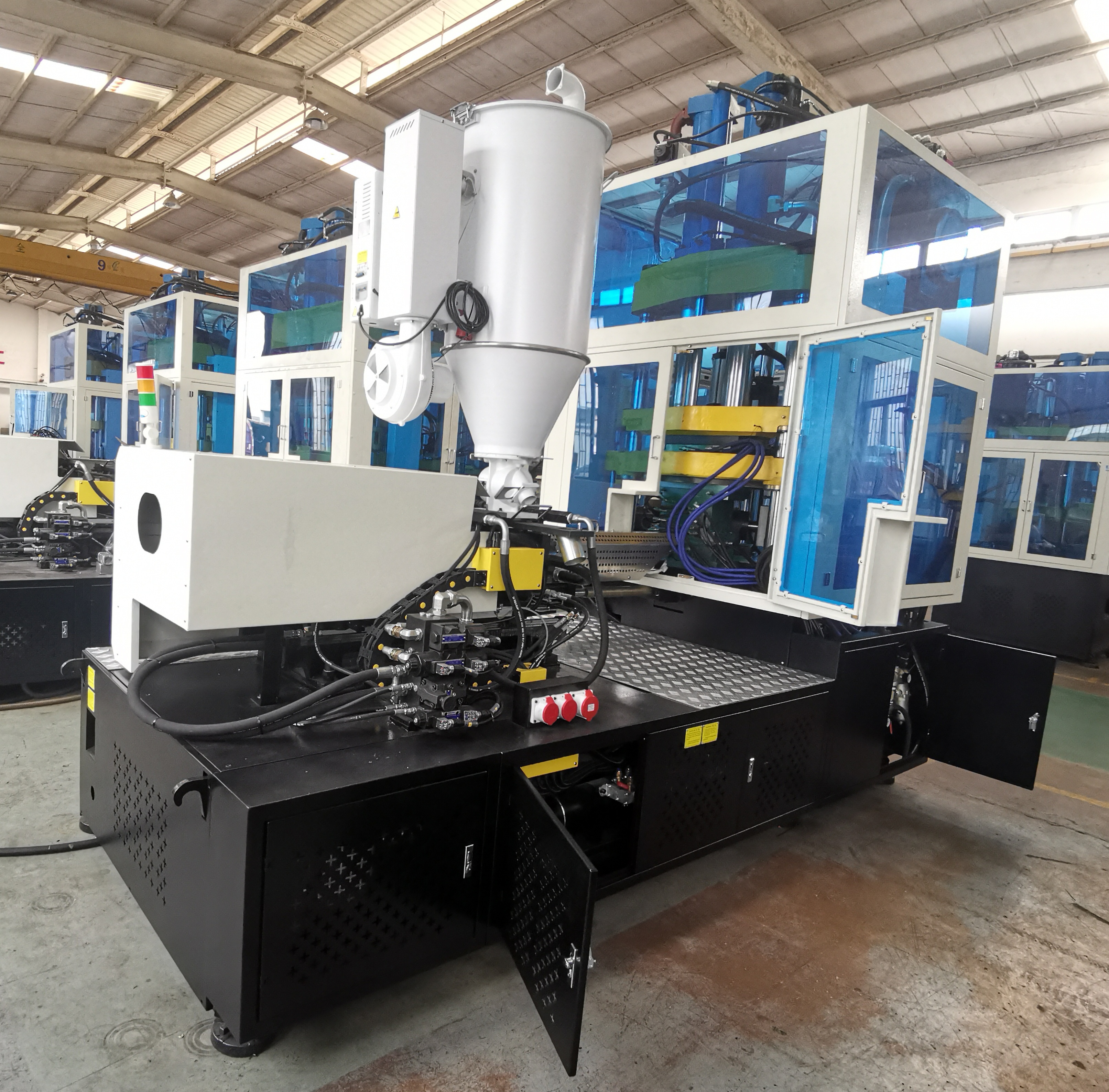
The relationship between cavity count and cycle time roots deeply in fluid dynamics. Imagine a hot runner system attempting to push a massive volume of viscous polymer into a 12-cavity mold. Doing so naturally requires a slightly longer injection duration compared to a compact 4-cavity setup.
If operators attempt to brute-force the larger volume of plastic into a multi cavity ISBM mold within the same brief time frame as a smaller mold, they must drastically spike injection pressure and velocity. This aggressive filling introduces severe shear stress into the polymer melt. In medical-grade containers, shear stress manifests as material degradation, optical cloudiness, and weak points in the bottle walls. To preserve structural integrity, technicians must carefully meter injection speeds, which naturally extends the fill time as cavity counts scale up.
Cooling dictates the pace of injection molding. It is the phase most severely penalized by a higher cavity count. Injecting molten plastic introduces an immense thermal load into the mold block. A higher cavity count inherently means a greater mass of hot plastic enters during every single shot.
Thermodynamics require this heat to be absorbed by the mold steel and carried away by cooling water channels before the preform becomes solid enough to move. Because a densely packed mold contains more hot plastic and less relative steel mass between cavities to act as a heat sink, the overall rate of thermal transfer slows down. Failing to extend the cooling time to compensate for this heavy thermal load results in preforms being ejected while still too soft. This inevitably leads to catastrophic warping or shrinkage.
Building on this thermal foundation, simple mechanical physics also play a restrictive role. High-cavity molds are physically massive and significantly heavier than their low-cavity counterparts. To accommodate these bulky blocks, the machine must open its platens wider, increasing the physical stroke length of the clamping mechanism.
Moving heavy steel plates over longer distances requires cautious acceleration and deceleration profiles. This prevents excessive wear on tie bars and toggle linkages. This unavoidable mechanical reality adds vital fractions of a second to the dry cycle time—the time required for the machine to perform mechanical movements without processing any plastic.
A pervasive misconception in procurement circles is that maximizing cavity count automatically guarantees peak efficiency. Modern intelligent facilities are increasingly prioritizing sustainable, rapid-cycle production over simply buying the largest mold available. While a high-cavity configuration certainly boosts total throughput, it operates on a strict curve of diminishing returns concerning time efficiency.
To illustrate this trade-off, consider a manufacturer operating a 4-cavity mold with a finely tuned 10-second cycle. This yields 1,440 bottles per hour. Upgrading to an 8-cavity mold increases the thermal mass and mechanical stroke, potentially pushing the cycle time to 14 seconds. Although the new output reaches 2,057 bottles per hour, the cycle time efficiency has degraded. Pushing the cavity count too high without advanced cooling infrastructure can cause cycle times to balloon so severely that hourly output actually stagnates or drops.
The pharmaceutical industry operates on a strict zero-defect tolerance policy. Containers must meet exact specifications for wall thickness, weight distribution, and barrier properties to ensure drug efficacy.
When cycle times are aggressively shortened on high-cavity molds to meet production quotas, quality control becomes the first casualty. Insufficient cooling causes variations in the preform temperature profile, leading to uneven stretching during the blow phase. Consequently, this results in bottles with dangerously thin walls that fail burst-pressure tests. Ensuring uniform quality across all cavities demands a conservative, highly controlled cycle time.
The 60ml bottle remains an absolute industry standard in pharmaceutical packaging. It is universally utilized for liquid suspensions, cough syrups, and pediatric medicines. Because global demand for this specific volume is astronomical, manufacturers frequently dedicate entire production lines to optimizing this exact size.
Consider a scenario where a production manager is configuring a dedicated 60 ml medicine bottle machine. They must choose between a 6-cavity and a 10-cavity setup. While the 10-cavity mold offers a higher theoretical yield, 60ml bottles often require a thick, heavy neck finish to accommodate Child-Resistant Closures. This thick neck retains a massive amount of heat.
Specifically, if the 10-cavity mold is used, the sheer volume of heat concentrated in the neck ring area requires a significantly extended cooling phase. If the operator rushes the cycle, the neck finish will deform upon ejection. This renders the child-resistant caps ineffective and causes the entire batch to fail compliance testing. By analyzing mold flow rates, the manufacturer might discover that a 6-cavity mold, running at a highly optimized, blistering cycle time, actually produces a more consistent yield of compliant bottles with a lower scrap rate.
To combat the extended cycle times inherent to high-cavity production, engineers rely on advanced thermal extraction. Traditional straight-line drilled cooling channels often fail to reach the most critical heat zones of a complex pharmaceutical bottle mold.
Conformal cooling provides a modern solution. Manufactured using Direct Metal Laser Sintering, widely known as 3D metal printing, these cooling channels wrap around the exact complex geometry of the preform cavity. By delivering chilled water exactly where heat concentration is highest and maximizing the surface area of thermal transfer, conformal cooling rapidly extracts heat. This technology shaves precious seconds off the cycle time, allowing higher cavity counts to operate efficiently.
Legacy hydraulic systems operate sequentially. The machine must finish one mechanical movement before starting the next. This linear operation adds unnecessary seconds to the dry cycle time, especially when moving heavier multi-cavity platens.
In contrast, investing in a high speed pharmaceutical ISBM machine equipped with servo-driven technology transforms this dynamic. Servo motors allow for overlapping movements. For instance, the machine can begin building clamp tonnage while the injection unit is still moving into place, or initiate the ejection sequence simultaneously as the mold opens. This simultaneous execution of mechanical steps drastically reduces dry cycle time.
In a multi-cavity setup, the hot runner system acts as the vascular network of the mold. If poorly designed, cavities closer to the nozzle will fill faster than those on the perimeter. This forces operators to extend the injection time to ensure the outermost cavities are fully packed.
An optimized, naturally balanced hot runner system utilizes precise geometric channel sizing and independent thermal controls at each valve gate. This guarantees uniform melt delivery to all cavities simultaneously, maintaining consistent shear rates and keeping the injection phase as brief as mechanically possible.
Polyethylene Terephthalate, commonly known as PET, has become the dominant material in medical packaging. It boasts exceptional clarity, shatter resistance, and excellent barrier properties against oxygen and moisture. Unlike glass, it does not break during transit, providing a safer alternative in medical environments.
However, PET is a highly temperature-sensitive semi-crystalline polymer. Processing it requires exact thermal management. If heated too much or cooled too slowly, PET will crystallize, turning cloudy and brittle—a fatal flaw for medical packaging requiring visual inspection.
The specific heat capacity of PET dictates how much energy is required to melt it and how long it takes to cool. When operating a PET pharmaceutical bottle machine with a high-cavity mold, managing this thermal behavior becomes highly complex.
Because PET must be cooled rapidly in the injection cavity to prevent crystallization, but must remain warm enough in the core to be stretched, the conditioning phase is critical. Managing the thermal gradient of numerous preforms simultaneously requires advanced thermal profiling. If the conditioning station is inefficient, operators must extend the cycle time to allow preform temperatures to equalize naturally.
Scaling up production volume while managing cycle times is ultimately a financial decision. Procurement officers must look beyond the initial capital expenditure of a larger mold. The Total Cost of Ownership must be calculated against the projected output.
Production Metric | 4-Cavity Configuration | 12-Cavity Configuration | Impact on Total Cost |
|---|---|---|---|
Cycle Time | 10 Seconds | 14 Seconds | Higher cavity takes longer per cycle. |
Hourly Output | 1,440 Bottles | 3,085 Bottles | Higher cavity yields significantly more volume. |
Energy Consumption | Lower per hour | Higher per hour | Must be weighed against output per kilowatt. |
Initial Tooling Cost | Lower | Significantly Higher | High cavity requires a longer return period. |
The math generally favors the high-cavity setup for long-term, continuous production runs. This holds true provided the cycle time penalty is kept within acceptable limits through advanced cooling and servo technologies.
A critical engineering error in scaling up cavity count is under-sizing the machine's clamping force. The injection pressure required to fill a multi-cavity mold exerts tremendous outward force on the mold halves.
If the machine lacks adequate tonnage to keep the mold securely closed, plastic will leak across the parting line, creating flash. In pharmaceutical packaging, flash is a critical defect that compromises the seal of tamper-evident bands. Manufacturers must ensure the machine provides sufficient clamping force calculated based on the projected surface area of all cavities combined.
Achieving the perfect balance between cavity count, cycle time, and product quality requires a strategic partnership with an equipment manufacturer capable of delivering customized engineering solutions. A trusted manufacturer will conduct comprehensive mold flow analysis before cutting any steel, predicting how the polymer will flow, cool, and shrink. This allows engineers to optimize the mold design to guarantee the lowest possible cycle time.
Increasing mold cavities undeniably raises the individual cycle time due to heavier thermal loads and extended mechanical movements. However, when engineered correctly, it significantly boosts overall daily production yield. True manufacturing efficiency requires looking past the illusion that more is always better and instead making smart, calculated machine investments. By choosing equipment equipped with advanced conformal cooling systems and servo-driven precision, pharmaceutical manufacturers can effectively manage multi-cavity demands. If you are looking to scale your facility, explore the advanced solutions at JASU ISBM Machines to find the perfect configuration for your specific volume and quality requirements. Consult with our industry experts to run accurate mold flow analyses and optimize your pharmaceutical container design today.
The cycle time varies significantly based on the bottle's volume, weight, wall thickness, and the chosen cavity count. Generally, for standard PET pharmaceutical bottles ranging from 30ml to 150ml, the cycle time falls between 10 to 18 seconds. Heavier bottles or molds with a very high cavity count will lean toward the higher end of that spectrum due to extended cooling requirements.
Not always. While a higher cavity count increases overall output, it also involves higher upfront tooling costs, requires a larger machine with greater energy consumption, and results in slightly longer cycle times. For high-volume, continuous production, the cost per bottle decreases. However, for short runs or niche products, a lower cavity mold might offer a better return on investment due to faster changeover times and lower capital expenditure.
Single stage ISBM processes the raw resin into a finished bottle within one continuous machine cycle. This eliminates the need to store, bulk-pack, and transport preforms. By removing these intermediate steps, the risk of biological contamination, dust accumulation, and surface scratching is drastically reduced, making single stage production ideal for strict cleanroom pharmaceutical environments.
To optimize current operations, start by slightly lowering the melt temperature if the polymer's viscosity allows, which directly reduces the required cooling time. Ensure your cooling water flow is highly turbulent and the temperature is properly chilled. Additionally, verify that the machine's hydraulic or servo settings are precisely tuned to eliminate any mechanical dead time between the injection, conditioning, blowing, and ejection phases.
Yes. Depending on the machine's tie-bar spacing, platen size, and maximum clamping force, manufacturers can swap molds to run different cavity configurations. However, the machine must be properly sized from the beginning to handle the maximum intended cavity count. You cannot safely run a 12-cavity mold on a machine whose tonnage was originally specified only for a 4-cavity setup.
For high-cavity PET production, cooling water temperatures typically range between 8 to 12 degrees Celsius. Maintaining this chilled, turbulent flow is critical to rapidly extracting heat from the preform neck and body, preventing crystallization while keeping cycle times as short as possible.
Wall thickness is one of the primary drivers of cycle time. Thicker walls, particularly around the neck finish required for child-resistant caps, retain significantly more thermal energy. This requires a prolonged cooling phase in the injection cavity to ensure the plastic solidifies enough to withstand ejection without deformation.
