
Views: 0 Author: Site Editor Publish Time: 2026-10-21 Origin: Site


In the pharmaceutical packaging sector, the margin for error is effectively zero. A single micro-leak can trigger a catastrophic and costly recall. Inconsistent wall thickness often ruins entire batches of sensitive medicine. Achieving perfect optical clarity and structural integrity in every single unit remains a massive challenge for facilities utilizing 1-stage injection stretch blow molding.
Even minor variations in polymer melt temperature or uneven cooling cycles can cause microscopic structural weaknesses. These invisible flaws compromise the entire packaging barrier. The ultimate solution to flawless production lies deep within the core hardware of the machinery. Specifically, it depends on two critical factors: the metallurgical quality of the tooling and the thermodynamic precision of the melt delivery.
By upgrading to premium materials and mastering your thermal controls, manufacturing engineers can drastically improve process stability. In this technical guide, we will explore exactly how these two critical elements dictate the physical properties of the final container and maximize your long-term return on investment.
Material Selection is Critical: Premium steel provides the superior thermal conductivity, high corrosion resistance, and high-polish finish required for flawless medical containers.
Melt Homogeneity Prevents Defects: Highly controlled thermal systems prevent plastic degradation. This ensures uniform material flow and eliminates aesthetic defects like haze or flow marks.
Synergy Drives Stability: The combination of top-tier metallurgy and precise temperature control guarantees consistent preform conditioning, leading to perfectly distributed wall thickness.
Regulatory Compliance: Investing in optimized tooling ensures strict adherence to GMP, FDA, and USP standards by minimizing dimensional variations and particulate contamination.
Looking at the current landscape of pharmaceutical manufacturing, regulatory bodies like the FDA are aggressively pushing the concept of "Quality by Design" (QbD). Instead of relying on end-of-line quality inspections to catch defective bottles, manufacturers are now expected to design stability directly into the process itself. This shift means that thermodynamic fluctuations are no longer acceptable.
Furthermore, the explosive growth in biologics and sensitive liquid vaccines has driven demand for high-barrier, shatterproof polymers. These advanced resins are notoriously difficult to process. Consequently, the industry is seeing a massive migration away from legacy equipment toward highly automated, closed-loop systems that can guarantee absolute melt homogeneity. Facilities that fail to adopt these advanced thermal and metallurgical standards are finding it increasingly difficult to meet stringent cleanroom compliance audits.
Injection Stretch Blow Molding (ISBM) is a highly specialized manufacturing process used to create hollow, precision plastic containers. The entire production cycle occurs within a single, integrated machine. First, the molten polymer is injected to create a preform. Next, it undergoes precise thermal conditioning. Finally, it is biaxially stretch-blown and ejected.
Driven by heightened FDA scrutiny on particulate contamination, manufacturers are rapidly abandoning multi-step operations. Moving preforms across a factory floor from an injection machine to a separate blower introduces massive contamination risks. In contrast, the focus has shifted heavily toward thermodynamic stability within single-stage platforms. This closed-loop approach drastically reduces the cleanroom footprint and minimizes human intervention.
This 1-stage method induces biaxial orientation, aligning the polymer chains both lengthwise and circumferentially. This molecular alignment significantly increases the mechanical strength, drop-impact resistance, and gas barrier properties of the container. Ultimately, it makes the process fundamentally superior to traditional Injection Blow Molding (IBM).
Unlike standard beverage bottles, pharmaceutical containers operate under a strict regulatory landscape. Agencies mandate that medicine bottles provide an absolute barrier against moisture, oxygen, and microbial contamination. Beyond simple barrier performance, dimensional stability is a non-negotiable metric on the production floor.
Medicine bottles frequently utilize tamper-evident closures and child-resistant caps. If the neck finish of a bottle deviates by even a fraction of a millimeter due to machine instability or poor cooling, the cap will fail to seal properly. Process stability is not merely an efficiency metric; it is a critical safety requirement that prevents product contamination and severe regulatory penalties.
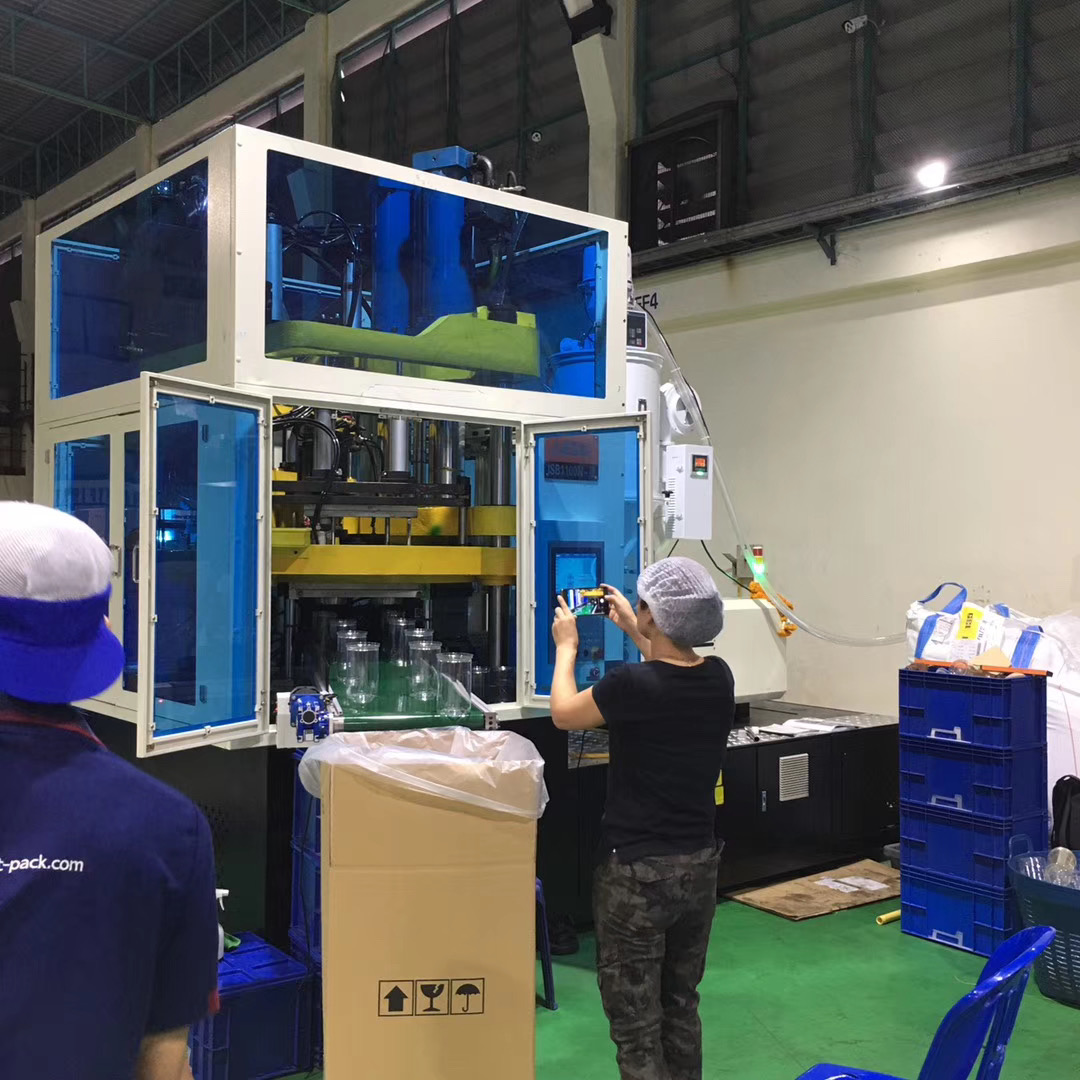
Pharmaceutical packaging relies heavily on specific medical-grade polymers, primarily PET, PP, and PETG. Processing these sensitive materials requires a highly durable pharmaceutical bottle mold that can withstand extreme internal cavity pressures and continuous thermal cycling without suffering from metal fatigue or deformation.
Crack open a standard tool after just a few thousand cycles, and the reality of cheap steel hits you hard. Inferior metals often show micro-abrasions and parting line wear. If the steel lacks proper thermal conductivity, the resulting preforms will have uneven temperature profiles. This translates directly to catastrophic defects during the blow phase, such as blown-out bases or off-center gates.
For medical applications, standard tool steels are entirely insufficient. Industry best practices strongly recommend the use of premium stainless tool steels. An S136 ISBM mold represents the gold standard for pharmaceutical applications due to several distinct metallurgical advantages.
Corrosion Resistance for Cleanroom Environments: Medical containers must be manufactured in ISO-certified cleanrooms. High humidity and strict sanitation protocols in these environments can cause standard metals to rust quickly. Furthermore, heated polymers can release corrosive off-gasses. Premium stainless steel contains a high chromium content, making it exceptionally resistant to oxidation. This eliminates the need for rust-preventative sprays, which are a major source of chemical contamination.
High Polishability for Optical Clarity: Liquid medicines require crystal-clear packaging to allow automated optical inspection systems and healthcare professionals to check for particulates. The fine, homogenous microstructure of premium steel allows toolmakers to achieve an SPI A-1 mirror finish. When integrated into a PETG medicine bottle machine, this glass-like finish transfers directly to the plastic. The result is flawless surface aesthetics and premium transparency.
Superior Thermal Conductivity: Thermal management is the most critical variable in the entire ISBM process. High-grade steel provides uniform thermal conductivity across the entire cavity, ensuring rapid, symmetrical cooling of the preform. Symmetrical cooling prevents localized shrinking and internal stresses, ensuring the preform retains its exact geometric dimensions before stretching.
In traditional setups, cold runners distribute the plastic to the cavities, resulting in solid plastic waste that must be mechanically clipped and recycled. For pharmaceutical manufacturing, this approach is highly problematic. The trimming process generates plastic dust—a severe particulate contamination risk in a cleanroom.
Conversely, a modern hot runner system utilizes a heated manifold and precision nozzles to maintain the polymer in an exact molten state right up to the gate. This zero-waste approach is entirely enclosed, eliminating the generation of particulate dust and reducing raw material costs.
Melt homogeneity refers to the uniform temperature, density, and viscosity of the molten plastic as it enters the cavity. Achieving this is a complex thermodynamic challenge. When plastic flows through poorly designed channels, it experiences shear stress. The plastic near the walls experiences higher friction than the center, causing molecular degradation and localized spikes in temperature known as shear heating.
If the melt is not perfectly homogenous, the resulting preform will have areas of differing density. By utilizing an advanced injection stretch blow mold with scientifically optimized rheological flow paths, manufacturers can avoid shear stress. This ensures that the polymer chains remain intact, delivering a preform with identical mechanical properties throughout its entire structure.
Having advanced hardware is only half the equation; controlling its temperature with absolute precision is what guarantees stability. The thermal window for processing medical-grade plastics is notoriously narrow. If the temperature drops by even 2°C below the optimal setpoint, polymers like PET can begin to crystallize prematurely. This crystallization manifests as a milky, opaque haze, destroying optical clarity and making the plastic brittle.
Similarly, if the temperature fluctuates above the setpoint, the polymer chains begin to thermally degrade. This degradation causes yellowing and releases acetaldehyde, a byproduct that can alter the chemical composition of the medicine stored inside. Precise, multi-zone control ensures the plastic remains entirely amorphous and chemically stable.
To maintain a stable process, the injection pressure and flow speed must remain constant cycle after cycle. Temperature directly dictates plastic viscosity. If the thermal system fluctuates, the viscosity changes instantly. If the plastic becomes too cool, it flows unevenly, leaving visible ripples or flow marks on the bottle surface. If viscosity increases significantly, the plastic may freeze before completely filling the cavity, resulting in a short shot. Modern setups rely on advanced PID temperature controllers that monitor thermocouples hundreds of times per second to maintain a constant thermal profile.
The physical point where the plastic enters the mold is called the gate. In older thermal gating systems, the plastic is allowed to freeze at the tip, which often causes stringing or a rough, protruding gate vestige. For pharmaceutical containers, a rough vestige is a structural weak point that can crack under pressure.
High-end systems utilize synchronized pneumatic or hydraulic valve gates. Imagine a physical metal pin cleanly shutting off the flow of plastic at the exact millisecond injection is complete. This eliminates stringing and leaves a perfectly smooth injection point, ensuring the base of the medicine bottle is structurally robust and visually flawless.
The most critical step in a 1-stage process is the conditioning phase. After the preform is injected, it is transferred to a conditioning station where it must reach an exact, uniform temperature profile—often slightly hotter on the inside and cooler on the outside—before it is stretched.
To understand this dynamic better, look at how the components interact. The precise, even heat delivery of the melt system ensures the preform starts with a uniform thermal history. Simultaneously, the uniform thermal extraction provided by the premium steel ensures the preform cools symmetrically. If either the heating or the cooling is unbalanced, the preform simply will not condition properly, leading to a high scrap rate.
When an evenly conditioned preform enters the blow cavity, the stretch rod and high-pressure air can distribute the plastic with mathematical precision. Thermal stability prevents the formation of thick and thin spots. Symmetrical wall thickness ensures the bottle can withstand vertical top-load pressure during automated capping, pass rigorous drop tests, and maintain a consistent barrier against oxygen transmission.
When procuring equipment for medical packaging, manufacturing engineers must look beyond basic output metrics. Key specifications include the rigidity of the clamping unit and the precision of the injection pressure transducers. For instance, look for machines offering solid clamping forces (e.g., 400kN to 1000kN ranges) driven by servo motors rather than traditional hydraulics. Servo-driven movements eliminate hydraulic oil leaks, ensuring strict cleanroom compatibility.
It is vital to interrogate the Original Equipment Manufacturer regarding their tooling supply chain. The integration between the machine's software and the thermal hardware must be seamless to allow for real-time, micro-adjustments. While machines equipped with premium tooling require a higher initial capital expenditure, the return on investment is realized rapidly through operational stability. Upgrading to a high-end setup can reduce scrap rates from an industry average of 5% down to less than 0.5%, saving tens of thousands of dollars annually in wasted medical-grade resin.
Container stability relies entirely on precise thermodynamics and superior quality materials. Premium molds and accurate thermal controls ensure flawless production, preventing costly defects and meeting strict medical standards. The stability of pharmaceutical containers isn't just about mechanical movements; it is deeply rooted in the thermodynamics of the process.
Investing in reliable, high-precision equipment reduces scrap, boosts efficiency, and maximizes long-term profitability. If you are looking to upgrade your cleanroom production line to achieve the melt homogeneity and cooling uniformity required for zero-defect pharmaceutical packaging, explore the customized, high-performance ISBM solutions at JASU to find the exact configuration for your medical requirements.
Premium stainless tool steel is known for its exceptional corrosion resistance and ability to take a mirror-like polish. This ensures the tooling won't rust in high-humidity cleanrooms and guarantees the high clarity required for medical bottles, allowing for accurate visual inspection of the liquid contents.
It ensures uniform temperature and flow of the molten plastic into the cavity. If the temperature fluctuates, the preform will have uneven heat distribution. During the stretch-blow phase, hotter areas stretch more than cooler areas, leading to uneven wall thickness. Precise control eliminates this issue entirely.
Yes. A high-quality machine equipped with versatile tooling and an advanced thermal system can process PET, PETG, PP, and PC. However, the temperature profiles must be strictly adjusted for each specific material's melting point and thermal behavior to prevent degradation.
The 1-stage process biaxially stretches the plastic, aligning the molecular chains both lengthwise and radially. This provides superior structural rigidity, optical clarity, and gas barrier properties compared to standard injection blow molding, making it the preferred choice for high-precision pharmaceutical packaging.
PID (Proportional-Integral-Derivative) controllers monitor temperatures hundreds of times per second, making micro-adjustments to the heaters. This prevents temperature spikes that cause thermal degradation (yellowing) and prevents drops that cause premature crystallization (haze).
Valve gates use a physical mechanical pin to shut off the plastic flow instantly. This prevents plastic stringing and leaves a perfectly smooth injection point on the bottom of the bottle. A smooth base eliminates structural weak points, which is critical for passing medical drop tests.
