
Views: 0 Author: Site Editor Publish Time: 2026-10-24 Origin: Site


Imagine an entire pallet of premium sauces rejected by a major retailer simply because a fraction of the caps were slightly cocked. Leaking jars ruin production line efficiency. More importantly, poor closure alignment triggers massive food safety risks, rapid spoilage, and expensive product recalls. While capping technology has advanced significantly, a perfect seal ultimately requires absolute neck finish precision long before the container ever reaches the filler.
In this comprehensive engineering breakdown, we explore how structural orientation solves these alignment nightmares. By examining the mechanics of advanced injection stretch blow molding, you will learn exactly why upgrading your facility equipment is the most effective path to flawless closure accuracy.
Precision is Built-In: Advanced ISBM technology ensures the neck finish is injection-molded and remains mechanically unaltered during the blowing process. This results in zero thermal distortion.
Orientation Eliminates Defects: Proper neck finish orientation utilizes engineered notches and alignment guides. This physical geometry prevents cross-threading and guarantees capping mechanisms align perfectly during every cycle.
Crucial for Food Safety: Accurate closures maintain the required headspace and airtight seals. These precise measurements are non-negotiable for products manufactured for the stringent food and beverage sector.
Equipment Matters: Investing in dedicated, high-performance machinery drastically reduces scrap rates, maximizes automated capping speed, and ensures the structural integrity of every container produced.
Recent packaging industry data reveals a distinct shift toward ultra-lightweight containers and high-speed automated filling lines. Processors are pushing equipment to the absolute limit to maximize throughput and reduce resin costs. However, this speed exposes a critical vulnerability. Lighter sidewalls mean the structural integrity of the entire package relies heavily on the neck ring. Consequently, forward-thinking manufacturers are moving away from legacy extrusion methods. They now demand injection stretch blow molding solutions that guarantee zero variance in thread geometry, ensuring seamless integration with high-speed rotary cappers.
In the packaging industry, the neck finish refers to the highly engineered portion of a container that holds the cap, lid, or closure. Far from being a simple threaded tube, it comprises several critical components. These include the threads that engage with the cap, the tamper-evident band bead that secures safety rings, the support ledge used for handling the container during transit, and the sealing surface. The sealing surface is the flat top rim where the cap liner physically compresses.
In this specific context, orientation refers to the deliberate design technique of adding precise physical reference points—such as notches, lugs, or asymmetrical indentations—to the bottle or jar neck. When the container moves down a high-speed packaging line, optical sensors and mechanical orienters read these markers. This allows the machinery to rotate and align the container into an exact, predetermined position milliseconds before the capping head descends.
The physical dynamics of a wide neck PET jar present unique manufacturing challenges. As the diameter of a container opening increases, the structural rigidity of the neck ring naturally decreases. This wider surface area makes the container highly susceptible to ovalization. Ovalization is a severe defect where the perfectly round neck becomes slightly elliptical under top-load pressure or thermal stress.
When an unoriented wide-mouth container enters a rotary capper, the sudden torque applied by the chuck can force the jar to spin, tilt, or flex. Orientation features lock the jar into a stabilized stance. By ensuring the starting point of the jar thread perfectly matches the starting point of the cap thread, manufacturers can apply precise downward torque without warping the plastic. This completely prevents costly line jams.
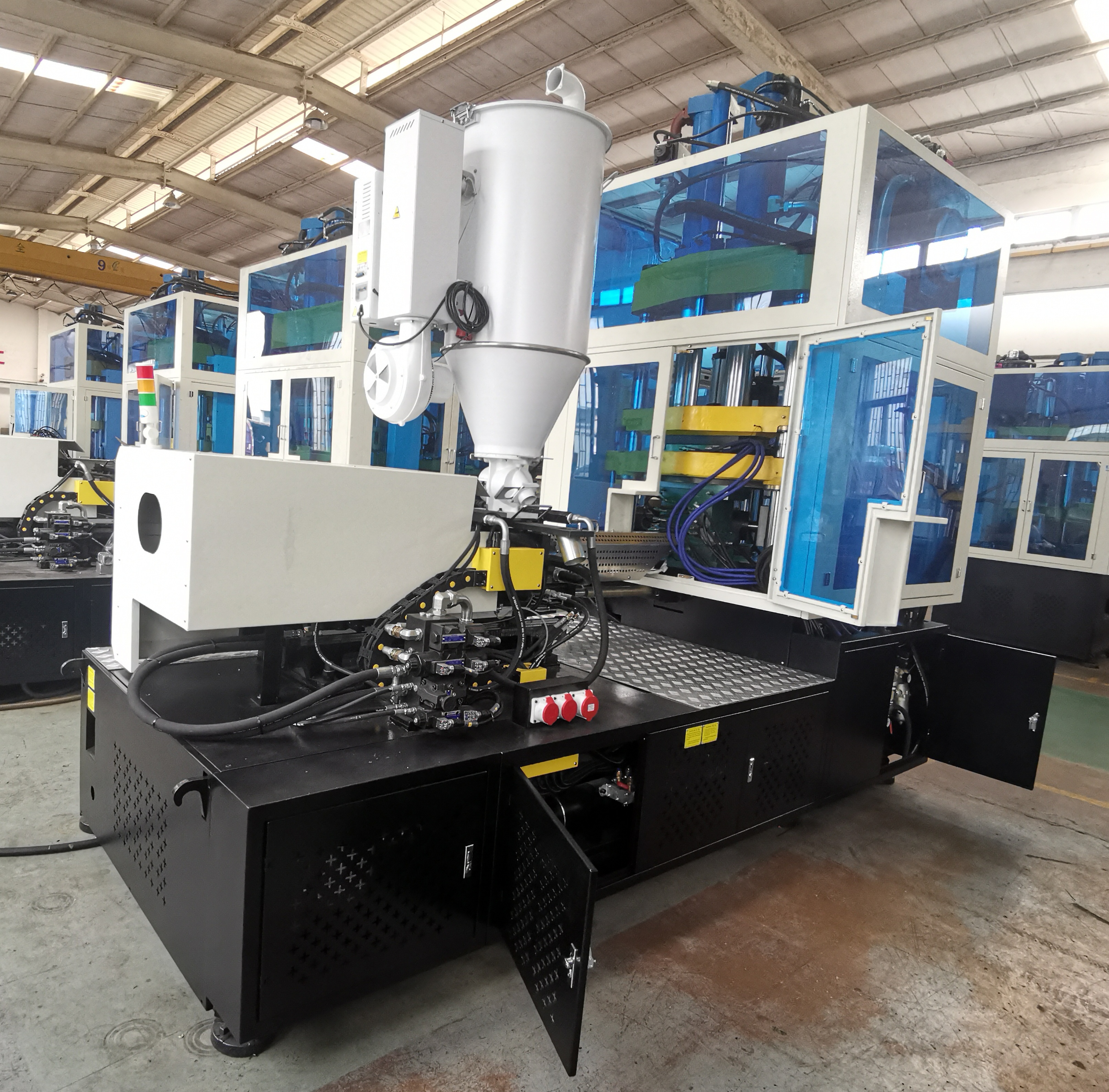
Current packaging trends show a massive push toward lightweighting to reduce resin costs and lower carbon footprints. Shaving grams off a container sidewall makes the structural integrity of the neck ring even more critical. To understand how superior dimensional stability is achieved, production managers must evaluate the fundamental differences between 1-step and 2-step blow molding processes.
In a traditional 2-step Reheat Stretch Blow Molding workflow, preforms are injection-molded on one machine, cooled, stored, and later fed into a separate blowing unit. During this second phase, preforms pass through infrared ovens to soften the plastic. This reheating often exposes the previously formed neck to ambient heat, drastically increasing the risk of microscopic warping or thread distortion.
Conversely, a 1-step ISBM process integrates injection and blowing into a single, continuous machine cycle. The preform is injection-molded, and crucially, the neck finish is securely clamped by a rigid steel neck ring. It is then immediately transferred to the conditioning and blowing stations without ever being released. Because the neck is shielded and physically locked in place throughout the entire thermal cycle, it experiences absolute zero heat distortion.
Process Metric | 1-Step ISBM Technology | Traditional 2-Step RSBM |
|---|---|---|
Neck Thermal Exposure | Zero. Neck remains clamped in steel tooling. | High. Preforms are reheated in infrared ovens. |
Thread Distortion Risk | Eliminated completely. | Moderate to High depending on oven shielding. |
Capping Alignment | Absolute precision via continuous servo-indexing. | Prone to micro-variances during transfer. |
A high-quality PET container machine leverages advanced servo-driven indexing to maintain the orientation of the container precisely. From the moment the molten resin enters the injection cavity to the final ejection of the blown jar, servo motors ensure the neck ring does not rotate or shift out of alignment.
This inherent level of control sets 1-step technology apart from traditional extrusion blow molding. In extrusion platforms, the neck is formed by blowing air into a parison and trimming the excess plastic. This inherently leaves rough seams and inconsistent thread profiles. ISBM guarantees that the threads and sealing surface are formed purely by the high-pressure injection mold, resulting in a glass-like, flawless finish.
The accuracy of a closure is directly proportional to the quality of the injection mold tooling used on the factory floor. The surface finish of the mold cavities dictates the smoothness, sharpness, and dimensional stability of the neck threads. Tooling engineers often spend hours polishing thread cavities under high magnification, utilizing advanced CNC machining and specialized buffing techniques.
If microscopic burrs, tool marks, or uneven polishing remain in the mold, they will transfer directly to the PET plastic. When caps are applied to threads with high surface friction caused by poor mold finishing, the rotational torque is absorbed by the friction rather than translating into downward sealing pressure. Consequently, this results in under-tightened caps and compromised seals.
In the context of perishable goods, micro-leaks represent a critical quality control failure. Interestingly, these leaks often occur not because the cap is defective. They happen because microscopic imperfections on the container sealing surface prevent the cap liner from making uniform contact.
If an injection mold has uneven parting lines or slight mismatches at the neck ring interface, it creates a microscopic step on the top sealing rim of the jar. Even a deviation of a few hundredths of a millimeter creates a gap. By utilizing premium mold tooling within a stable ISBM environment, manufacturers achieve perfect neck finish control. This ensures the sealing surface remains perfectly flat and continuous, blocking oxygen ingress.
In food packaging, headspace is defined as the empty, carefully measured volume between the top of the product and the underside of the lid. Maintaining exact headspace is not merely a volumetric preference. It is a strict physical requirement for thermal processing and food safety.
During processes like hot-filling or vacuum sealing, the product cools and contracts. This creates a vacuum that pulls the cap tightly against the jar sealing surface. If the neck finish is poorly oriented, the cap may sit at a slight angle. This angled compression alters the internal volume, compromising the exact headspace required to achieve a proper vacuum. A perfectly oriented neck ensures the cap engages the threads simultaneously, compressing the sealing liner evenly 360 degrees around the rim.
Regulatory bodies mandate strict compliance regarding packaging integrity to prevent bacterial growth and oxidation. A specialized food jar ISBM machine is engineered specifically to meet these rigorous demands. By guaranteeing absolute dimensional stability in the neck finish, these machines ensure that every container produced can achieve a fully airtight and watertight seal. This allows processors to pass stringent quality audits effortlessly.
In modern, high-speed packaging facilities, the transition from container manufacturing to the filling line is a critical juncture. Automated capping lines rely heavily on the physical orientation features molded into the container. Upstream of the capping station, mechanical or optical orienters use sensors and physical guides to detect the specific notch engineered into the neck finish.
Once the marker is detected, the orienter rapidly rotates the container until it faces the exact predetermined direction. Because the starting point of the thread is mathematically aligned with the orientation notch during the injection molding phase, turning the container ensures that the cap thread will engage the jar thread at the exact right starting coordinate. This synchronous alignment is the absolute bedrock of automated accuracy.
Manufacturing managers often face a perceived trade-off between production speed and quality control. Running a capping machine at maximum velocity dramatically increases the risk of thread jumping if containers are misaligned. However, an advanced jar blowing machine eliminates this compromise entirely.
When containers are produced with exact neck orientation and zero dimensional variance, capping machines can operate at their maximum rated speeds. There is no need to throttle down the line to prevent cross-threading or mechanical jamming. The physical alignment of the container practically guarantees a flawless cap application every single cycle.
Cross-threading occurs when the cap thread misaligns with the container thread. This causes the cap to screw on at an angle and bind tightly before a true seal is formed. Slanted caps—often referred to as cocked caps on the factory floor—are a similar defect where the closure fails to sit flush against the sealing rim.
Both of these critical defects are primarily caused by a lack of proper container orientation. When a container enters the capping head randomly, the high-speed rotational force can force the threads to cross before they have time to align naturally. By manufacturing containers with an orientation notch, the cap and jar threads are perfectly synchronized before rotational torque is applied. This entirely eliminates the physical possibility of cross-threading.
Walk the floor of a high-speed beverage plant, and you will quickly notice that the bottleneck is not always the filler. It is often the capper. The production of thin-walled PET cans introduces a unique structural challenge. Because the sidewalls are designed to be extremely lightweight, the structural integrity of the container relies entirely on the rigid neck ring.
If an unoriented PET can is struck by the downward pressure of a chuck capper, the neck ring can warp, causing ovalization. A high-quality ISBM system ensures the neck ring is injection-molded with maximum density and precise geometry. When combined with orientation notches, the capping force is distributed evenly across the vertical axis. This prevents the neck from warping and preserves the structural integrity of the can.
For procurement engineers looking to upgrade their facility, selecting the right equipment is a critical capital expenditure. When evaluating machinery for wide-mouth and PET can production, abstract promises are not enough. You need specific engineering features to achieve perfect neck finish control.
Buyers should prioritize machines equipped with advanced servo-hydraulic systems. Look for equipment featuring clamping forces exceeding 500kN, capable of handling multi-cavity molds—ranging from 4 to 12 cavities—without losing injection pressure. Servo-driven indexing with ±0.05mm precision ensures the container never shifts during the transfer phase. Furthermore, an advanced Human-Machine Interface allows operators to fine-tune injection pressures, holding times, and thermal profiles to exact micrometer specifications.
Transitioning to advanced 1-step technology is a proven strategy for maximizing Return on Investment in the packaging sector. By upgrading to a modern ISBM system, manufacturers drastically reduce scrap rates associated with deformed necks and capping failures.
Beyond standard mechanics, these machines offer unparalleled production versatility. A single platform can easily switch between producing heavy-walled cosmetics jars, wide-mouth food containers, and lightweight PET cans simply by executing a tooling changeover. This flexibility ensures that the initial equipment investment is rapidly recovered through increased operational efficiency and minimized product waste.
Closure accuracy does not begin at the capping station. It starts deep inside your molding equipment. Perfect neck finish orientation is the foundational element of building leak-proof, high-quality products. This structural precision protects your brand reputation and ensures consumer safety every single time a product leaves your facility.
Upgrading to advanced 1-step ISBM machinery eliminates costly daily capping errors, reduces material waste, and significantly increases factory profits. By investing in superior control mechanisms, manufacturers position themselves for long-term packaging success in an increasingly competitive market.
It is the precise design and manufacturing technique of adding specific physical features, such as notches, lugs, or indentations, to the neck of a bottle or jar. This standardized feature allows automated capping machinery and orienters to align the container perfectly before applying the cap, ensuring the threads engage at the exact right starting point for high closure accuracy.
A 1-step Injection Stretch Blow Molding machine is superior because the neck is injection-molded first and remains securely clamped by a steel neck ring while the rest of the jar is blown. This prevents any heat distortion or warping in the neck area. The result is flawless dimensional stability, which is critical for preventing ovalization in wide-mouth closures.
Proper sealing requires the cap to sit perfectly level on the rigid jar rim. If the neck finish is warped or inaccurate, the cap may apply unevenly, causing the seal to fail. A failed seal alters the internal headspace and allows oxygen or bacteria to enter the product. Reliable molding prevents this by ensuring zero deviation in neck dimensions, thereby maintaining the required vacuum seal for food preservation.
Cross-threading happens when threads engage at the wrong angle under high-speed torque. By utilizing a physical orientation notch, the capping machine rotates the jar so the start of its thread perfectly aligns with the start of the cap thread. This synchronized positioning ensures smooth, flush engagement every single time.
While PET is the industry standard due to its clarity and strength, advanced 1-step ISBM machines can also efficiently process PP and PC. The choice depends on the specific thermal requirements of your filling line, such as hot-fill applications which typically require specialized heat-set PET or PP resins.
Ready to eliminate capping defects and upgrade your production line? Explore our high-performance 1-step ISBM solutions and find the exact machinery to meet your strict packaging tolerances at Jasui ISBM Machines.
