
Views: 0 Author: Site Editor Publish Time: 2026-08-01 Origin: Site


Pharmaceutical packaging carries incredibly high stakes in today’s regulatory environment. Even minor variances in bottle weight, wall thickness, or barrier properties can cause compromised drug efficacy. Worse, these subtle defects often trigger severe, brand-damaging regulatory recalls. Production leaders face immense pressure to deliver flawless containers rapidly. Pharmaceutical ISBM (Injection Stretch Blow Molding) emerges as a highly mature, reliable solution. It expertly bridges the gap between high-volume output and absolute zero-defect compliance. You can achieve strict medical packaging standards without sacrificing production speed. This article serves as a comprehensive technical and commercial evaluation guide. It will help production leaders assess adopting or scaling Pharmaceutical ISBM technology. You will discover how this process aligns perfectly against modern operational targets. We will also explore how it effectively resolves critical compliance constraints in cleanroom environments.
Quality Assurance: Single-stage Pharmaceutical ISBM eliminates preform storage and transfer, inherently reducing contamination risks and supporting cleanroom sterility.
Material Efficiency: Biaxial orientation improves mechanical strength and barrier properties, allowing for safe lightweighting of PET, PP, and HDPE bottles.
Process Comparison: Compared to standard Injection Blow Molding (IBM), ISBM offers superior dimensional stability and clarity, though it requires distinct tooling investments.
Implementation Reality: Successful adoption depends on evaluating multi-cavity scalability, and vendor validation protocols (FAT/SAT).
Legacy blow molding setups often struggle to meet modern pharmaceutics demands. Many manufacturers battle unacceptably high scrap rates daily. They also face inconsistent neck finishes and poor moisture barriers. Older machines suffer from temperature fluctuations during the blowing phase. These inconsistencies directly threaten product safety and shelf life. You simply cannot rely on outdated equipment for sensitive medical compounds. The risks of product degradation are too severe.
What does a successful packaging line look like today? Production managers demand an Overall Equipment Effectiveness (OEE) consistently above 90%. They require extremely strict weight tolerances for every single bottle produced. Furthermore, minimal operator intervention is absolutely crucial. Less human contact means significantly fewer contamination risks inside the cleanroom. Modern pharmaceutical facilities aim for fully automated manufacturing whenever possible.
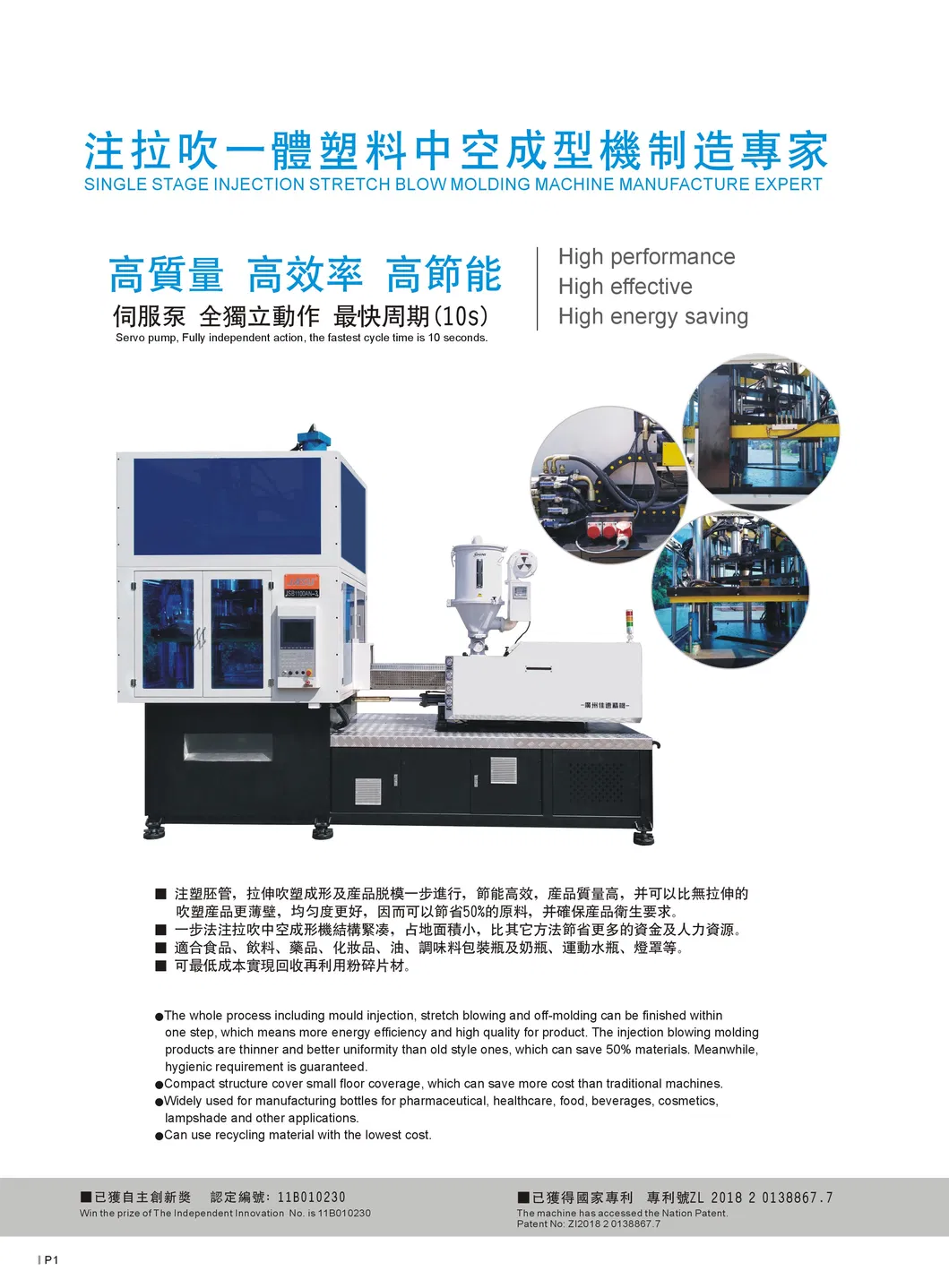
This is where the injection-stretch-blow mechanism specifically addresses operational bottlenecks. It seamlessly combines preform injection and stretch blow molding. Everything happens within a continuous, highly controlled cycle. The Pharmaceutical ISBM process ensures each container receives identical thermal treatment. You entirely eliminate the chaotic variables of transferring preforms between different machines. The resin melts, injects, conditions, stretches, and blows without ever leaving the system.
Production leaders need a pragmatic, dimension-by-dimension comparison before upgrading their lines. Evaluating these distinct technologies helps you select the right process for specific drugs. Making the wrong choice can lead to massive long-term operational losses.
Blow Molding Process Comparison
Process Metric | ISBM | IBM | EBM |
|---|---|---|---|
Material Orientation | Biaxial (High Strength) | Uniaxial (Moderate) | None (Lowest Strength) |
Scrap Generation | Zero (Flash-free) | Zero (Flash-free) | High (Requires Trimming) |
Neck Precision | Exceptional | Excellent | Variable / Moderate |
Tooling Cost | High | Moderate | Low |
Standard Injection Blow Molding (IBM) lacks the crucial biaxial orientation step. The "stretch" factor defines the core advantage of advanced molding technology. A mechanical stretch rod physically aligns the polymer chains longitudinally and radially. This specific action significantly enhances physical strength and visual clarity. It also dramatically improves gas barrier properties against oxygen and moisture.
Cost and time considerations vary widely between these two processes. Tooling complexities differ because the stretch-blow method requires specialized preform and blow molds. However, cycle times are often highly optimized for high-volume output. The Pharmaceutical ISBM investment pays off rapidly through safe material lightweighting. You use less raw plastic while maintaining superior container strength and performance.
Extrusion Blow Molding (EBM) notoriously generates a significant amount of flash. Operators must trim this excess plastic away after the molding cycle completes. EBM scrap generation adds unnecessary material waste and airborne dust to cleanrooms. Conversely, the single-stage process is entirely flash-free. The process requires absolutely no secondary trimming, deflashing, or manual finishing.
Neck precision marks another critical dividing line for medicine bottles. Advanced molding guarantees perfect, pharmaceutical-grade neck finishes every single time. It achieves this because the neck is precisely injection-molded before blowing occurs. You need this exact dimensional precision for child-resistant (CR) closures to function correctly. Tamper-evident (TE) seals also rely entirely on flawless neck thread dimensions to prevent leaks.
Different drug delivery requirements demand specific pharmaceutical-grade resins. Modern equipment handles these diverse polymers with remarkable efficiency and precision. You can easily adapt to various medical packaging needs without buying separate machines.
Here is how the machinery processes specific medical materials:
Precision PET for OTC Medicines: Over-the-counter liquid syrups require excellent visual appeal on pharmacy shelves. PET provides glass-like high clarity for these consumer-facing liquid products. It also delivers the dimensional precision necessary to securely attach accurate dosing cups.
Polypropylene (PP) for IV Solutions: Intravenous solutions undergo intense terminal sterilization processes before hospital use. PP offers exceptional thermal stability under high autoclave temperatures. The continuous molding process maintains PP container integrity during these harsh heat cycles.
HDPE for Solid Dose/Pills: Sensitive solid tablets and capsules degrade quickly when exposed to humidity. HDPE inherently resists moisture transmission naturally. Stretching HDPE during molding optimizes this crucial moisture barrier even further. It successfully extends the shelf life of highly degradable pills and vitamins.
Quality and compliance officers prioritize patient safety above all else. Packaging equipment must integrate flawlessly into sterile manufacturing environments. Every machine component must support stringent pharmaceutical hygiene protocols.
Single-stage sterility advantages stand out immediately during facility audits. The continuous single-stage process minimizes human intervention almost entirely. Preforms never leave the machine frame to cool or wait in storage bins. This closed-loop design eliminates ambient exposure to airborne particulates and microbes. It directly supports strict ISO cleanroom standards and routine environmental monitoring protocols.
Defect mitigation and material traceability also improve dramatically. Advanced equipment utilizes automated parameter controls for injection pressure and conditioning temperature. These closed-loop systems ensure completely uniform wall thickness across every single cavity. They actively prevent weak points from forming in the stretched plastic. Eliminating thin walls prevents dangerous micro-leaks in finished liquid drug containers.
Furthermore, manufacturers must prioritize validation-ready equipment during procurement. You cannot legally install unverified machinery in a regulated medical facility. Always select equipment that supports strict IQ/OQ/PQ validation frameworks. These structured protocols ensure FDA and GMP compliance from day one. Proper documentation proves the machinery performs consistently within its specified design limits.
Deploying new manufacturing technology always carries inherent operational risks. A skeptical, realistic view helps you build a highly resilient deployment strategy. Acknowledging these challenges early prevents costly production delays later.
Tooling and changeover realities require careful upfront planning and budgeting. Upfront costs for high-precision molds represent a major capital expense. Production teams must evaluate quick-mold-change (QMC) features carefully before purchasing. QMC technology significantly offsets costly machine downtime during frequent SKU transitions. Faster changeovers keep your overall output metrics highly competitive.
Next, analyze your available cleanroom footprint and ceiling clearance. Space inside an ISO-certified environment carries a massive financial premium. Single-stage machines typically require much less floor space than older two-stage processes. Their compact facility integration frees up valuable room for other automation lines.
Finally, apply strict shortlisting logic during your vendor selection process. Follow a standardized, numbered approach to qualify potential machinery partners:
Request detailed case studies demonstrating multi-cavity output stability over long runs.
Demand rigorous Factory Acceptance Testing (FAT) utilizing your exact specific resin.
Conduct Site Acceptance Testing (SAT) to verify local facility integration and utilities.
Assess the availability of rapid, localized aftermarket technical support and spare parts.
Implementing this advanced molding technology is not merely a volume play. It serves as a vital risk-mitigation strategy for strict pharmaceutical environments. Uncompromising quality control protects both vulnerable patients and your valuable brand reputation. Pharmaceutical ISBM elevates your entire production standard effortlessly.
Decision-makers should immediately audit their current operational inefficiencies. Review your historical scrap rates and ongoing cleanroom operating expenses. Document any past barrier-failure incidents or dangerous closure-seal leaks. These metrics clearly highlight the urgent need for a reliable technological upgrade.
Procurement and engineering teams must take proactive steps today. Request detailed output simulations from specialized machinery manufacturers. Ask for thorough tooling feasibility studies based on your exact bottle designs. Moving forward with expert data ensures a seamless, highly profitable manufacturing transition.
A: Pharmaceutical-grade stainless steel molds typically last for millions of cycles. The exact lifespan depends on the resin used and operational speeds. Proper maintenance, including regular cleaning and lubrication, prevents premature wear. High-quality tooling ensures consistent dimensional stability across extended production runs.
A: Yes, it easily handles thick-walled designs. However, thicker walls require longer cooling times within the cycle. Machine specifications must accurately match your desired wall-thickness profiles. Upgraded chilling systems can help offset the cycle time trade-offs associated with heavy containers.
A: The biaxial stretching process physically aligns the polymer chains. This structural orientation significantly improves both oxygen and moisture barriers. It densifies the material at a molecular level. You achieve these enhanced protective properties naturally, entirely without requiring costly secondary coatings.
A: While upfront tooling expenses are relatively high, it remains viable. Single-stage platforms work well for high-value drugs or smaller, flexible runs. The process becomes highly cost-effective if the machine features rapid changeover technology. Fast tooling swaps maximize uptime during frequent product changes.
