
Views: 0 Author: Site Editor Publish Time: 2026-07-31 Origin: Site


Profit margins in PET container manufacturing are won or lost on the production floor. Cycle times, scrap reduction, and cavity-to-cavity consistency directly dictate operational viability. We see lightweighting and complex container geometries dominating modern industry standards. Legacy pneumatic or low-tier hydraulic equipment struggles heavily under these precise demands. They fail to maintain dimensional stability across large production runs, leading to unacceptable physical variances. You cannot risk the leakage issues or visual defects caused by outdated machinery. The market simply rejects subpar packaging.
This guide provides production managers and procurement engineers an evidence-based framework for strategic upgrades. You will learn how to evaluate and shortlist a high-precision Injection Blowing Molding Machine. We outline the technical capabilities, implementation realities, and testing protocols necessary for manufacturing success. You will discover exactly how to align equipment specifications with your long-term production targets.
Hidden costs pile up quickly when using standard or outdated equipment. Inconsistent neck finishes frequently lead to compromised seals and product leakage. Poor optical clarity damages brand perception heavily on retail shelves. High scrap rates during startup phases drain raw material budgets relentlessly. Upgrading to modern platforms stops these recurring daily losses.
What defines true high-precision? We differentiate these advanced machines through repeatable clamp force distribution. Servo-motor accuracy eliminates the hydraulic drift commonly found in older models. Precise hot runner temperature control guarantees material flow consistency across every single nozzle. These technical upgrades ensure each cavity fills uniformly.
A successful machine integration hits specific operational targets. You should establish baseline success criteria before contacting vendors. Excellent implementations typically achieve:
Electric servo systems offer superior energy efficiency and repeatability. They outperform traditional hydraulic systems significantly during high-speed runs. All-electric machines run clean and quietly. This cleanliness makes them ideal for pharmaceutical and food-grade PET manufacturing. We must acknowledge balanced claims here. While electric servos provide incredible precision, extremely high-tonnage applications may still require robust hybrid solutions. Hybrids combine hydraulic power for clamping force alongside electric drives for precise injection control.
Standardized platen designs simplify mold integrations across your entire facility. You need features designed specifically to reduce costly downtime. Evaluate quick-mold-change (QMC) systems during your technical vendor reviews. Magnetic platens or hydraulic auto-clamps save hours during product changeovers. Accessible parison transfer stations allow operators to clear jams quickly. Fast changeovers keep production lines agile and highly profitable.
Closed-loop control systems act as the brain of high-precision manufacturing. They adjust parameters dynamically to maintain target setpoints. You should demand real-time monitoring capabilities from your equipment interface. Modern programmable logic controllers (PLCs) offer massive data advantages.
Your systems must track these variables continuously:
Catching variances early prevents minor defects before they compound into massive scrap piles.
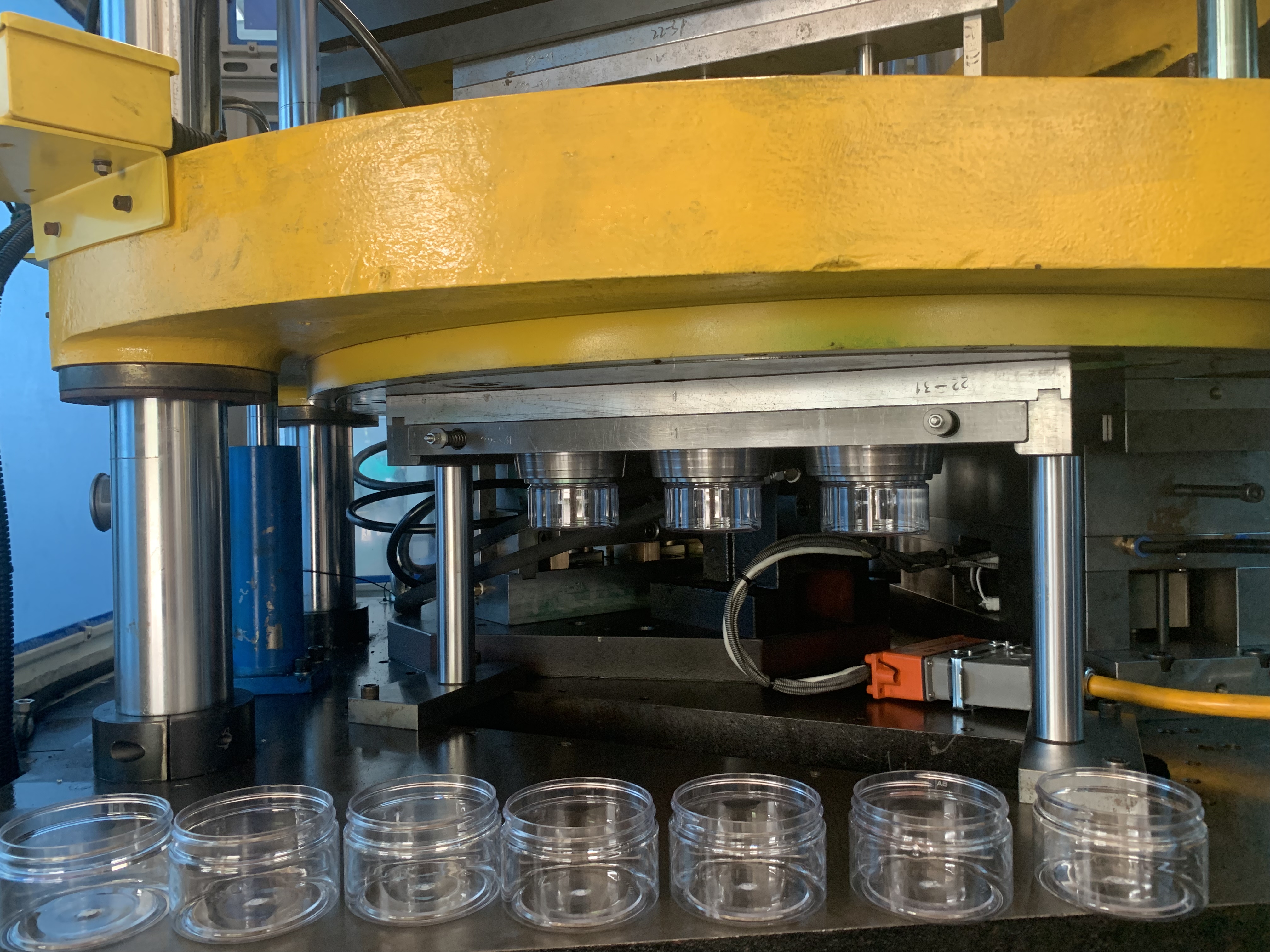
Choosing the right architecture depends heavily on your specific SKU mix. The one-step process perfectly suits specialized, non-standard shapes. Cosmetic packaging and pharmaceutical bottles require exact neck-to-body concentricity. The one-step method delivers this flawless alignment consistently. It also reduces your factory footprint substantially. Preforms transfer internally while hot. This continuous handling entirely eliminates surface scratching risks.
Conversely, the two-step stretch blow molding process serves a different purpose entirely. It handles ultra-high-volume beverage bottle manufacturing efficiently. Two-step systems prioritize sheer output speed over deep customization.
We use the following logical framework to help buyers confirm their architecture choice. An Injection Blowing Molding Machine built on a one-step frame shines when premium quality matters most.
| Production Criteria | One-Step System Analysis | Two-Step System Analysis |
|---|---|---|
| Production Volume | Low to medium volume; frequent changeovers. | Extremely high volume; dedicated massive runs. |
| Customization Capability | Excellent for complex geometries and off-center necks. | Limited flexibility; best for standard cylindrical shapes. |
| Floor Space Utilization | Highly compact; single-machine footprint saves space. | Large footprint; requires separate injection and blowing units. |
| Surface Finish Quality | Blemish-free; no preform collisions occur. | Risk of minor scuffs during bulk preform storage. |
Purchasing the hardware only represents the first phase of deployment. Proper integration requires careful facility planning. Overlooking basic utilities will severely bottleneck your new high-precision equipment.
Factories often overlook crucial prerequisite utilities before delivery. High-precision machines demand highly stable operational environments. You must provide dedicated chilled water systems for rapid mold cooling. Variations in water temperature ruin cycle time consistency. Clean, dry compressed air prevents moisture-related defects inside the PET matrix. Robust power supply stability protects sensitive servo drives from damaging voltage spikes. Ensure your electrical grids can handle the peak load demands.
Mold wear remains an unavoidable reality in any manufacturing setting. High-precision molding equipment demands equally precise tooling. This tooling often carries a premium price tag initially. You must establish strict maintenance intervals for tie-bars and servo actuators to protect your mold investments. We avoid promising zero downtime because hardware inevitably wears down. Data-supported predictive maintenance makes servicing manageable and highly predictable. Regularly calibrate your platen parallelism to prevent uneven mold closure.
Complex digital dashboards require highly skilled operators. You cannot simply install the machine and expect immediate perfection. Factor vendor-provided training into your rollout schedule heavily. Operators must understand how to interpret pressure curves and thermal mapping data. Localized technical support guarantees fast troubleshooting when complex software issues arise. The best equipment performs poorly if your team lacks proper training.
Moving from evaluation to procurement demands a highly structured approach. Do not rely solely on marketing brochures to make a capital decision.
Look deep into a manufacturer's post-sale infrastructure. Verify spare parts availability within your specific geographic region. Long shipping delays for minor sensors will destroy your production quotas. Request documented Mean Time Between Failures data for the exact model you want. Ensure they offer comprehensive tooling engineering support. A strong vendor acts as a long-term technical partner.
Your Request for Proposal must demand highly specific performance data. Use this checklist format when requesting vendor bids:
| Data Category | Specific Metric to Request | Why It Matters |
|---|---|---|
| Cycle Times | Guaranteed seconds per cycle for your exact PET part weight. | Defines your maximum daily production capacity. |
| Energy Efficiency | Kilowatt-hours consumed per kilogram of processed PET. | Impacts your ongoing monthly utility overhead. |
| Scrap Allowance | Guaranteed maximum scrap percentage during continuous operation. | Controls raw material waste and recycling labor. |
Never sign off on equipment using generic test parameters. Test the machine strictly using your own custom molds. Supply your own specific raw materials for the trial. This step is critically important if you process rPET blends. Validate dry-cycle speeds physically with a stopwatch. Conduct rigorous multi-cavity optical clarity tests before shipment approval. Demand that the machine runs continuously for several hours to prove thermal stability.
Take the next logical step in your procurement journey today. Request a customized operational analysis from your shortlisted vendors. Submit your most complex part drawing to get an accurate cycle-time estimation. Contact their engineering team directly to discuss your specific infrastructure constraints. Early collaboration prevents costly integration mistakes later.
Investing in a high-precision Injection Blowing Molding Machine represents a major strategic shift. You are no longer just buying raw manufacturing capacity. You are securing advanced capabilities to outpace your competitors.
The right equipment empowers your team to deliver flawless containers rapidly. Base your final decision on verifiable test data, realistic maintenance planning, and strong vendor support.
A: Manufacturing, testing, and shipping timelines typically range from 3 to 6 months. This timeline depends heavily on your specific customization requirements. Specialized tooling design and complex servo configurations will push lead times closer to the 6-month mark. Plan your facility infrastructure upgrades accordingly while waiting for delivery.
A: Retrofitting standard hydraulic systems presents significant technical limitations. You cannot easily achieve sub-millimeter precision by simply upgrading legacy controls. Investing in a native servo-driven platform provides far better repeatability and clamp force distribution. Upgrading old frames rarely delivers the performance stability modern PET containers require.
A: Recycled PET introduces a highly variable melt flow index. Your machine requires exceptionally robust thermal controls to handle these fluctuations. Specialized screw designs help homogenize the rPET blend properly. High-precision machines adjust hot runner temperatures dynamically, ensuring the final containers maintain structural integrity and acceptable optical clarity.
A: You can generally expect an ROI period between 18 and 36 months. This timeframe relies heavily on energy savings and dramatic scrap reductions. Regional power costs and your overall production volume will shift this calculation. All-electric models reduce energy consumption significantly compared to outdated hydraulic platforms.
