
Views: 0 Author: Site Editor Publish Time: 2026-08-08 Origin: Site


In pharmaceutical packaging, selecting the right blow molding technology directly impacts cleanroom compliance, dimensional consistency, and unit economics. Scaling production requires choosing between Pharmaceutical ISBM (Injection Stretch Blow Molding) and traditional methods like EBM (Extrusion) or IBM (Injection Blow Molding). The wrong choice leads to high scrap rates, compromised barrier properties, or unjustified tooling expenditures. We provide a transparent, criteria-driven framework to evaluate these technologies. You will learn to assess them based on production volume, material requirements, and GMP compliance standards.
Pharmaceutical ISBM offers superior biaxial strength, optical clarity, and lightweighting potential, making it the standard for PET-based liquid medications and premium solid dose packaging.
Traditional IBM remains highly effective for small-volume, high-precision neck finishes, while EBM offers the lowest tooling costs for standard, non-transparent HDPE/PP containers.
Cleanroom integration favors ISBM and IBM due to their flash-free processes, whereas EBM requires secondary trimming that introduces particulate contamination risks.
Tooling amortization is the primary commercial barrier: ISBM requires higher upfront capital but delivers lower TCO (Total Cost of Ownership) at high production volumes due to material savings.
Evaluating packaging equipment begins by understanding fundamental mechanical differences. Traditional and modern blow molding methods handle raw polymers differently. Each process creates unique structural properties for the final container. You must align these mechanical realities against your commercial objectives.
Extrusion Blow Molding (EBM) represents the traditional standard in plastics manufacturing. The machine extrudes a continuous hollow tube of molten plastic called a parison. The mold halves close around this parison. Compressed air then blows the plastic outward against the mold walls. This method offers high flexibility. It supports complex container shapes and distinct handle designs. However, EBM pinches the plastic at the top and bottom. This pinching generates scrap material known as flash. You must trim this flash mechanically. Secondary trimming introduces extra steps, wastes material, and creates commercial inefficiencies for high-volume runs.
Injection Blow Molding (IBM) takes a different approach. The machine first injects molten plastic into a precision cavity to form a preform. This preform looks like a small test tube. It features a fully finished, threaded neck. The machine transfers this preform to a blowing station. Air expands the plastic into the final bottle shape. IBM generates zero flash. It delivers exceptional neck precision. Child-resistant closures demand this exact tolerance. Despite these benefits, IBM lacks biaxial orientation. The material stretches only outward, limiting the structural strength of the bottle.
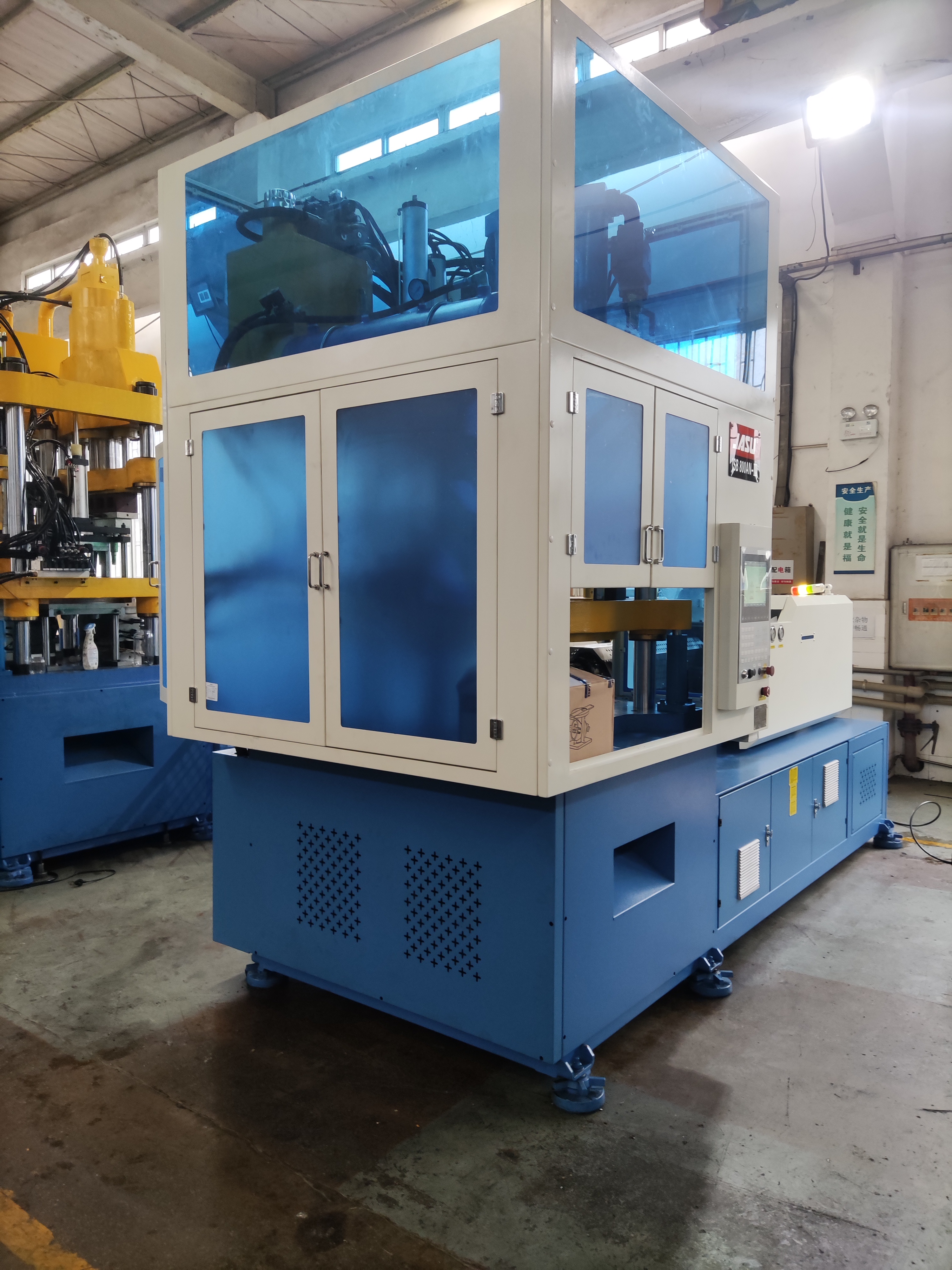
Injection Stretch Blow Molding introduces advanced vertical stretching. The machine injects a preform. A mechanical rod stretches this preform vertically before horizontal air blows it outward. This biaxial stretch aligns the polymer molecules tightly. The alignment maximizes material barrier properties and optical clarity. Single-stage Pharmaceutical ISBM completes this entire process inside one highly compact machine. It requires no secondary preform handling. This closed loop creates an ideal environment for strict, flash-free pharmaceutical production.
Blow Molding Technology Comparison
Process Feature | EBM (Extrusion) | IBM (Injection) | ISBM (Injection Stretch) |
|---|---|---|---|
Scrap Generation | High (Generates Flash) | None (Flash-free) | None (Flash-free) |
Neck Precision | Moderate | Exceptional | Exceptional |
Material Orientation | None | Uniaxial | Biaxial |
Tooling Cost | Low | High | Highest |
Pharmaceutical packaging demands strict adherence to Good Manufacturing Practices (GMP). Your production environment must minimize contamination risks constantly. Machine design heavily influences your ability to maintain ISO-certified cleanroom standards.
Particulate contamination presents the largest threat during manufacturing. EBM inherently creates flash during the molding cycle. Trimming this excess plastic shears the material forcefully. This shearing action releases microscopic polymer dust into the air. Managing these airborne particulates requires aggressive HEPA filtration. It drives up your cleanroom maintenance costs significantly. You must clean filters more often. Conversely, IBM and ISBM offer flash-free processes. The plastic remains contained entirely within precision molds. They generate zero trimming dust. This clean operation drastically reduces the burden on your HVAC systems. It secures your ISO Class 7 or 8 compliance effortlessly.
Dimensional stability directly impacts closure integrity. Liquid pharmaceuticals require perfect seals to prevent leakage. EBM forms the bottle threads by blowing plastic into a neck ring. This approach leaves minor variations in the thread dimensions. Capping machines sometimes struggle to seal these irregular necks tightly. IBM and ISBM solve this problem completely. They form the neck finish during the initial high-pressure injection phase. The threads cure precisely inside steel cavities before any blowing occurs. The resulting neck dimensions never vary. Capping failures drop. Product leakage disappears during transport.
Wall thickness distribution affects drug stability deeply. Thin bottle corners allow oxygen and moisture to penetrate the packaging. These elements degrade sensitive medications quickly. EBM struggles to maintain uniform wall thickness. The molten parison often thins out unpredictably near the base. The mechanical stretch rod inside an ISBM machine provides ultimate control. It pushes the plastic material downward evenly. The horizontal air blow then distributes the polymer uniformly across the entire mold cavity. This prevents thin corners. It ensures consistent barrier properties for oxygen-sensitive and moisture-sensitive drugs.
Financial feasibility relies on balancing initial investments against long-term production efficiencies. You must analyze your volume thresholds carefully before choosing a technology platform.
Upfront capital heavily favors traditional methods for short runs. EBM molds are fundamentally simple. They consist primarily of a two-piece blow cavity. You can source them quickly and cheaply. ISBM tooling represents a highly complex engineering challenge. A standard setup requires a hot runner injection mold, precision stretch rods, and a separate blow mold cavity. All components must interact perfectly. This complexity makes the molds significantly more expensive. You must establish clear volume thresholds. Low-volume specialty drugs rarely justify complex mold costs. High-volume, mass-market medications easily absorb these initial expenses through long-term operational savings.
Material efficiency changes the financial equation over time. Biaxial orientation unlocks massive lightweighting potential. The stretching process aligns polymer chains securely. This makes the plastic walls substantially stronger. You can achieve the same structural rigidity using far less raw material. Lighter bottles consume less resin per unit. When you manufacture millions of units annually, these raw material savings compound rapidly. The reduced plastic weight also lowers downstream shipping costs. Using Pharmaceutical ISBM maximizes this efficiency for large-scale operations.
Energy consumption dictates your daily operating expenses. Single-stage machines offer brilliant thermal efficiency. They inject the hot preform and immediately blow it into a bottle. You utilize the residual heat from the injection phase directly. Multi-step traditional setups sometimes require secondary reheating stations. Reheating cold plastic wastes immense amounts of electricity. Furthermore, modern single-stage servo-driven machines minimize cycle times. They operate faster and consume less power per cycle. You increase your hourly production output while simultaneously lowering your facility energy bills.
Polymer chemistry dictates machine selection. Not all plastics behave well inside every machine type. You must pair your material requirements accurately to ensure peak performance.
Knowing when to specify the stretching process is critical. PET and PETG resins thrive under biaxial orientation. These materials achieve glass-like optical clarity when stretched properly. Clear packaging allows automated vision systems to inspect the liquid levels easily. It also builds consumer trust.
Target formats for high-clarity stretch molding include:
Liquid cough syrups requiring precise dosage visibility.
Transparent IV bottles needing visual inspection for particulates.
Ophthalmic eye droppers demanding perfect squeezability.
Premium pill packers requiring high aesthetic appeal.
Knowing when to stick with traditional blow molding is equally important. Polyolefins like HDPE, LDPE, and certain PP blends perform reliably in EBM setups. These materials naturally appear opaque or milky. You cannot force them to become transparent. If your drug formulation requires protection from UV light, opaque HDPE serves you perfectly. Biaxial stretching provides diminishing returns for standard HDPE.
Target formats for traditional molding include:
Opaque supplement packers holding large capsules.
Bulk liquid containers exceeding standard volume capacities.
Short-run packaging where high tooling budgets remain unjustified.
Thick-walled chemical bottles demanding high stiffness over clarity.
Deploying new manufacturing lines carries operational risks. You must evaluate your internal engineering capabilities before signing purchase orders.
Operator expertise dictates production success. Setting up an extrusion line is straightforward. Most technicians can tune a parison quickly. Advanced stretch processes require specialized technical setup. Operators must balance injection pressures, thermal profiles, and stretch rod timing precisely. A minor thermal imbalance causes bottle defects instantly. You must budget for comprehensive vendor training. Ensure your maintenance team understands hot runner systems deeply.
Mold lead times impact project rollout schedules heavily. Simple extrusion cavities take a few weeks to fabricate. Complex injection and stretch tooling often takes months to engineer, machine, and test. You must factor this extended timeline into your drug launch schedule. Rushing the tooling phase leads to poorly balanced cavities. Precision engineering cannot be rushed safely.
Follow this decision matrix to simplify your shortlisting logic:
Choose EBM if: Your budget remains strict. Your production runs vary wildly. Your chosen material is HDPE. You possess adequate filtration to mitigate cleanroom particulate risks effectively.
Choose IBM if: You require extremely tight neck tolerances on small bottles. Your volumes remain moderate. You need child-resistant closures. You do not need extreme optical clarity or lightweighted walls.
Choose Pharmaceutical ISBM if: You produce high-volume PET containers. Optical clarity is absolutely mandatory. Material lightweighting represents a primary cost-saving goal. Your cleanroom GMP compliance requirements are uncompromising.
Neither technology is universally superior. The correct choice depends entirely on the intersection of your chosen material, annual volume, and compliance requirements. Extrusion provides cost-effective flexibility for opaque containers. Injection provides unmatched neck precision. Biaxial stretching delivers ultimate clarity, strength, and material savings for high-volume PET lines.
We advise procurement teams to conduct rigorous ROI analyses comparing tooling expenses against projected resin savings. Never assume one process fits every drug format. Always request detailed Factory Acceptance Testing (FAT) protocols from your machine manufacturers before committing capital.
To finalize your strategy, consult an engineering specialist today. Ask them to run a comprehensive cycle-time and material-yield simulation tailored specifically for your next pharmaceutical container design.
A: While the machine itself doesn't inherently require it, its single-stage, flash-free operation makes it highly suitable for ISO Class 7/8 cleanroom integration common in pharma.
A: ISBM requires multiple precision components (injection mold, stretch rods, blow mold) engineered to exact thermal tolerances, whereas EBM primarily requires just the blow mold cavity.
A: Yes, but it is less common. ISBM's primary advantage is unlocking the clarity and strength of PET/PP. For standard opaque HDPE bottles, traditional EBM or IBM is usually more cost-effective.
A: Single-stage does the injection and blowing in one machine (better for cleanrooms, less handling, pristine quality). Two-stage requires buying preforms and blowing them separately (higher output, but higher contamination risk during preform transit).
