
Views: 0 Author: Site Editor Publish Time: 2026-08-16 Origin: Site


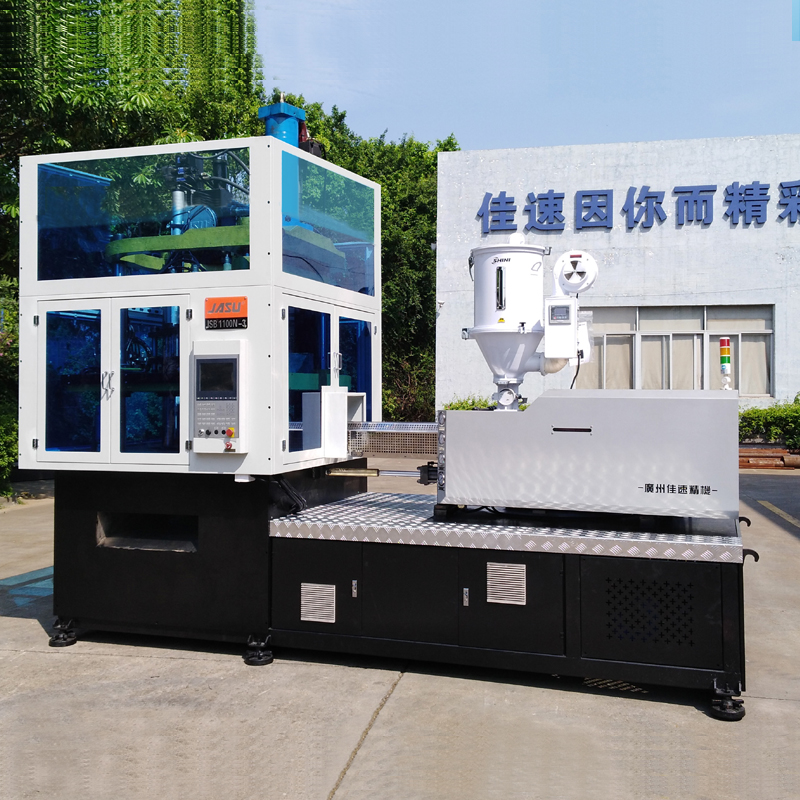
Pharmaceutical packaging operates in a high-stakes environment. Choosing the wrong polymer compromises drug efficacy. It jeopardizes strict regulatory compliance. It ultimately destroys production efficiency. Injection Stretch Blow Molding (ISBM) serves as the industry gold standard. Manufacturers rely on it to produce high-clarity, high-strength vials and bottles. This specialized manufacturing process demands absolute precision from start to finish. Successful Pharmaceutical ISBM requires meticulous planning. You must align polymer thermodynamics directly with drug stability requirements. Sterilization methods strictly dictate your specific resin choices. Stringent Good Manufacturing Practice (GMP) standards guide every material decision you make.
We will explore how to navigate these complex variables effectively. You will learn the distinct structural advantages of PET, PP, and COP. We will outline the critical evaluation criteria for sterility and shelf life. Ultimately, you will discover how to match your drug formulation to the perfect polymer. This ensures seamless production scaling from early clinical trials to full commercial launch.
PET remains the dominant choice for transparency and moisture/oxygen barrier properties in ambient-temperature drug storage.
Polypropylene (PP) is required when containers must withstand terminal sterilization (autoclaving) or demand higher chemical inertness.
COP/COC (Cyclic Olefin Polymers) serve as high-end glass replacements for biologics, offering superior extractables and leachables (E&L) profiles.
Material selection directly dictates ISBM tooling design, stretch ratios, and overall production scalability for Phase I-III clinical trials and commercial runs.
Material choice represents far more than a simple technical preference. It acts as a critical business driver for pharmaceutical companies. The polymer you select directly influences per-unit manufacturing overhead. It dictates your time-to-market speed. Most importantly, it governs the complex pathway to FDA and EMA regulatory approvals. Selecting a substandard material early in development triggers catastrophic delays. Engineers often discover these failures only during late-stage stability testing. At this point, reversing the decision requires repeating costly validation batches. You must treat material selection as the foundation of your entire packaging strategy.
To succeed, a proposed polymer must navigate a rigorous qualification gauntlet. We evaluate pharmaceutical packaging materials against three non-negotiable gates. Missing even one of these criteria forces teams back to the drawing board.
Processability: The material must stretch uniformly within the heating profile of your machinery. Polymers behave differently under thermal stress. They must achieve proper biaxial orientation without tearing or crystallizing prematurely in the mold.
Protection: The container must provide adequate barrier properties. We measure this through Oxygen Transmission Rate (OTR) and Moisture Vapor Transmission Rate (MVTR). The polymer must shield the active pharmaceutical ingredient (API) from environmental degradation throughout its labeled shelf life.
Compliance: Raw materials must meet stringent global GMP standards. They must pass rigorous USP pharmacopeia testing, including USP <661.1> for plastic packaging systems. Materials must also comply with European Pharmacopoeia (Ph. Eur.) chapter 3.1 standards.
Failing to secure compliance documentation upfront halts production. Procurement teams must request comprehensive material data sheets early. Regulatory bodies demand complete transparency regarding polymer origins, additive packages, and manufacturing controls.
Engineers primarily rely on three distinct polymer families. Each brings unique thermodynamic properties to the blow molding process. Understanding their strengths prevents costly manufacturing misalignments.
Medical-grade PET dominates the ambient-temperature pharmaceutical market. It provides exceptional glass-like clarity. Patients and clinicians prefer it for easy visual inspection of liquid medications.
Ideal use case: Cough syrups, oral liquid suspensions, ambient clinical trial vials, and over-the-counter liquid medications.
ISBM Advantage: PET offers excellent biaxial orientation characteristics. When stretched horizontally and vertically, the polymer chains align tightly. This results in high impact resistance and massive lightweighting potential. It allows you to reduce plastic usage without sacrificing bottle rigidity.
Limitations: Standard PET cannot endure terminal sterilization. It shrinks and deforms violently at high autoclave temperatures (typically 121°C). If you use PET, you must rely on gamma irradiation, ethylene oxide (EtO), or aseptic filling processes.
Polypropylene steps in where PET fails thermally. It offers remarkable heat resistance. It also provides a highly cost-effective solution for massive production runs.
Ideal use case: Intravenous (IV) solutions, ophthalmic washes, and products requiring terminal steam sterilization.
ISBM Advantage: PP boasts high thermal stability. Interestingly, the biaxial stretching inherent in ISBM significantly improves PP's natural cloudiness. The process aligns the crystalline structures, bringing the final container much closer to glass-like clarity.
Limitations: Processing PP requires extreme precision. It features a much narrower processing temperature window compared to PET. If the preform heating is slightly off, the material will not stretch evenly. This demands advanced thermal control systems on your machinery.
These advanced polymers represent the pinnacle of modern pharmaceutical packaging. They serve as premium, shatterproof replacements for traditional Type I glass.
Ideal use case: Biopharmaceuticals, highly sensitive vaccines, protein-based drugs, and small-batch Phase I-III drug development.
ISBM Advantage: Cyclic olefins deliver exceptional chemical purity. They boast near-zero ion extractables. They resist shattering completely, eliminating the breakage risks associated with glass vials on filling lines.
Limitations: They carry a premium price point. Furthermore, processing COP requires highly specialized machine configurations. You often need custom stretch rods and highly polished mold surfaces to prevent scratching the pristine polymer.
Polymer Comparison Chart for Pharmaceutical Manufacturing
Material Type | Visual Clarity | Autoclave Compatibility | Primary Application |
|---|---|---|---|
Medical-Grade PET | Excellent (Glass-like) | No (Deforms) | Oral liquids, ambient storage |
Medical-Grade PP | Good (Improved via stretch) | Yes (High heat resistance) | IV solutions, sterilized vials |
COP/COC | Outstanding (Premium) | Yes | Biologics, vaccines, premium drugs |
Selecting a material requires mapping the polymer directly to the drug formulation. You cannot treat packaging as an afterthought. It functions as an active participant in drug stability. We must evaluate three specific physical interactions.
First, consider sterilization compatibility. Your chosen sterilization method restricts your material options immediately. If your regulatory filing mandates terminal sterilization via steam autoclaving, you must eliminate standard PET. You are forced into PP or COP territory. Conversely, if your facility relies on Gamma or E-beam irradiation, PET and COP perform admirably. However, you must carefully address degradation risks. High-dose irradiation can cause yellowing in certain polymers. It may also induce embrittlement. You must request irradiated material samples from your supplier for mechanical testing.
Second, you must scrutinize Extractables and Leachables (E&L). Regulatory agencies zero in on E&L profiles during drug approvals. Every polymer contains an additive package. These packages include slip agents, catalysts, and antioxidants. You must ensure these chemicals do not migrate into the liquid medication. Biologics prove especially sensitive to leachables. A stray metal ion from a catalyst can denature a protein-based drug instantly. Furthermore, the high heat and extreme stretching forces of the ISBM process must not alter the polymer's chemical stability. You need a polymer grade specifically designed to withstand thermal cycling without breaking down.
Finally, establish a framework for barrier properties versus shelf life. You must match the polymer’s OTR and MVTR precisely to the API’s sensitivity. If a drug oxidizes rapidly, standard PP might fail. You might need PET or a multilayer structure. If a lyophilized powder requires absolute moisture exclusion, COP or specialized thick-walled PET becomes necessary. Over-engineering the barrier wastes money. Under-engineering it causes drug recalls. Work closely with formulation scientists to define the exact barrier threshold.
Theoretical material selection frequently clashes with factory floor realities. Engineering teams must anticipate operational hurdles. Overlooking these hidden variables leads to massive production bottlenecks.
Resin conditioning represents a major hidden operational burden. PET, for example, is highly hygroscopic. It absorbs moisture from the ambient air rapidly. If you melt damp PET, water molecules attack the polymer chains. This causes hydrolytic degradation. The intrinsic viscosity drops, resulting in brittle, unusable bottles. To prevent this, facilities must invest heavily in desiccant drying systems. You must dry PET for several hours before it ever enters the injection barrel. PP, conversely, does not require extreme drying. You must factor these auxiliary equipment needs into your facility planning.
Tooling and shrinkage variables also dictate strategy. Novice manufacturers often assume molds are universally interchangeable between materials. They are not. PP exhibits a significantly different shrinkage rate than PET as it cools. If you design a mold for PET and run PP through it, the final bottle will miss its dimensional specifications. The neck finish might not seal properly against the cap. Switching materials necessitates distinct tooling strategies. You often need completely separate mold sets, core rods, and stretch rods for different polymers.
Supply chain stability introduces another severe risk. You must secure robust supplier qualification constraints. Pharmaceutical ISBM demands absolute material consistency. If a resin supplier quietly changes their catalyst supplier, your drug might suddenly fail its stability tests. Advise your procurement team to demand comprehensive Drug Master Files (DMFs) from raw material suppliers. A DMF gives regulatory agencies confidential access to the polymer's exact recipe. If the supplier lacks a DMF, you risk catastrophic validation delays during commercial rollout. Lock in your supply agreements early.
Before finalizing your material, you must validate your manufacturing process. You must ensure ISBM is superior to alternatives like standard Injection Blow Molding (IBM) or Extrusion Blow Molding (EBM) for your specific project.
Process fit is crucial. ISBM dominates the pharmaceutical sector for a specific scientific reason: biaxial orientation. EBM simply extrudes a tube of plastic and blows it. IBM injects a preform but only stretches it outward. ISBM uses a stretch rod to push the plastic down vertically while air blows it outward horizontally. This dual-axis stretching aligns the molecular chains tightly. It exponentially increases physical strength. It dramatically improves barrier properties. It delivers optical clarity that IBM and EBM cannot match. When you use premium materials like COP or medical-grade PET, ISBM maximizes their inherent properties.
Once you confirm ISBM as the process, adopt a strict pilot testing logic. Never jump straight into ordering a 24-cavity commercial mold. The financial risk is too high. We strongly recommend starting with a single-cavity prototype mold. Use this prototype phase to validate material distribution. Check the wall thickness at the base and the shoulder. Run OTR and MVTR tests on the actual blown prototype bottles. Subject them to your specific sterilization protocols. Only after the prototype passes all physical and chemical gates should you commit to high-cavitation commercial molds.
The optimal material for pharmaceutical packaging does not exist in isolation. The best choice sits perfectly at the intersection of drug stability, sterilization needs, and thermal processability. PET offers unparalleled clarity and barrier strength for ambient products. PP steps up for high-heat autoclave scenarios. COP provides the ultimate glass-like purity for sensitive biologics. Failing to match these properties to your drug formulation guarantees regulatory rejection.
Your immediate next step is clear. Direct your procurement and engineering teams to engage resin suppliers today. Demand comprehensive Extractables and Leachables (E&L) data. Request exact thermal processing profiles. Once you gather this documentation, consult immediately with your machinery partner. They will evaluate tooling feasibility and help you design a prototype mold. Rigorous preparation today prevents disastrous validation failures tomorrow.
A: Yes, you can run both polymers on the same machine. However, it requires distinct temperature profiles and entirely different tooling. Because PP and PET have different shrinkage rates, you cannot use the same mold. It also potentially requires different stretch rod designs. It is never a simple "plug-and-play" swap.
A: ISBM utilizes biaxial orientation. The machine stretches the heated plastic preform both vertically (using a stretch rod) and horizontally (using high-pressure air). This dual stretching aligns the polymer chains tightly. It significantly improves physical strength, enhances gas barrier properties, and boosts optical clarity compared to non-stretched methods.
A: Generally, no. Standard PET cannot withstand the high temperatures required for steam autoclaving (typically 121°C). The material will shrink, warp, and deform violently. If your product requires high-heat terminal sterilization, you must utilize Polypropylene (PP) or Cyclic Olefin Polymers (COP).
