
Views: 0 Author: Site Editor Publish Time: 2026-08-31 Origin: Site


Pharmaceutical packaging lines face relentless operational pressure today. You must aggressively eliminate microbial and particulate contamination risks while maintaining a massive output scale. Achieving this delicate balance is no small feat in modern manufacturing. Traditionally, manufacturers rely heavily on two-stage blow molding technology. This older methodology inherently involves preform storage, physical transport, and extensive manual handling. Every transfer step introduces severe, compounding risks to product safety. Contrastingly, a single-stage process changes the entire operational paradigm for facility managers. Enclosing the resin-to-bottle transformation fundamentally shifts your baseline risk profiles. Adopting a single-stage Pharmaceutical ISBM process directly supports GMP compliance globally. It radically reduces your cleanroom footprint and minimizes human intervention from start to finish. You will learn how this closed-loop strategy eliminates intermediate handling flaws altogether. We will also explore polymer validation nuances, cleanroom footprint strategies, and essential equipment evaluation steps.
Single-stage ISBM converts resin to finished bottles in a continuous, closed-loop cycle, structurally eliminating intermediate handling and storage risks.
Integrating ISBM significantly reduces required cleanroom space, lowering operational costs associated with HVAC and particle filtration.
Medical-grade polymers, particularly Polypropylene (PP) for high-temperature sterilization and PET for clarity, are optimally processed with precise wall thickness control.
Implementation requires rigorous CapEx planning and adherence to IQ/OQ/PQ validation, necessitating partners with proven pharmaceutical backgrounds.
We must first detail the inherent contamination vectors present in traditional two-step manufacturing. The traditional process operates in disjointed phases. You inject a plastic preform, cool it down, and drop it into large storage bins. Operators then place these bulk bins into warehouses or staging areas. Later, they transport these stored preforms to a secondary blow molding machine. Finally, the machine reheats the cold preforms before stretching and blowing them. This fragmented sequence breeds contamination at almost every transition point.
Preform storage creates significant vulnerabilities. Bulk storage bins foster intense static buildup across the plastic surfaces. This static electricity acts like a powerful magnet. It actively attracts ambient dust, cardboard fibers, and microscopic particulate matter. Transporting these bins introduces even more human handling. Operators move materials across different facility zones, elevating the potential microbial bioburden unnecessarily. By the time a preform reaches the reheating oven, its exterior often carries a heavy particulate load.
A single-stage Pharmaceutical ISBM system provides a highly reliable structural alternative. It runs a continuous, uninterrupted cycle. The machine natively manages injection, thermal conditioning, stretch-blow, and ejection. It executes all these actions within a single closed system. The medical-grade resin never leaves the controlled, purified environment until you have a finalized bottle. The intermediate cooling and reheating phases vanish completely.
How do you define success when upgrading to this technology? You measure success by achieving a demonstrable, quantifiable reduction in bioburden before the sterilization phase. You should see drastically lower particulate counts on the unwashed bottles. This baseline cleanliness is critical. It applies equally whether you utilize terminal sterilization ovens or advanced aseptic liquid filling lines.
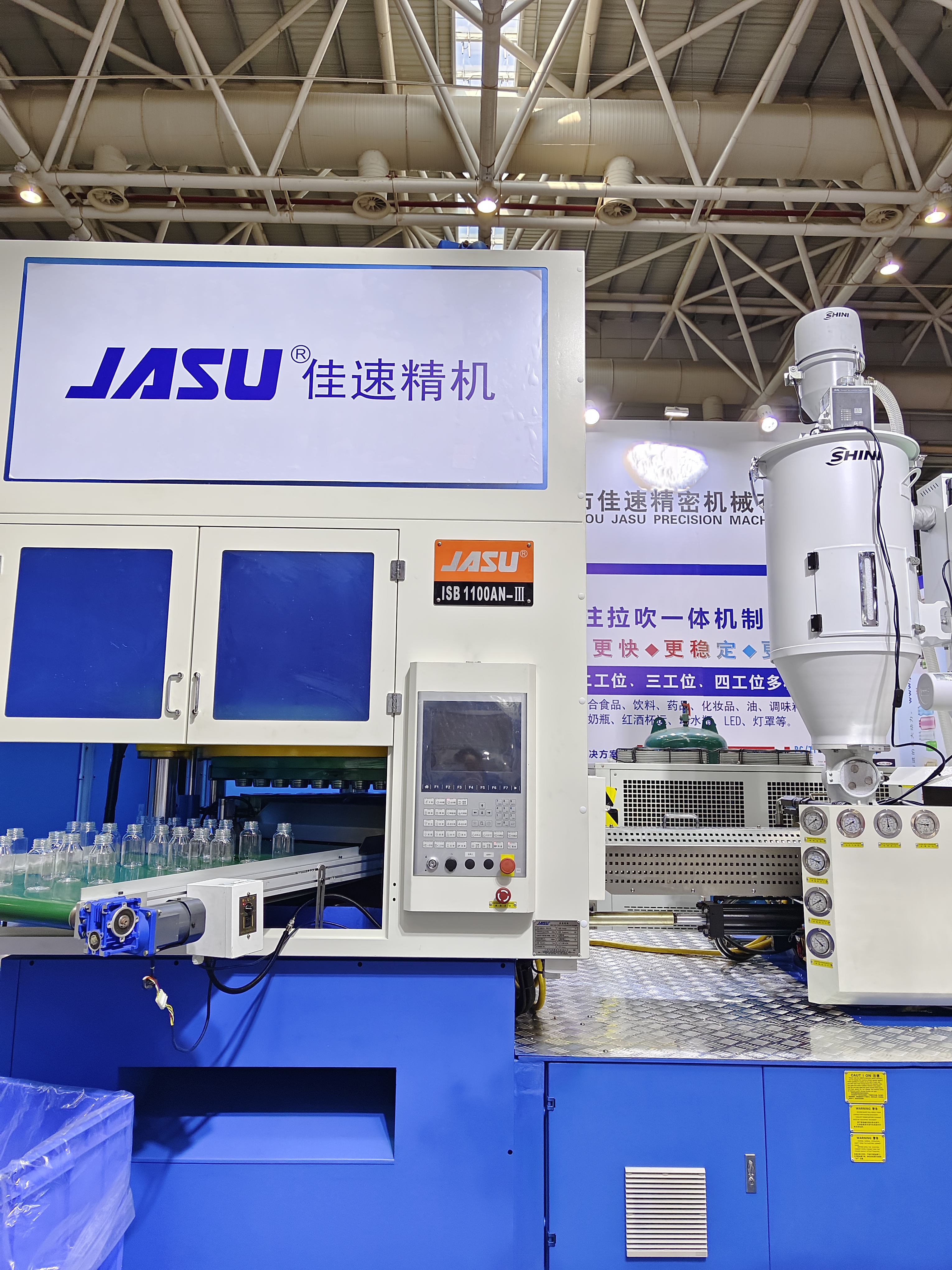
The enclosed nature of single-stage machinery translates directly to easier GMP and ISO cleanroom compliance. Regulators heavily scrutinize open product exposure. By keeping the resin isolated from ambient air, you inherently reduce these exposure risks. An enclosed molding environment restricts airborne pathogens from accessing the internal surfaces of the containers.
Footprint reduction offers a massive operational advantage for facility planners. You need a much smaller ISO Class 7 or 8 cleanroom footprint. The entire bottle-making process occurs inside one localized machine boundary. You avoid building massive, expensive cleanrooms for separate injection and blow molding departments. A smaller cleanroom volume means you process less air. It dramatically simplifies your daily air filtration and pressure cascade management.
When evaluating new equipment, you must heavily scrutinize specific design elements. Not all closed-loop machines meet strict medical standards. Compliant machinery should feature localized HEPA filtration installed directly over the primary molding area. Furthermore, enclosed ejection systems are absolutely mandatory. The bottles must exit the machine through a shielded chute or direct-connect conveyor. Ensure the vendor uses entirely oil-free pneumatic components. These specific, deliberate features prevent mechanical lubricants from contaminating the sterile zone.
Buyers must demand hard evidence during early testing phases. Do not accept theoretical cleanliness claims. Require machinery manufacturers to provide empirical particulate generation data. You should collect this data specifically during Factory Acceptance Testing (FAT). Run the machine at full operational speed and measure the air quality immediately surrounding the mold interface.
Medical applications demand highly precise polymer selection. Polypropylene (PP) and Polyethylene Terephthalate (PET) dominate the industry. They serve different but equally critical roles in an injection stretch blow molding environment. You must understand their thermal behaviors to succeed.
Polypropylene remains the gold standard for intravenous (IV) solutions and heavy-duty clinical liquids. These products often require terminal sterilization via extreme autoclaving. PP handles these aggressive 121°C heat cycles without warping or deforming. Single-stage machinery expertly manages the specific thermal requirements of PP. It precisely controls the stretch ratios to maintain the polymer's crystalline structure.
Precision control dictates your overall production success. Consistent wall thickness and completely seamless bases are absolutely critical. If a bottle base has a noticeable seam or structural weakness, it invites catastrophic failure. Bottles will rupture during rough transit or explode under heavy sterilization pressure. You must engineer these weak points out of the process entirely.
We must acknowledge a transparent assumption about tooling capabilities. Single-stage machinery provides excellent visual clarity and high barrier properties. However, the initial mold design phase is incredibly complex. It requires higher precision engineering than standard beverage packaging. You will experience significantly longer iteration cycles to perfect the mold thermal mapping. Do not attempt to rush this critical engineering phase.
Feature / Characteristic | Polypropylene (PP) | Polyethylene Terephthalate (PET) |
|---|---|---|
Thermal Resistance | Excellent (Withstands 121°C autoclaving) | Low to Moderate (Deforms under high heat) |
Visual Clarity | Translucent to semi-opaque | High clarity (Glass-like transparency) |
Common Medical Use | IV solutions, flush syringes, ampoules | Syrup bottles, diagnostic reagent vials |
Stretch Behavior | Requires highly precise temperature bands | Broad processing window, easier to stretch |
Moisture Barrier | Excellent moisture barrier properties | Good moisture, excellent oxygen barrier |
Many procurement teams express understandable skepticism regarding single-stage technology. The high initial capital expenditure (CapEx) of the machinery frequently gives buyers pause. Complex tooling drives this upfront investment even higher. Engineering highly polished, thermally precise medical molds is an expensive endeavor. You must prepare your organization for a significant, front-loaded financial commitment.
Beyond the raw CapEx, the qualification reality presents a heavy administrative burden. You cannot simply plug in a machine and start producing compliant medical bottles. You must navigate a strict, multi-stage validation pipeline. Regulators require comprehensive proof that the machine performs predictably under extreme conditions.
You must execute the following validation steps sequentially:
Design Qualification (DQ): You must verify that the proposed machine specifications perfectly align with your required GMP and product criteria before manufacturing begins.
Installation Qualification (IQ): You must document that the vendor installed the equipment exactly according to approved engineering drawings and local facility regulations.
Operational Qualification (OQ): You must stress-test the machine. This involves verifying consistent bottle dimensions and base integrity across the extreme upper and lower limits of the operating ranges.
Performance Qualification (PQ): You must run extended production batches. This proves the system consistently yields compliant, sterile-ready products under normal daily manufacturing conditions.
Risk mitigation focuses heavily on your human capital. Operator training is absolutely vital for long-term success. This specialized equipment requires elite technicians. They must understand both injection molding physics and stretch-blow molding parameters simultaneously. A deficit in operational training will inevitably cascade into severe production delays and high scrap rates.
Not all machinery builders understand strict medical requirements. Cosmetic or beverage bottle manufacturers do not automatically qualify as competent pharmaceutical equipment partners. You need a builder who intimately understands regulatory demands, particle counts, and strict bioburden controls.
Apply highly structured shortlisting logic to your vendor search. Ask pointed questions to filter out unqualified builders early in the process.
Traceability & Documentation: Does the vendor provide comprehensive, GMP-compliant documentation? Can they support your extensive validation pipeline (IQ/OQ/PQ) from day one?
Turnkey Capabilities: Can they supply the complete operational system? You need the primary machine, specialized molds, and advanced temperature controllers. Seamless downstream sterile handling integration is also essential.
Testing Infrastructure: Do they offer robust Factory Acceptance Testing (FAT)? Can they execute Site Acceptance Testing (SAT)? They must customize these tests specifically to your chosen medical polymer and cleanroom parameters.
Engineering Pedigree: How many dedicated pharmaceutical installations have they completed in the last five years? Request blind case studies detailing their success with similar medical projects.
Take a concrete next-step action to begin this evaluation process. Request a technical audit of your current two-stage cycle times. Additionally, schedule a preliminary mold design consultation to directly gauge their engineering competence. This early interaction reveals their true technical depth.
Moving to a single-stage, closed-loop system is a deeply strategic risk-mitigation decision. You systematically substitute dangerous manual handling and open ambient exposure for automated, enclosed precision. By doing so, you radically protect your product from airborne and human-introduced contaminants.
The upfront validation and tooling investments are undeniably substantial. You must plan for intense engineering cycles and rigorous testing protocols. However, the long-term gains in sterility assurance and compliance stability are indispensable. Modern pharma manufacturing strictly requires this elevated level of production predictability and safety.
Contact an experienced engineering specialist today. Have them model the exact cleanroom footprint reduction specifically for your unique bottle specifications. Initiating a preliminary design consultation will clarify your exact CapEx requirements and validation timeline.
A: Single-stage machinery entirely eliminates preform storage, which causes static dust accumulation. It also removes the need for operators to physically transport bins between different machines. By keeping the resin inside one continuous, enclosed machine loop, it fundamentally blocks ambient particulates from contaminating the plastic during the forming process.
A: Yes. However, mold design and temperature conditioning profiles differ significantly between the two polymers. Polypropylene requires much higher heat resistance and precise thermal control during stretching. Your machine must feature advanced, highly accurate temperature controllers to switch successfully between PET and PP manufacturing.
A: You must execute standard IQ, OQ, and PQ protocols. Operational Qualification (OQ) is particularly critical. It verifies consistent bottle dimensions, wall thickness, and base integrity across extreme operating ranges. Thoroughly documenting these phases is mandatory to satisfy strict global GMP standards.
A: While you can seamlessly transfer freshly blown ISBM bottles immediately into a sterile filling line, it remains mechanically distinct from standard BFS. BFS forms, fills, and seals in one mold cycle. Inline ISBM produces a finished bottle first, then securely transfers it to a separate, integrated aseptic filler.
