
Views: 0 Author: Site Editor Publish Time: 2026-10-01 Origin: Site


Investing in industrial manufacturing equipment dictates a facility's long-term profitability. Pick the wrong setup, and you will face a nightmare of production bottlenecks, skyrocketing power bills, and inconsistent bottle quality. This cascade of failures ruins brand reputation fast.
Right now, the packaging sector is undergoing a massive shift. Global demand for bottled water is surging, but profit margins are shrinking due to fluctuating resin prices and strict environmental mandates. Buyers are actively pivoting away from energy-hungry legacy systems toward highly integrated, smart manufacturing lines. Thriving today means deploying machines that are fast, precise, and incredibly power-efficient.
Evaluating an Injection Stretch Blow Molding system is a make-or-break strategic move for procurement teams. The right technology secures maximum return on investment, slashes unplanned downtime, and guarantees flawless structural quality. This guide breaks down the exact technical specs, hidden costs, and vendor metrics you must scrutinize before signing that purchase agreement.
One-Stage Efficiency: A continuous, single-step process combines injection and blow molding. This ensures blemish-free, highly precise water containers.
Production vs. Footprint: Procurement engineers must balance targeted output capacity with physical equipment dimensions. This optimizes expensive factory floor space.
Energy Consumption Matters: Evaluating power efficiency is non-negotiable. Servo-motor technology integration is vital since electricity constitutes a massive portion of the Total Cost of Ownership.
Material Flexibility: The equipment must handle diverse resin types, varying neck sizes, and different bottle volumes to prevent costly future upgrades.
Vendor Support is Crucial: Responsive after-sales service, robust operator training, and global spare parts availability carry just as much weight as the initial capital expenditure.
To make a solid procurement decision, we first need to look under the hood at the mechanical differences. A One Stage Blow Molding Machine operates on a unified principle. It melts raw plastic resin, injects it into a preform mold, conditions the temperature, stretches it, and blows it into the final shape. All of this happens in a single, uninterrupted cycle.
From an engineering perspective, this gives you massive quality control advantages. Imagine a production floor where hot preforms move straight to the blowing station without ever leaving the internal handling system. They never eject into bulk storage bins. They never tumble down conveyors. This frictionless handling eliminates micro-abrasions. You get glass-like visual clarity. Furthermore, the neck dimensions stay perfectly locked in place. This guarantees a leak-proof seal during the downstream capping process.
In contrast, traditional two-stage systems require completely separate pieces of heavy machinery. One unit injects the preforms, and another reheats and blows them. This decentralized setup demands significantly more factory floor space, complex conveyor belts, and massive preform storage silos.
Two-stage setups have their place in ultra-high-volume commodity production. However, ISBM technology is the gold standard for premium water bottle manufacturing. Consolidating the workflow drastically reduces the risk of dust or bacterial contamination between phases. For buyers prioritizing pristine aesthetics and rigorous hygiene standards, the one-stage process delivers measurable operational superiority.
Feature Comparison | One-Stage ISBM | Two-Stage Process |
|---|---|---|
Footprint | Highly compact, unifies all steps in one frame. | Requires massive space for two machines and conveyors. |
Bottle Quality | Blemish-free, high clarity, exact neck dimensions. | Prone to surface scratches during preform storage. |
Energy Efficiency | Utilizes residual heat from injection for blowing. | Requires reheating cold preforms from scratch. |
Contamination Risk | Near zero. Preforms never leave the sterile machine environment. | High risk during preform transit and bulk storage. |
Do not trust a brochure highlighting theoretical maximum speeds. True operational output equals the number of mold cavities multiplied by the machine dry cycle time. For instance, high-performance models in the market can handle bottle volumes ranging from 15ml up to 1000ml, with cycle times optimized for specific container weights. You must rigorously scrutinize these core metrics to determine realistic daily yields.
Procurement teams should match the machine stable capacity with actual market demand. Pad your calculation with a 20 percent margin for business growth. Buying a massive, high-cavity machine for a mid-sized run locks up capital and leads to underutilization. Conversely, under-specifying guarantees supply chain failures during peak summer beverage seasons.
Running a Water Bottle Making Machine at its absolute mechanical limit is a terrible financial strategy. Pushing equipment beyond stable parameters compromises wall thickness distribution. You get weak spots, poor top-load strength, and cloudy plastic. Look for machines offering precise injection weights and reliable clamping forces. A clamping force ranging around 400kN to 500kN for mid-sized water bottle applications ensures zero-defect runs.
Instead of chasing the highest top speed, request detailed data on optimal stable running speeds. Comparing scrap rates at recommended daily operating speeds provides a much more accurate picture of true production efficiency. A machine running slightly slower but yielding a near-zero defect rate is vastly more profitable than a fast machine generating bins full of wasted plastic.
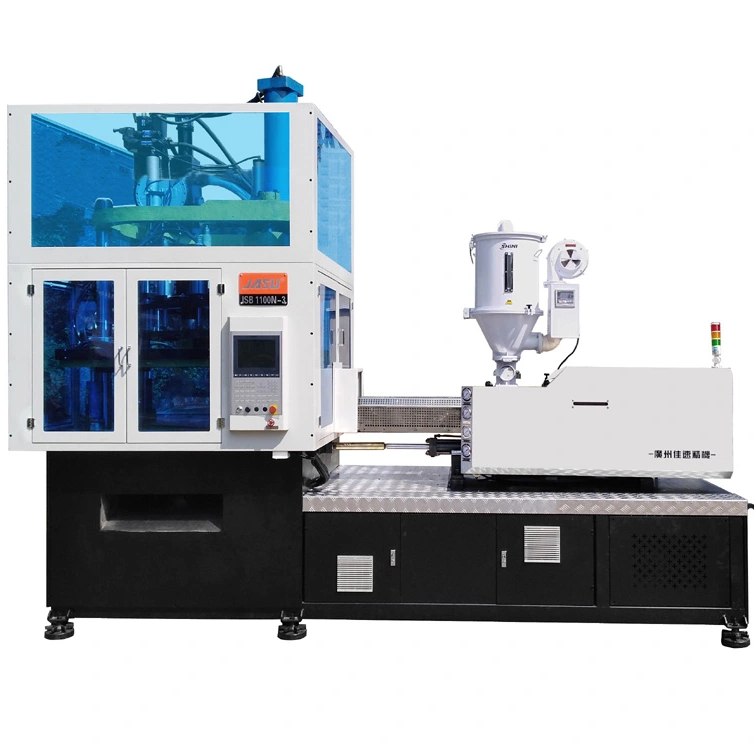
The current manufacturing landscape is heavily driven by corporate sustainability goals and volatile energy markets. Buyers now conduct comprehensive energy audits before purchasing. Machinery that bleeds power is obsolete. Electricity is an unyielding expense. When evaluating a PET Bottle ISBM Machine, demand a granular breakdown of power draw across heating arrays, extruders, and hydraulic clamping units.
The gold standard metric is the kilowatt-hour required per kilogram of processed PET. Forcing manufacturers to provide this specific metric strips away marketing fluff. It allows procurement engineers to accurately model long-term utility costs on a level playing field.
Modern engineering has nearly eradicated energy waste. Leading machines utilize advanced servo-driven hydraulic systems. Legacy variable displacement pumps run continuously and bleed energy. Servo motors act on demand. They draw power only during active mechanical movement and spin down during cooling phases. This slashes electricity waste dramatically.
Furthermore, closed-loop heating controls use thermal sensors to optimize preform temperatures in real-time. Ensuring perfectly even heat distribution conserves power and minimizes scrap rates caused by uneven blowing or plastic degradation.
Polyethylene Terephthalate remains the champion for water packaging due to its clarity and tensile strength. However, consumer trends are shifting aggressively toward recycled materials and lightweighting. Your equipment must handle alternative resins without a complete overhaul.
Assess the machine ability to process recycled PET. This material demands distinct temperature profiles and highly robust extruder screws due to varying viscosity. Future-proofing means ensuring your system can also pivot to Polypropylene or durable resins like Tritan if environmental regulations shift.
Manufacturing agility is a massive competitive advantage. Evaluate the minimum and maximum mold dimensions the chassis can fit. A flexible platform transitions smoothly from 250ml single-serve airline bottles to 1-liter premium restaurant carafes.
Look closely at the estimated time and labor required for mold changeovers. Machines designed with quick-change tooling systems allow a single operator to swap molds rapidly. This minimizes production downtime and directly boosts overall equipment effectiveness.
Industrial real estate is incredibly expensive. One compelling financial benefit of an integrated ISBM setup is its compact footprint. Combining injection, conditioning, and blowing into a unified frame reclaims up to 40 percent of the floor space devoured by decentralized setups.
This spatial efficiency allows plant managers to install multiple lines within the same square footage. You scale output capacity without triggering massive facility expansion costs.
No molding machine operates in a vacuum. You must account for auxiliary equipment. Industrial water chillers, high-pressure air compressors, resin dehumidifiers, and automated vacuum loaders all take up space.
Specifically, evaluate how the machine output conveyor handshakes with downstream automation. The control architecture must communicate flawlessly with automated filling, capping, and labeling stations to prevent end-of-line bottlenecks.
Software complexity dictates operator efficiency. Compare user interfaces closely. The human-machine interface should feature responsive high-resolution touchscreens and support multiple languages for a diverse factory workforce.
Recipe storage is a vital feature. When swapping molds, recalling saved temperature, pressure, and timing settings from memory accelerates changeovers. This automation eliminates manual entry guesswork and minimizes human error.
Smart diagnostics reduce reliance on expensive specialized technicians. Prioritize equipment with real-time process monitoring and automatic defect detection.
In addition, advanced systems utilizing Internet of Things sensors alert maintenance teams to minor pressure drops long before they ruin a whole batch of bottles. Remote troubleshooting lets manufacturer engineers log in globally to diagnose software faults in minutes rather than waiting days for a technician flight.
Equipment lifespan comes down to metallurgy and engineering tolerances. Look past the shiny exterior. Examine the clamping unit design, tie bar tensile strength, and extruder screw wear resistance.
High-stress zones need robust, over-engineered construction to prevent premature mechanical fatigue. Automated, centralized lubrication systems are non-negotiable for machines running millions of cycles. Specialized coatings on the extruder screw indicate a machine built for heavy-duty industrial use.
A machine is only as reliable as its manufacturer. Rigorously interrogate warranty terms, global service network density, and guaranteed turnaround times for spare parts.
The hidden cost of downtime is brutal. Buying a cheaper machine from a vendor with poor support leads to massive losses when you wait weeks for a proprietary valve. Partnering with vendors offering proven, rapid after-sales service is a fundamental risk mitigation strategy.
Business procurement goes far beyond the sticker price. Capital expenditure alone paints an incomplete and dangerous financial picture. A robust Total Cost of Ownership framework includes the initial purchase price, freight, installation, annual energy costs, wear parts, and operator labor, minus savings from scrap reduction.
Applying this formula usually reveals that premium machines offer much better financial returns over a standard 10-year lifecycle. Their superior energy efficiency and minimal material waste easily offset higher upfront costs.
Understanding ownership costs allows you to plot accurate return on investment timelines. Cross-reference projected production volumes, wholesale bottle prices, and operational savings to pinpoint your exact break-even month. Investing in high-quality equipment almost always accelerates the return timeline by maximizing uptime and ensuring consistent product quality.
Selecting the optimal ISBM equipment is a high-stakes balancing act. You must weigh output capacity, energy efficiency, footprint, and long-term mechanical reliability. By systematically comparing power consumption metrics, material flexibility, and vendor support depth, you can confidently navigate this complex procurement landscape.
Never rely on brochures alone. Request live sample runs, visit the manufacturer assembly facility, and speak directly to existing customers to verify real-world performance claims before signing a contract.
If you are ready to upgrade your production line with high-precision, energy-saving technology, explore the advanced solutions at JASU. Whether you need a compact one-stage system for premium cosmetic bottles or a robust, high-cavity line for high-volume water containers, JASU offers equipment engineered for maximum return on investment. Contact our sales engineering team today to find the perfect ISBM machine tailored to your exact manufacturing requirements.
The primary advantage is that it creates the preform and blows the final bottle in one continuous cycle. This completely eliminates the need for intermediate preform storage. It prevents surface scratches caused by preforms rubbing together, ensures perfect neck alignment, and saves a massive amount of factory floor space.
With strict adherence to scheduled maintenance, regular automated lubrication, and timely replacement of standard wear parts, a high-quality industrial machine operates efficiently for 10 to 15 years. Lifespan can extend even further depending on the operational environment and routine care.
Yes. While specifically optimized for water packaging, executing a simple mold changeover allows the exact same machine to produce containers for juices, cosmetics, pharmaceuticals, and edible oils. You just need to ensure the selected resin material and neck specifications match the machine parameters.
The one-stage process utilizes the residual thermal heat remaining from the initial injection phase to blow the bottle. It requires significantly less energy to condition the preform. Combined with modern servo motors, this makes the one-stage process highly energy-efficient compared to two-stage alternatives that must reheat cold preforms from scratch.
Modern machines feature quick mold-change tooling systems and intuitive software recipe storage. While it requires specific technical knowledge and training, a competent operator can typically complete a full mold changeover in just a few hours. This dramatically minimizes production downtime.
The break-even point typically ranges from 18 to 36 months for mid-to-high volume manufacturers. This timeline depends heavily on your local electricity rates, resin costs, and the premium price your high-clarity bottles command in the market. Energy-efficient machines with low scrap rates reach profitability much faster.
The system uses highly precise closed-loop temperature controls to condition the preform before blowing. By heating specific zones of the preform with exact accuracy and utilizing a precisely timed stretch rod mechanism, the plastic distributes evenly across the mold cavity. This eliminates weak spots and maximizes top-load strength.
