
Views: 0 Author: Site Editor Publish Time: 2026-10-09 Origin: Site


In the fiercely competitive cosmetics industry, packaging operates as far more than a mere vessel. It serves as a silent ambassador for your brand. A flawless, glass-like plastic bottle can instantly elevate a product's perceived value. Conversely, a scratched or poorly molded container will swiftly erode consumer trust. Today’s beauty brands require an extensive array of packaging designs to satisfy diverse market demands. These range from intricate, minimalist perfume vials to highly durable travel sets and thick-walled premium cream jars.
Recently, the packaging sector has experienced a massive pivot toward sustainable luxury. Market data indicates a growing consumer preference for post-consumer recycled resins and heavy-wall PET designs. Buyers want the tactile weight and premium feel of glass jars but demand the shatterproof, lightweight benefits of plastic. This industry-wide trend places immense pressure on manufacturing tolerances. Standard blow molding machinery frequently struggles to maintain the strict aesthetic and dimensional precision demanded by luxury beauty labels. Consequently, investing in specialized injection stretch blow molding technology becomes the critical first step for manufacturers aiming to achieve high-clarity, defect-free packaging.
This comprehensive guide will walk you through exactly how to evaluate your current and future bottle design requirements from an engineering perspective. By thoroughly understanding the mechanical capabilities of different systems, you can select the perfect equipment to scale your production, guarantee flawless aesthetics, and substantially maximize your return on investment.
Design Dictates the Machine: The physical geometry—encompassing shape, size, neck finish, and wall thickness—of your cosmetic bottles will directly dictate the clamping force, heating profile, and stretch ratio required from your equipment.
Material Matters: Whether you are molding PET for high-clarity travel bottles, PCTG for superior chemical resistance, or PP for resilient lotion containers, the machinery must integrate highly precise temperature controls and optimized screw designs to ensure melt homogeneity.
Single-Stage is King for Cosmetics: For premium, scratch-free, and dimensionally exact cosmetic containers, a one-step process is empirically proven to be vastly superior to two-step methods.
Versatility Equals ROI: The most effective manufacturing setup facilitates rapid mold changeovers, seamlessly accommodating varying product lines without incurring excessive operational downtime.
To make an informed capital expenditure, factory managers must grasp the underlying mechanics of Injection Stretch Blow Molding, commonly referred to as ISBM. Unlike standard extrusion blow molding, this process initiates by injecting molten plastic into a precision mold to form a preform. While still in a precisely conditioned thermal state, this preform is transferred to a blow cavity. Here, a mechanical stretch rod extends it vertically to create axial stretch, while high-pressure air simultaneously expands it horizontally for radial stretch. This bi-axial orientation meticulously aligns the polymer molecules, significantly enhancing the container's optical clarity, barrier properties, and structural rigidity.
The cosmetics sector operates on what factory floors often call the cosmetic standard. Unlike beverage or household chemical packaging, which allows for minor imperfections, cosmetic containers demand absolute zero-defect manufacturing. This rigorous standard translates to absolutely no surface scratches, perfectly centered neck finishes for complex pump dispensers, and unblemished, glass-like transparency.
Furthermore, standard extrusion blow molding often leaves unsightly pinch-off scars on the base or results in uneven wall distribution. These defects instantly compromise the luxury feel of high-end skincare products. By utilizing dedicated stretch blow molding technology, manufacturers can entirely eliminate these quality control variables. This ensures that thermal conditioning is perfectly optimized for cosmetic-grade resins, thereby drastically reducing scrap rates.
Before diving into machine specifications, production engineers must conduct a rigorous audit of their current and projected bottle designs. The unique geometry of the container will effectively narrow down the required thermal and mechanical capabilities of the machinery.
Processing thick-walled, eco-friendly materials requires a setup capable of handling prolonged injection and cooling cycles. Specifically, the injection unit must apply sustained, high holding pressure to prevent unsightly sink marks or internal voids as the thick plastic cools. If thick PET cools too slowly, it crystallizes. This results in a milky, opaque appearance rather than the coveted glass-like clarity.
In contrast, thin-wall designs require an entirely different approach. They demand rapid injection speeds to fill the mold cavity before the material freezes off. This necessitates high-response hydraulic or all-electric servo systems to maintain fast cycle times.
Modern cosmetic packaging frequently utilizes asymmetrical geometries. Examples include flat oval lotion bottles, sharply squared toner containers, or serum bottles featuring off-center droppers. These complex shapes present a distinct operational challenge because they cannot be blown uniformly using standard, symmetrical heating profiles.
To conquer these designs, the machinery must be equipped with advanced preferential heating capabilities. This technology allows operators to apply targeted thermal energy to specific sides of the preform. When the stretch rod engages, the warmer segments of the plastic stretch more easily to fill the distant corners of an irregular mold. This guarantees uniform wall thickness and prevents weak spots in angular designs.
Bottle Design Feature | Manufacturing Challenge | Required Machine Capability |
|---|---|---|
Heavy-Wall PET Jars | Sink marks and thermal crystallization causing milky opacity. | Sustained holding pressure and advanced mold cooling channels. |
Flat Oval / Square Shapes | Uneven stretching leading to weak corners and thin walls. | Preferential heating systems for targeted thermal profiling. |
Off-Center Pump Necks | Thread misalignment when capping directional pumps. | One-step continuous processing for perfect thread orientation. |
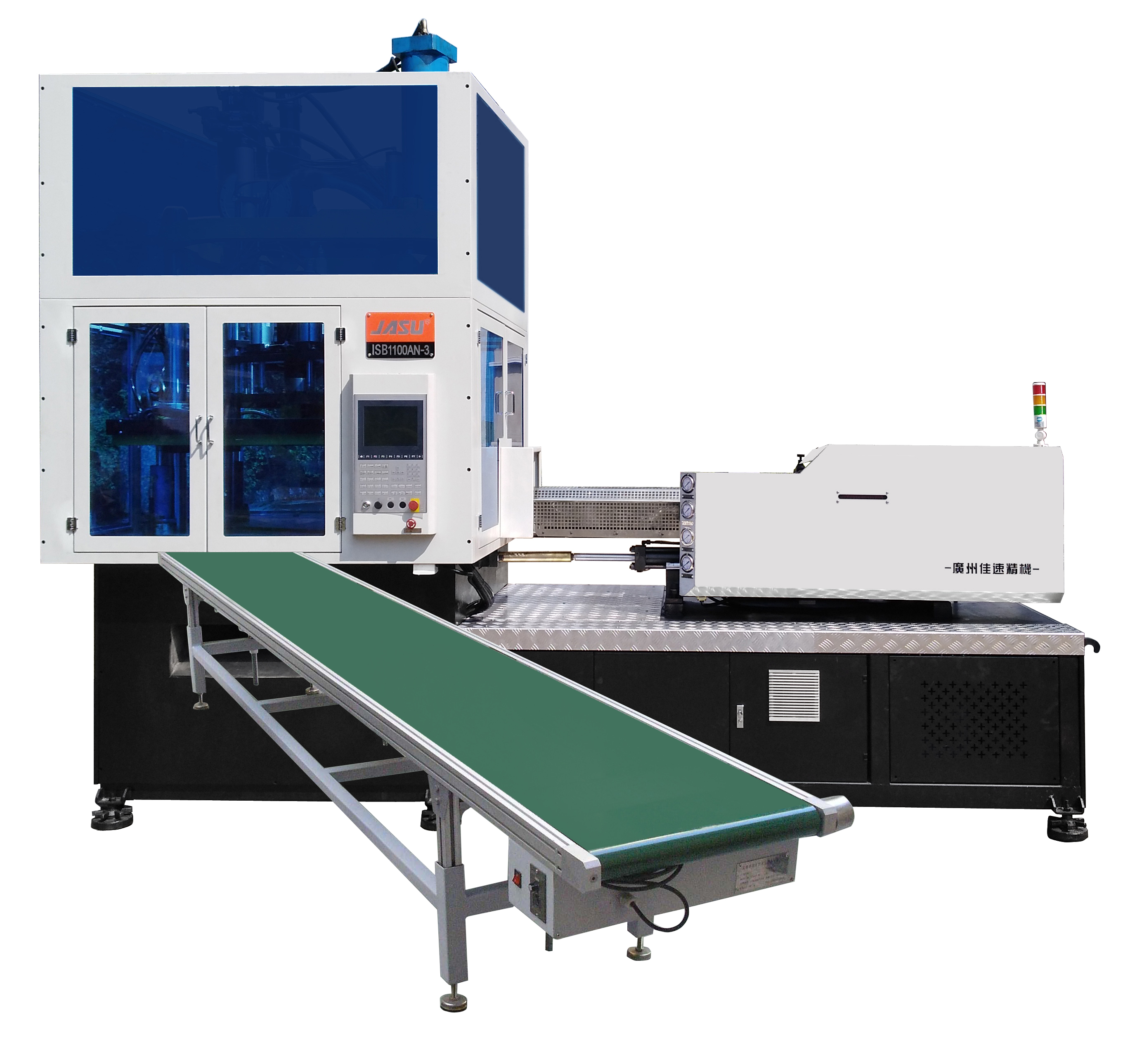
The global market for travel-size cosmetics continues to expand exponentially. However, because the profit margins on individual travel-size formats are inherently lower than on full-size luxury containers, maximizing production volume is critical for profitability.
To profitably mass-produce these smaller formats, a dedicated PET Travel Bottle Machine must feature a robust clamping system engineered to support multi-cavity tooling. For example, a machine generating upwards of 500kN of clamping force can stably support an 8-cavity or 12-cavity mold. In a real-world factory setting, even a minute variance in clamping force can cause the central cavities to mold perfectly while the outer cavities suffer from flash. Therefore, highly uniform force distribution across the platen is non-negotiable.
Travel bottles must strike a delicate physical balance. They must be flexible enough for consumers to squeeze easily, yet durable enough to withstand aggressive baggage handling and severe pressure changes in aircraft cabins without leaking.
This equilibrium is achieved by precisely managing the biaxial orientation during the stretch-blow phase. By fine-tuning the stretch rod descent speed and the exact millisecond the pre-blow air is introduced, the equipment ensures the side walls remain pliable while the base and neck retain unyielding structural rigidity.
Fragrance packaging represents the absolute pinnacle of cosmetic manufacturing difficulty. Perfume bottles demand the highest conceivable level of dimensional precision, chemical resistance, and optical brilliance.
The neck finish of a perfume bottle is an engineering critical-to-quality feature. Most luxury perfumes utilize expensive crimp-on atomizers or highly calibrated screw-on spray pumps. If the inner or outer diameter of the bottle neck deviates by even a fraction of a millimeter, the atomizer will fail to seal correctly during the filling line process. This leads to the evaporation of incredibly expensive fragrance formulations.
A specialized Perfume Bottle ISBM Machine relies heavily on its injection molding station to form this critical neck. Because the threaded neck is injected directly into a solid steel cavity rather than being blown and trimmed, it achieves absolute, repeatable dimensional accuracy that extrusion methods simply cannot match.
For luxury fragrances utilizing materials like Surlyn, PCTG, or heavy-wall PET, the plastic must be virtually indistinguishable from traditional glass. To maintain this premium aesthetic, the surface of the bottle must remain completely free of micro-scratches, scuffs, or thermal degradation.
By utilizing a single-stage process, the preform is held gently by its neck ring throughout the entire manufacturing cycle. It never touches another preform, and it is never ejected into a bulk storage bin. This frictionless handling guarantees a pristine, high-gloss surface finish that easily rivals traditional glassmaking techniques.
When factory managers evaluate new equipment, the decision must be rooted in hard technical specifications that directly align with real-world production requirements.
Clamping force is the immense pressure applied to keep the mold securely closed during the high-pressure injection and blowing phases. Calculating the necessary clamping force requires engineers to analyze the projected surface area of the specific bottle design alongside the melt characteristics of the chosen polymer. Heavy-wall cosmetic jars or sprawling multi-cavity configurations require significantly higher clamping force to prevent the molds from being forced open by the blow air. An inadequate clamp will result in defective bottles with highly visible, unacceptable seams.
The stretch ratio is the mathematical degree to which the preform is expanded both vertically and horizontally. A top-tier Cosmetic Bottle Making Machine provides precise, programmable control over its servo-driven stretch rods. For tall, slender cosmetic packaging, such as mascara tubes or elongated lotion pumps, the equipment must support a high axial stretch ratio without allowing the rod to puncture the base of the preform.
Modern cosmetic manufacturing demands strict hygiene and exceptional energy efficiency. Machines equipped with all-electric servo-motor technology for their hydraulic pumps consume up to forty percent less electricity than traditional constant-speed systems. Furthermore, integrated robotic take-out systems are essential for quality control. These automated arms gently remove the finished bottles from the mold and place them directly onto a cooling conveyor. This entirely prevents the bottles from dropping, eliminating impact damage and drastically reducing the risk of human contamination before the units proceed to the decoration lines.
Understanding the architectural differences between single-stage and two-stage processes is a critical decision for any packaging manufacturer.
In a single-stage machine, the entire process occurs on one continuous, rotating carousel. This includes melting the resin, injecting the preform, conditioning its temperature, and blowing the final bottle. For the cosmetics industry, this one-step process is universally recognized as the gold standard.
Because the preform never leaves the tooling spindle, asymmetrical bottles can be blown with the neck threads perfectly aligned to the bottle's shape. This is an absolute necessity for ensuring that directional flip-top caps or lotion pumps face the exact right direction when screwed onto the final product. Additionally, the residual heat from the injection phase is efficiently utilized for the blowing phase, resulting in superior optical properties without the risk of reheating blemishes.
In a two-stage process, one machine mass-produces the preforms, which are then cooled, dumped into storage bins, and later fed into a separate reheat-stretch-blow machine. While two-step methods offer massive volume output for generic, round beverage bottles, they fall short for custom, luxury cosmetic shapes. The bulk storage and reheating process introduces a high risk of surface scratching, moisture absorption, and makes precise thread orientation incredibly difficult to achieve consistently.
Procuring industrial machinery is a significant capital expenditure. Maximizing your Return on Investment requires looking beyond the initial sticker price and deeply evaluating the machine's lifecycle operational efficiency.
The cosmetics market is driven by rapidly shifting consumer trends. Brands frequently launch limited-edition designs, seasonal packaging, and new product sizes. Consequently, contract manufacturers cannot afford to have their machinery sitting idle for days during complicated mold changes.
When evaluating equipment, prioritize machines engineered around Single-Minute Exchange of Die principles. Machinery featuring standardized mold bases, quick-release water manifolds, and easily accessible platens allows technical teams to switch from producing a 50ml serum bottle to a 200ml lotion bottle in a matter of hours. This agility directly increases machine uptime, allowing you to accept smaller, more diverse custom orders profitably.
The operational success of this technology relies heavily on the seamless synergy between the machine and the mold. Purchasing a machine from one vendor and molds from another frequently leads to frustrating integration issues, finger-pointing, and delayed production timelines. To mitigate risk, it is highly recommended to source equipment from manufacturers who provide comprehensive, turnkey solutions. This includes in-house mold design, pre-shipment sampling, and robust after-sales technical support.
Choosing the right injection stretch blow molding machine is a delicate balancing act. You must carefully weigh your specific bottle designs and material choices against your long-term production volume goals. Whether you are manufacturing flexible travel kits or heavy-walled, glass-like luxury perfume bottles, the precision of your equipment will directly reflect the quality and prestige of the brands you serve. By prioritizing single-stage technology, rapid mold changeovers, and precise thermal controls, you can ensure your packaging stands out on the most competitive retail shelves.
Ready to elevate your cosmetic packaging production? Evaluate your specific project requirements and discover the perfect high-precision equipment by exploring the comprehensive turnkey solutions available at JASUI ISBM Machines today.
Most advanced equipment excels with PET, PP, PCTG, and Tritan. These specific polymers are highly favored in the beauty industry because they provide the clear, durable, and chemically resistant properties required for premium cosmetic formulations, including essential oils and aggressive solvents.
Yes, highly versatile single-stage machines can easily produce both types of containers. Provided you have the correct custom molds engineered for each specific product, and the machine's overall clamping force accommodates the varying sizes, a single machine offers exceptional production flexibility for a diverse client base.
The stretch blow process provides vastly superior optical clarity, resulting in an elegant, glass-like appearance. Furthermore, it produces zero scrap on the bottom of the bottle, eliminating the ugly pinch-off marks common in extrusion methods. It also creates highly precise, injection-molded neck finishes that definitively prevent high-end serums and perfumes from leaking.
Complex shapes, such as flat ovals or sharp-edged squares, require machines equipped with advanced preferential heating and highly customized stretch rod controls. These specific features ensure the thermal energy and plastic material are distributed evenly across all sharp corners, guaranteeing structural stability and uniform wall thickness.
Manufacturing heavy-wall packaging requires longer cooling phases to prevent crystallization and sink marks. While standard thin-wall containers might run on a 12-second cycle, thick-wall luxury jars often require 25 to 35 seconds. The exact timing depends heavily on the optimized cooling channels within the mold and the chiller capacity of your facility.
The most effective method is utilizing single-stage machinery. Because the preform is held securely by the neck ring and never ejected into bulk storage bins, friction between parts is entirely eliminated. This continuous handling guarantees a pristine, glass-like surface finish right off the production line.
