
Views: 0 Author: Site Editor Publish Time: 2026-10-27 Origin: Site


Producing crystal-clear, shatter-resistant water bottles requires much more than simply pouring melted plastic into a mold. Perfecting these containers demands an exact, almost delicate harmony between the mechanical equipment, the chosen polymer, and the specific geometric design of the bottle. A single, rigid setup inevitably fails the moment an operator switches resins or attempts to run a different capacity mold.
The 1-step Injection Stretch Blow Molding process stands as the manufacturing gold standard for creating flawless, high-quality containers. However, a one-size-fits-all approach to this technology is a costly operational myth. Transitioning from a standard disposable container to a premium reusable flask drastically alters how the equipment must be configured.
Recent market data highlights a massive shift in the beverage packaging sector. Consumers increasingly demand sustainable, highly customized, and health-safe containers. This pivot forces production facilities to move away from single-purpose lines. Today's competitive landscape requires agile manufacturing environments capable of seamlessly switching from standard hydration vessels to premium, drop-resistant flasks. Mastering versatile machine configurations based on material properties is no longer just a technical skill. It is a baseline requirement for market survival.
The 1-step ISBM process is an advanced manufacturing method that transforms raw plastic resin into a finished, flawlessly clear bottle within a single continuous cycle. Unlike older 2-step processes that rely on separate machines for preform injection and bottle blowing, the 1-step process integrates four distinct stations. These include injection, thermal conditioning, stretch blow molding, and ejection.
In the initial station, the polymer melts and injects into a precise preform mold. The system then immediately transfers this preform to the conditioning station. Here, the temperature equalizes to match the exact stretch-blow parameters required for that specific run. Moving to the third station, a mechanical stretch rod extends the preform vertically while high-pressure air expands it horizontally against the chilled mold walls. Finally, the finished container ejects, ready for packaging.
For manufacturing decision-makers, getting this setup right is not merely a technical necessity. It is a critical financial imperative. The precision of these settings dictates your return on investment, minimizes scrap plastic, and ensures the final product meets rigorous safety and aesthetic standards. The complex interplay between injection pressure, thermal profiling, and mechanical stretching must operate in perfect synchronization.
The assumption that one standard configuration can handle multiple polymer types is a frequent operational error. Resins possess distinct molecular structures, melting points, and stretch ratios. Consequently, thermal profiles and mechanical timings must be highly specialized for each specific material.
Polyethylene Terephthalate remains the industry standard for bottled water due to its high clarity, excellent barrier properties, and highly predictable stretch ratios. When operating a PET water bottle machine, the primary objective is managing the thermal profile to prevent spherulitic crystallization. If unchecked, this crystallization manifests as a cloudy, hazy appearance that ruins the visual appeal of the product.
PET typically requires an injection barrel temperature ranging from 260°C to 280°C. The most critical setup phase occurs during the transition from injection to conditioning. Operators must ensure the preform cools rapidly to halt crystallization, then precisely reheats to its glass transition temperature ranging from 75°C to 85°C just before blowing. Furthermore, the stretch rod speed must align with the natural strain-hardening characteristics of PET, guaranteeing optimal biaxial orientation and physical strength.
Tritan, an advanced copolyester, is celebrated across the industry for its BPA-free composition, extreme durability, and high heat resistance. It is frequently the material of choice for premium reusable containers. Transitioning to a TRITAN bottle machine setup requires significant deviations from standard PET settings.
Because Tritan possesses a higher viscosity and heat resistance, injection temperatures must elevate, often reaching between 270°C and 290°C. In contrast to PET, Tritan does not strain-harden in the same manner. To maintain uniform wall thickness and prevent dangerous material thinning at the base, the setup demands slower stretch rod speeds and highly specific mold heating configurations. The conditioning station must maintain a warmer environment, ensuring the thicker sections of the preform remain pliable enough for uniform, controlled expansion.
Polycyclohexylenedimethylene Terephthalate Glycol offers glass-like clarity coupled with exceptional chemical resistance, making it ideal for high-end water bottles and premium cosmetics packaging. Dialing in a PCTG bottle machine demands meticulous thermal control.
PCTG is an amorphous polymer, meaning it resists crystallization, which is highly advantageous for optical clarity. However, it is notoriously susceptible to flow marks and shear stress during the injection phase. The equipment must feature lower injection speeds and precise hot runner temperature controls to guarantee a smooth, high-gloss finish. Blow pressure must also be carefully regulated. Applying maximum pressure too early in the cycle often causes microscopic stress fractures, severely compromising the drop-impact resistance of the final container.
Polypropylene is lightweight, flexible, and highly heat-resistant, making it the preferred choice for hot-fill beverage applications. Configuring a setup for a PP bottle ISBM is challenging due to the semi-crystalline nature and unique thermodynamic properties of the material.
Specifically, PP shrinks significantly more than PET, often between 1.5% and 2.0%. Therefore, the mold tooling must feature precise shrinkage allowances. During operation, PP requires a much higher conditioning temperature, often around 120°C to 130°C, compared to other resins. The stretch rod design and speed must accommodate the lower melt strength of PP, and cooling times must extend to prevent the bottle from warping upon ejection.
Material Type | Injection Temp Range | Conditioning Temp | Stretch Speed Requirement | Material Shrinkage Rate |
|---|---|---|---|---|
PET | 260°C - 280°C | 75°C - 85°C | Fast / Strain-hardening matched | 0.2% - 0.4% |
Tritan | 270°C - 290°C | 95°C - 105°C | Slow / Controlled expansion | 0.5% - 0.7% |
PCTG | 250°C - 270°C | 80°C - 90°C | Moderate / Low shear focus | 0.2% - 0.5% |
PP | 220°C - 240°C | 120°C - 130°C | Tailored for low melt strength | 1.5% - 2.0% |
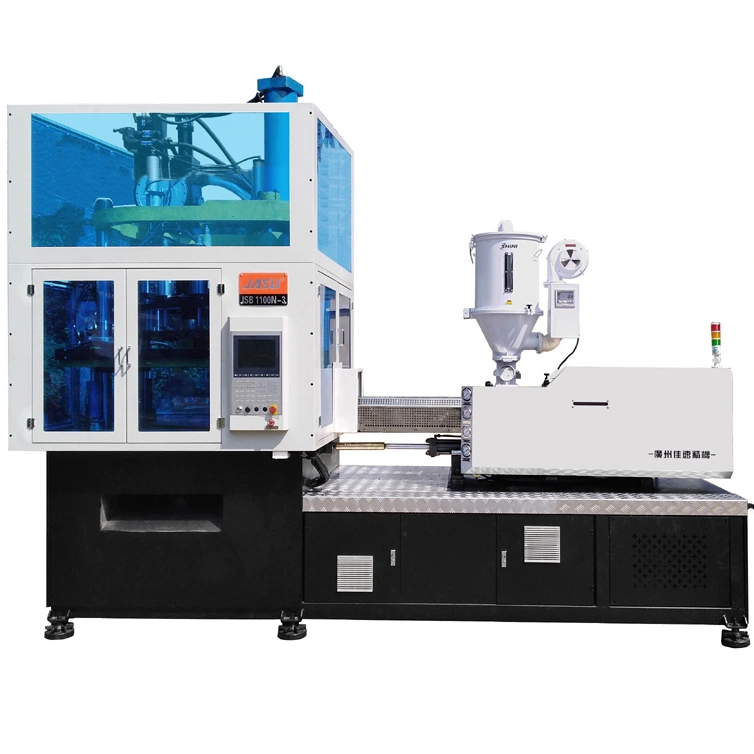
The physical dimensions and volumetric capacity of the targeted bottle fundamentally alter the mechanical and hydraulic demands placed on the ISBM equipment. Operators cannot simply swap a small 500ml mold for a large 2-liter mold without completely recalibrating the production system.
The production of small-volume water bottles is typically optimized for high-speed, high-yield output. In these scenarios, the machine setup accommodates high-cavitation molds, often featuring 8, 12, or even 16 cavities, depending on the available platen size.
Because the preforms are small and the surface area of the final bottle is minimal, the machine requires significantly lower clamping forces to keep the molds securely closed during the high-pressure blow phase. Cycle times are drastically shorter, frequently clocking in between 10 and 15 seconds. The configuration focus here rests heavily on rapid injection speeds, fast cooling water circulation, and rapid mechanical movements to maximize hourly output and drive down the cost per unit.
Producing large-volume containers shifts the operational focus away from pure speed and toward structural integrity and precise material distribution. The physical space limitations on the machine platen necessitate a reduction in cavitation, typically dropping to 2, 4, or 6 cavities.
Large bottles demand a substantially higher clamping force. When high-pressure air reaching up to 40 bar is introduced to expand a 2.5-liter bottle, the outward force exerted on the mold halves is immense. Engineering standards dictate that producing these larger volumes often requires machines rated between 800kN and 1200kN of clamping tonnage. If the clamping tonnage is configured too low, the mold may separate slightly, resulting in visible seam lines or catastrophic structural failures. The increased mass of plastic requires a longer cooling time. The chilling system must optimize to ensure the larger surface area sets correctly. Ejecting a massive bottle before it is fully cooled will inevitably lead to base deformation and volumetric inaccuracies.
Achieving zero-defect manufacturing requires a synchronized loop of parameter adjustments. The three most critical variables in the process are temperature profiles, mechanical stretch timing, and cooling efficiency.
The thermal management of the machine must operate as a cohesive, closed-loop system. The barrel heaters melt the resin, the hot runner system maintains the melt state without degrading the polymer, and the conditioning pots prepare the preform for stretching. If the hot runner temperature is too high, the material experiences thermal degradation, leading to yellowing or elevated acetaldehyde levels in PET bottles. If the conditioning temperature dips too low, the preform will resist stretching, often causing the stretch rod to puncture directly through the base.
The physical strength of the bottle is achieved through biaxial orientation, dictated by the stretch rod and blow pressure. The stretch rod provides axial vertical orientation, while the blow pressure provides radial horizontal orientation.
The timing between the pre-blow pressure ranging from 5 to 15 bar and the main-blow high pressure ranging from 25 to 40 bar is vital. The pre-blow separates the plastic from the stretch rod and initiates material distribution. Triggering the pre-blow too early causes the bottle to suffer from excessively thin walls at the top. Initiating it too late results in a base that becomes too thick, wasting valuable material and causing uneven weight distribution.
Cooling is inherently the bottleneck of any plastic molding operation. Optimizing the water chillers and the internal mold cooling channels is essential for profitability. The cooling water must flow at a turbulent rate to maximize heat transfer away from the plastic. Proper cooling configuration not only accelerates the cycle time but also locks in the molecular structure of the polymer, ensuring the bottle maintains its designated shape and liquid capacity.
Manufacturing sports bottles introduces a unique set of engineering challenges that standard cylindrical water bottles do not present. These products typically feature ergonomic grips, asymmetrical shapes, complex neck finishes designed to accommodate flip-top caps, and thicker base profiles to withstand frequent drops. Consequently, configuring a sports bottle machine requires a highly specialized approach to both preform design and stretch blow molding parameters.
When dealing with contoured or asymmetrical bottle designs, standard uniform heating is insufficient. The machine setup must incorporate preferential heating technology within the conditioning station. Preferential heating applies targeted thermal energy to specific longitudinal sections of the preform. By creating a precise temperature differential across the circumference of the preform, the plastic is encouraged to stretch more on the hotter side and less on the cooler side. This controlled stretching ensures the material distributes evenly into the deeper cavities of an asymmetrical mold, preventing dangerous thin spots in the grip areas.
The neck finishes of sports bottles are often wider and heavier than standard single-use bottles. The injection phase must calibrate with higher holding pressures and extended cooling times within the injection cavity to prevent shrinkage or ovalization of the neck threads. A deformed thread will ultimately lead to a leaking cap, which is a critical failure in this product category.
For production managers and procurement teams, investing in a new ISBM system is a significant capital expenditure. The decision must be rooted in long-term adaptability, operational efficiency, and overall Total Cost of Ownership. A rigid machine that only handles one material or volume limits market responsiveness.
Modern production lines must remain agile. The ability to transition a single piece of equipment from a standard PET setup to a specialized Tritan or PP configuration provides a distinct competitive advantage. When evaluating equipment, prioritize machines that feature modular plasticizing units and adaptable software control systems. Advanced Programmable Logic Controllers allow operators to easily save and recall specific material recipes, drastically reducing setup times when switching between resins with vastly different melt flow indices.
In facilities producing multiple bottle volumes ranging from 300ml travel sizes to 2-liter hydration jugs, machine downtime during mold changeovers directly erodes profitability. Traditional mold changes can take an entire shift, requiring manual realignment of the injection, conditioning, and blow molds.
To mitigate this, decision-makers should specify machines equipped with Quick Mold Change systems. These systems utilize standardized magnetic platens or hydraulic clamping mechanisms that allow operators to swap mold sets in a fraction of the time. Self-aligning stretch rods and plug-and-play water cooling manifolds ensure the new setup is operational rapidly, maximizing machine uptime.
Energy consumption is one of the largest ongoing operational expenses in injection stretch blow molding. Legacy hydraulic machines utilize fixed-speed pumps that consume maximum power even during idle phases of the machine cycle. Transitioning to machines equipped with servo-driven hydraulic systems ensures that motors only draw power when mechanical movement is required. This on-demand power delivery can reduce overall energy consumption by 30 to 50 percent compared to traditional systems, lowering utility costs and aligning with global sustainability mandates.
Even with top-tier equipment, operators will occasionally encounter defects due to environmental fluctuations, resin batch variations, or component wear. Understanding the physical causes of these defects is crucial for minimizing scrap rates on the factory floor.
When the finished bottle lacks glass-like transparency and appears milky or hazy, particularly near the injection gate or the neck, the issue is almost exclusively thermal. This visual defect stems from polymer crystallization. If the plastic melt is not cooled rapidly enough within the injection mold, the polymer chains have time to form ordered, crystalline structures that scatter light. To correct this, decrease the temperature of the injection mold cooling water. Verify that the hot runner temperature is not set too high, and check that the cooling channels within the mold are not obstructed by mineral scale buildup.
Another frequent issue is uneven wall thickness, where one side of the bottle is significantly thinner than the other. This leads to weak spots that deform under pressure. Uneven material distribution is typically caused by a misalignment of the stretch rod, improper pre-blow timing, or uneven heating in the conditioning station. Operators should inspect the infrared heating lamps in the conditioning station to ensure even heat distribution. Delaying the pre-blow pressure by a few milliseconds allows the stretch rod to carry more material toward the base before radial expansion begins.
If a bottle shatters or cracks at the base when dropped, or if the base exhibits a whitish stress mark, the material was either stretched too cold or insufficient material was pushed to the base of the mold. Stretching cold plastic causes micro-tearing in the polymer matrix. To resolve this, increase the heating profile at the very tip of the preform to make the material more pliable during the final stage of the stretch. Additionally, increasing the main blow pressure ensures the material is forced tightly against the chilled walls of the base mold.
Yes, modern ISBM machines are engineered for high versatility. However, transitioning from processing PET to Tritan is not seamless. It requires comprehensive adjustments to the thermal profiles, as Tritan requires higher injection temperatures. Operators must adjust resin drying parameters and, in some cases, replace the injection screw to accommodate different melt flow characteristics and prevent polymer degradation.
The maximum volume depends heavily on the specific platen size and clamping force of the machine. Standard 1-step ISBM machines efficiently produce bottles ranging from 10ml up to 2.5 or 3 Liters. For volumes exceeding 3 Liters, such as 5-gallon water dispenser jugs, the preform injection weight requires massive clamping forces that exceed standard 1-step machine limits, necessitating a 2-step process or specialized large-cavity blow molding equipment.
ISBM is preferred over Extrusion Blow Molding for sports bottles due to its superior material orientation, which yields high visual clarity and enhanced drop-impact resistance. Additionally, ISBM utilizes an injection-molded preform, which guarantees highly precise neck finish tolerances. This precision is an absolute necessity for creating the leak-proof seals required by complex sports caps, whereas Extrusion Blow Molding often leaves visible seam lines and less accurate thread profiles.
Yes, bottle volume has a statistically significant impact on energy consumption. Producing larger volumes requires melting a greater mass of plastic resin, which demands more thermal energy in the barrel. Larger bottles require higher pneumatic blowing pressures to distribute the material and longer cooling times to stabilize the thicker walls, all of which draw more electrical power per cycle compared to small-volume production.
Ambient temperature fluctuations directly impact the thermal stability of the molding process. During summer months or in un-air-conditioned facilities, the ambient heat can reduce the efficiency of the cooling chillers, leading to longer cooling times or hazy bottles due to delayed crystallization halting. Precision ISBM operations often require climate-controlled environments to maintain consistent preform conditioning and cooling rates.
For optimal PET injection stretch blow molding, the cooling water supplied to the injection and blow molds should typically be maintained between 8°C and 12°C. Water that is too warm fails to quench the PET fast enough, risking crystallization. Conversely, water that is too cold can cause condensation on the mold surfaces in humid environments, leading to watermarks and surface defects on the finished bottles.
A successful production run relies heavily on understanding the intricate relationship between the chosen plastic resin, the target volume, and the machine settings. Material types dictate thermal profiles, while bottle volumes dictate mechanical force and cooling requirements. The right machine setup not only guarantees a beautiful, defect-free container but also maximizes profitability by reducing cycle times and eliminating material waste. If your facility is looking to scale operations, handle advanced resins like Tritan and PCTG, or improve rapid mold changeovers, evaluating your current equipment is the first step. Explore the advanced, servo-driven, and multi-resin capable solutions at JASU ISBM Machines to find the exact configuration that meets the dynamic demands of tomorrow's packaging industry.
