
Views: 0 Author: Site Editor Publish Time: 2026-09-11 Origin: Site


High-volume production of wide-mouth plastic packaging requires precise alignment between polymer science and machinery mechanics. Selecting a molding machine without verifying exact resin processing parameters risks high scrap rates, optical defects like haze or flow marks, and compromised barrier properties. Wide-mouth containers present unique geometric challenges compared to standard beverage bottles. They demand specific preform designs and highly controlled stretching dynamics to achieve uniform wall thickness. Manufacturers must understand exactly how different polymers behave under extreme thermal and mechanical stress to maintain structural integrity and visual appeal on the store shelf.
This guide breaks down the specific polymers compatible with Injection Stretch Blow Molding (ISBM) technology. We detail the technical requirements, processing trade-offs, and evaluation criteria necessary to specify the correct equipment for your packaging line. You will learn how to match resin characteristics with machine capabilities, optimize thermal conditioning, and implement strict environmental controls to ensure continuous, flawless production.
Primary Compatibility: ISBM technology is optimized for amorphous and semi-crystalline polymers, primarily PET and Polycarbonate (PC), due to their distinct stretch and orientation characteristics.
Process Efficiency: A properly calibrated machine achieves near 100% raw material utilization, virtually eliminating the flash and scrap associated with extrusion blow molding.
Application Specificity: Material selection dictates machine configuration; processing high-heat PC requires different thermal conditioning, screw designs, and tooling specifications than standard PET.
Risk Mitigation: Successful deployment relies on strict environmental controls, specifically resin drying protocols, precise intrinsic viscosity (IV) management, and optimized feeding mechanics.
The ISBM process fundamentally differs from traditional blow molding techniques by separating the creation of the container's neck from the formation of its body. The operation begins in the injection cavity. Molten polymer shoots under extreme pressure into a precision-machined steel mold to form a preform. This initial stage establishes the exact neck and thread dimensions. Because the neck molds against solid steel tooling rather than being blown outward, the resulting threads offer superior dimensional accuracy. This accuracy guarantees the leak-proof seals required for wide-mouth jars and cans used in food, cosmetic, and chemical packaging.
Following the injection phase, the preform transfers to a thermal conditioning station before entering the blow mold. A mechanical stretch rod extends downward, pushing the preform to the bottom of the mold cavity to provide axial orientation. Simultaneously, high-pressure air forces the material outward against the mold walls, providing hoop orientation. This contrasts sharply with Extrusion Blow Molding (EBM), which relies on a continuous, unoriented extruded parison that gets pinched at the top and bottom. Wide-mouth containers demand specific preform designs featuring shorter, wider profiles compared to narrow-neck beverage bottles. This geometry requires specialized stretch rod mechanics, larger stretch rod diameters, and highly precise air pressure timing to prevent the material from thinning out at the base or shoulder.
The injection unit melts the resin and fills the preform cavity under high pressure.
Holding pressure packs the mold to prevent sink marks as the plastic cools.
The preform transfers to the conditioning station to achieve the optimal stretching temperature.
The stretch rod extends to orient the polymer chains axially.
High-pressure blowing air expands the preform radially against the chilled blow mold walls.
Stretching a wide preform involves complex physics and relies heavily on a polymer property known as strain hardening. As the mechanical rod and air pressure stretch the plastic, the molecular chains begin to align and entangle. This entanglement increases the material's resistance to further stretching in that specific area. Consequently, the stretching force transfers to adjacent, thicker, unoriented regions of the preform. This self-regulating mechanism ensures uniform wall thickness across the entire diameter of the jar or can. It prevents weak spots that could rupture during filling, capping, or transport.
The biaxial stretching process fundamentally alters the physical properties of the polymer. Aligning the molecular chains dramatically increases the tensile strength, top-load capacity, and drop impact resistance of the finished jar. It also tightens the molecular structure, which significantly enhances the barrier performance against oxygen and moisture ingress. Polymers that lack a distinct strain-hardening phase, or those that crystallize too rapidly, will tear, distribute unevenly, or turn opaque during this aggressive stretching phase. You must select resins engineered specifically for biaxial orientation to achieve acceptable production yields.
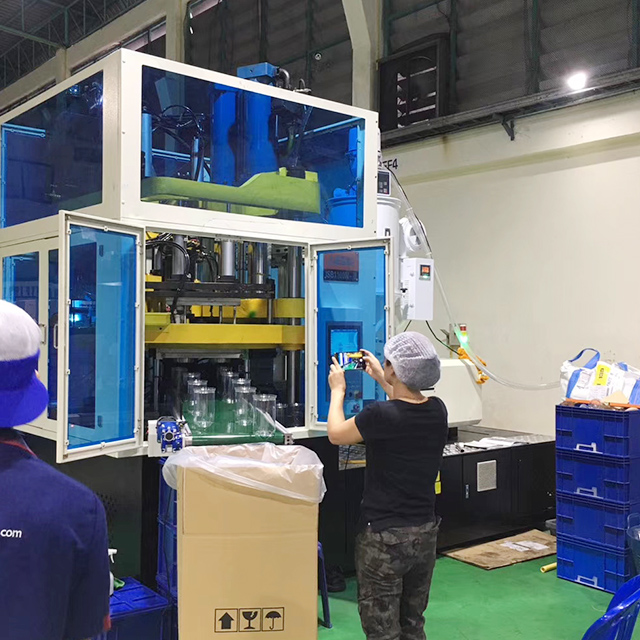
Operating a Jars Cans Injection Stretch Blow Molding Machine requires matching the target resin to the mechanical and thermal limits of the equipment. Different polymers demand vastly different processing parameters, screw geometries, and mold temperature controls.
Polyethylene Terephthalate (PET) dominates the wide-mouth packaging sector. It offers exceptionally high tensile strength, allowing for lightweight container designs without sacrificing structural rigidity. PET provides outstanding optical clarity, giving plastic jars a premium, glass-like appearance that appeals to consumers on retail shelves. Furthermore, its excellent CO2 and O2 barrier properties make it the standard choice for protecting sensitive contents from oxidation and spoilage.
Processing this polymer in a standard PET jar blow molding machine requires strict adherence to specific Intrinsic Viscosity (IV) ranges. For wide-mouth applications, an IV between 0.76 and 0.84 dl/g is typically required. Resins with an IV below this range lack the necessary melt strength to withstand the aggressive stretching required for large diameters, leading to webbing or blowouts at the base. Typical applications for PET processed via ISBM include peanut butter jars, cosmetic containers, mayonnaise jars, and dry food packaging. The injection barrel temperatures for PET generally range from 270°C to 290°C, requiring standard heater bands and water-cooled molds.
Polycarbonate (PC) offers distinct structural advantages over PET, primarily driven by its exceptionally high glass transition temperature. This thermal stability makes PC the ideal polymer for hot-fill food applications, sterilization processes, and heavy-duty reusable containers. PC jars can withstand high-temperature washing cycles without warping, shrinking, or losing their optical clarity. This makes them a staple in institutional food service, premium water storage, and laboratory packaging.
However, operating a PC cans making machine demands highly robust equipment configurations. PC requires significantly heavier tooling and higher thermal capacity than standard resins. Melt temperatures in the injection barrel often exceed 290°C to 310°C. This extreme heat necessitates specialized barrel metallurgy to prevent premature wear, high-wattage heater bands, and precise mold temperature controllers utilizing pressurized water or thermal oil. The trade-offs for this durability include higher raw material costs, higher energy consumption during plasticizing, and much stricter drying requirements to prevent hydrolytic degradation prior to injection.
Polypropylene (PP) is frequently utilized for applications requiring superior chemical resistance and excellent moisture barriers. Clarified PP, which includes specific nucleating agents to reduce spherulite size during cooling, offers a semi-transparent finish suitable for household chemicals, dry goods, and pharmaceutical packaging. PP is highly cost-effective and boasts a lower density than PET, resulting in lighter overall container weights and reduced shipping costs.
Despite its benefits, PP presents unique processing challenges in ISBM equipment. It possesses a notoriously narrow processing temperature window. If the preform is slightly too cold during the stretch phase, the material will tear or exhibit severe stress whitening. If it is slightly too hot, the polymer crystallizes rapidly, turning the container hazy and brittle. Modern machinery compensates for this narrow window through advanced thermal profiling. Highly segmented IR heating ovens apply precise, zoned heat to specific sections of the preform, enabling successful biaxial orientation of this challenging material.
The packaging industry increasingly relies on specialty resins to meet niche market demands. Copolyesters like Tritan and PETG produce premium, ultra-clear packaging favored by high-end cosmetics and medical device manufacturers. These materials offer superior impact resistance, chemical durability, and a complete absence of Bisphenol-A (BPA). Polyamide (Nylon or PA) is often used in specialized blends or multilayer co-injection setups to provide an extreme oxygen barrier for highly sensitive food cans.
A versatile PET PC jar machine can adapt to these specialty resins, provided the operator understands the necessary mechanical adjustments. Processing these materials requires specific screw designs to manage shear heat effectively, preventing polymer chain degradation. It also demands highly precise mold temperature controls to prevent premature crystallization during the injection phase. The preform must remain completely amorphous prior to entering the stretch blow station to ensure maximum clarity and strength.
Not all thermoplastic polymers are suitable for biaxial stretching. Polyvinyl Chloride (PVC), while common in Extrusion Blow Molding for chemical bottles, fails completely in ISBM processes. PVC poses severe thermal degradation risks at the temperatures required for high-pressure injection molding. If overheated in the barrel, it releases corrosive hydrochloric acid gas. This gas rapidly destroys machine barrels, screws, and expensive steel tooling.
Standard polyolefins, such as Low-Density Polyethylene (LDPE) and High-Density Polyethylene (HDPE), also struggle in ISBM machines. These materials exhibit rapid crystallization rates and lack the distinct strain-hardening phase found in PET. This rapid phase change prevents the uniform stretching required for wide-mouth containers. Attempting to process standard HDPE in ISBM equipment usually results in severe webbing at the base, uneven wall distribution, and catastrophic structural failure during the high-pressure blow phase.
The journey of the polymer begins as plastic pellets enter the machine via the hopper. The injection screw must melt, mix, and convey the polymer uniformly without causing thermal degradation. Specific screw geometries are critical for success. The Length to Diameter (L/D) ratio, typically between 24:1 and 25:1 for PET, ensures adequate residence time for complete melting. The compression ratio dictates how aggressively the material is squeezed as it moves forward through the feed, transition, and metering zones.
Managing shear-sensitive materials requires specialized screw profiles. High-shear screws will physically tear the polymer chains of sensitive resins, drastically reducing the material's intrinsic viscosity before it even enters the mold. Conversely, a screw with insufficient mixing capabilities will inject unmelted particles or create thermal inconsistencies within the melt stream. Both defects ruin the structural integrity and optical clarity of the final jar. Barrier flights are often utilized to separate the melted polymer from the solid pellets, ensuring a homogeneous melt pool.
Melt Flow Index (MFI) and Intrinsic Viscosity (IV) define the exact rheological properties of the polymer. These metrics determine how the plastic flows under extreme pressure and how it behaves when stretched. Successful injection requires matching the resin's MFI to the machine's hydraulic or electric injection capabilities. High IV materials, necessary for large wide-mouth jars, are highly viscous and resist flow.
Processing these high IV resins demands immense injection pressure to fill the preform cavity completely before the material freezes. Consequently, the machine must possess adequate clamping force to keep the mold securely closed during this high-pressure injection phase. If the clamping force is insufficient, the mold will separate slightly, causing flash around the neck ring. Stretching the preform without tearing or webbing relies entirely on maintaining this precise rheological balance from the hopper to the blow mold. Melt pressure transducers installed in the barrel nozzle provide real-time feedback to the control system to maintain consistent shot sizes.
Thermal conditioning bridges the critical gap between injection and blowing. The infrared (IR) heating profile in a plastic container ISBM machine must be exact. The heat must penetrate the core of the preform wall without overheating the surface. Different materials require distinct axial and hoop stretch ratios to achieve optimal mechanical strength.
The axial stretch rod pushes the preform down to the base of the mold, while high-pressure air expands it outward to complete the hoop stretch. PET allows for relatively high stretch ratios, yielding thin, exceptionally strong walls. PC requires lower stretch ratios and significantly hotter conditioning temperatures. If the stretch ratios are mismatched to the polymer's natural orientation window, the resulting container will suffer from uneven material distribution, weak corners, and poor top-load strength. Ventilation fans in the heating oven prevent the ambient air from overheating the preform surface, ensuring the heat penetrates deeply into the polymer wall.
Operators must navigate the inverse relationship between processing speeds, cooling rates, and the resulting polymer crystallinity. Higher crystallinity generally improves a container's barrier properties and heat resistance, but it significantly reduces optical clarity. Slower cooling rates in the injection mold allow microscopic crystals to form, creating a hazy or milky appearance in the plastic.
Conversely, fast cooling locks the polymer in an amorphous state, yielding glass-like transparency but slightly lower barrier performance. Manufacturers must prioritize their requirements based on the end-use application. Adjusting chilled water flow rates and mold temperatures allows technicians to dial in the exact balance required for the product.
Application Priority | Recommended Polymer | Processing Focus | Expected Outcome |
|---|---|---|---|
Maximum Optical Clarity (Premium Cosmetics) | PETG / Tritan | Rapid cooling, precise IR heating | Glass-like transparency, moderate barrier |
High Heat Resistance (Hot Fill Foods) | Polycarbonate (PC) | High mold temperatures, slow cooling | Extreme durability, slight haze potential |
Extended Shelf Life (Perishable Goods) | PET with PA blends | Optimized stretch ratios for orientation | High O2/CO2 barrier, high tensile strength |
Chemical Resistance (Household Cleaners) | Clarified PP | Strict thermal profiling, narrow temp window | Excellent moisture barrier, semi-transparent |
Traditional Extrusion Blow Molding generates significant pinch-off scrap at the neck and tail of every container. ISBM technology fundamentally eliminates this waste. The process utilizes hot runner systems with precision valve gates to inject the exact volume of molten material needed to form the preform. There is no flash to trim, no tails to remove, and no regrind to process back into the hopper.
This precision results in near 100% raw material utilization. The financial impact of this efficiency is substantial, particularly at high production volumes. Eliminating scrap reduces direct material costs, eliminates the labor associated with trimming, and removes the need for auxiliary grinding equipment. This high level of material efficiency quickly offsets the higher initial capital expenditure required to purchase and install ISBM equipment. It also ensures consistent container quality, as virgin resin behaves much more predictably than blends containing regrind.
Different resins require vastly different energy inputs to process successfully. Melting and conditioning high-temperature resins like PC demands significant electrical power. The energy draw, measured in kilowatts per kilogram (kW/kg) of processed material, is noticeably higher for PC than for standard PET or PP. Barrel heaters must run hotter, injection pressures must be higher, and mold temperature controllers must maintain elevated heat levels continuously.
Evaluating these energy requirements is critical for large-scale manufacturing operations. Facility managers must ensure adequate power infrastructure is in place before committing to high-heat resins. Furthermore, the cooling phase requires robust industrial chillers to remove heat rapidly from the molds. Understanding the specific energy consumption profiles by resin type helps plant managers optimize production schedules, balance electrical loads, and manage operational overhead effectively at scale. Modern servo-hydraulic systems can mitigate some of this power draw by only consuming energy during active machine movements.
Moisture is the primary enemy of hygroscopic polymers like PET and PC. Improper drying causes catastrophic hydrolytic degradation during the plasticizing phase. When wet resin enters the heated barrel, the trapped water molecules turn to steam and physically break the polymer chains apart. This chemical reaction drastically reduces the material's intrinsic viscosity before it even reaches the mold.
Containers molded from degraded resin suffer from severe structural failure, brittleness, and poor optical clarity. Strict drying protocols are absolutely mandatory. Facilities must install high-capacity desiccant dryers capable of holding the resin at specific temperatures (e.g., 160°C for PET) for 4 to 6 hours prior to processing. Furthermore, inline dew point monitors are required to ensure the air used for drying remains at or below -40°C. The resin must reach the machine hopper at the exact specified moisture level, typically below 50 parts per million (ppm) for PET, to guarantee structural integrity.
Certain polymers, particularly those blended with opaque colorants or barrier additives like Titanium Dioxide (TiO2), act as abrasives during the injection process. The high injection pressures required for ISBM compound this wear on the steel tooling. Over millions of cycles, core rods, neck rings, and blow molds degrade. Worn tooling causes flash around the sealing surfaces, dimensional inaccuracies in the threads, and poor venting during the blow phase.
Manufacturers must implement a strict, cycle-based preventative maintenance schedule. Technicians must regularly inspect core rods for scoring or deflection. Neck rings require periodic polishing to maintain exact thread tolerances for capping. Blow molds must be cleaned frequently to remove off-gassing residue and ensure proper air venting through the micro-slots. Consistent, proactive maintenance is the only way to guarantee container quality and prevent costly unplanned downtime on the production floor.
Audit your product portfolio to determine the exact resin grades, intrinsic viscosity requirements, and barrier needs for all future wide-mouth containers.
Request a physical material trial using your specific resin grade on the machinery manufacturer's test equipment to verify optical clarity and cycle times.
Consult with tooling engineers to finalize preform designs, neck finishes, and stretch ratios before signing off on final machine specifications.
Evaluate your facility's power and auxiliary equipment infrastructure to ensure it can support the required desiccant dryers, high-pressure air compressors, and thermal loads.
A: A parison is a continuous tube of extruded, unoriented plastic used in Extrusion Blow Molding. A preform is a precisely injection-molded tube with a finished neck and threads used in ISBM. Preforms offer superior dimensional accuracy, which is critical for creating the leak-proof seals required on wide-mouth jars and cans.
A: Generally, no. HDPE and LDPE are typically processed via Extrusion Blow Molding or Injection Blow Molding. Their rapid crystallization rates do not lend themselves well to the biaxial stretching process of ISBM. Attempting to stretch these materials usually results in uneven wall distribution, webbing, and structural failure.
A: PC requires significantly higher melt temperatures, hotter mold conditioning, and higher injection pressures than PET. It also needs specific screw designs to prevent shear degradation and demands stricter drying protocols. While PC is harder to process, it yields a highly heat-resistant and durable container suitable for hot-fill applications.
A: Each polymer has an optimal temperature window for molecular chain alignment. PET allows for high stretch ratios, enabling lighter, thinner-walled containers. Polymers like PP or PC require lower stretch ratios and different thermal conditioning profiles to achieve their optimal mechanical strength without tearing or crystallizing.
A: Yes, but it requires substantial process recalibration. Switching materials involves changing the injection screw profile, adjusting heating lamp configurations, modifying cooling times, and potentially swapping tooling to account for the vastly different shrinkage rates between PET and PP.
A: Intrinsic viscosity measures the polymer's molecular weight and melt strength. A correct IV ensures the plastic flows properly during injection and stretches uniformly during blowing. If the IV drops due to poor drying or excessive shear heat, the final container will suffer from structural weakness and poor clarity.
