
Views: 0 Author: Site Editor Publish Time: 2026-10-14 Origin: Site


Picture a high-speed filling line grinding to a sudden halt because a single batch of bottles failed a microscopic dimensional check. In pharmaceutical packaging, the stakes are absolute. A defective medical container risks biological contamination, massive product recalls, and crippling regulatory fines. Unlike standard consumer packaging, medical containers carry the heavy burden of maintaining the chemical stability and absolute purity of life-saving drugs.
Faced with an overwhelming array of manufacturing options, production managers and procurement officers often struggle to find the perfect equipment. Balancing microscopic precision, stringent cleanroom compliance, and long-term cost-efficiency is a complex puzzle. Injection Stretch Blow Molding, commonly known as ISBM, has emerged as the industry gold standard. It offers a proven pathway to producing flash-free, highly precise, and crystal-clear medical containers.
Procuring this machinery is a massive capital expenditure. It dictates your facility baseline capabilities for the next decade. This comprehensive guide reveals the exact technical, regulatory, and operational factors you must evaluate before making a final purchasing decision. We will help you cut through the marketing noise and choose the right platform for your unique production demands.
Before diving into machinery specifications, it is crucial to understand the macro trends dictating packaging requirements. The global pharmaceutical landscape is experiencing a massive shift toward biologics, personalized medicine, and specialized ophthalmic solutions. These highly sensitive active pharmaceutical ingredients demand extreme barrier properties against oxygen and moisture transmission.
Consequently, manufacturers are actively moving away from rigid, high-volume legacy extrusion systems. The market now demands highly flexible, cleanroom-ready equipment capable of handling smaller, specialized batches with zero risk of cross-contamination. This shift underscores a growing need for manufacturing platforms that prioritize absolute purity, material traceability, and rapid adaptability over mere raw output.
At its core, Injection Stretch Blow Molding is a highly specialized manufacturing process utilized to create hollow plastic containers. Within the medical sector, the 1-step methodology is universally preferred. Older 2-step processes require preforms to be manufactured, cooled, stored in bins, and then reheated. On the factory floor, this is a logistical nightmare that introduces multiple contamination risks. In contrast, the 1-step process completes the entire container formation in a single, continuous cycle on one machine.
This seamless operation is divided into four primary stations. First, molten polymer is injected into a mold at the injection station to form a preform, where the neck finish is molded to its final, exact dimensions. Next, the preform enters the conditioning station to achieve the optimal temperature profile. It then moves to the stretch blow station. Here, a servo-driven rod extends the preform vertically while high-pressure air blows it outward. This biaxial stretching aligns the polymer molecules, significantly enhancing mechanical strength. Finally, the fully cooled bottle is released at the ejection station.
Feature | 1-Step ISBM | 2-Step PET Molding | Extrusion Blow Molding |
|---|---|---|---|
Contamination Risk | Extremely Low. Continuous closed-loop process. | High. Preforms are stored and transported before blowing. | Medium to High. Requires secondary trimming. |
Material Waste | Zero scrap. Flash-free production. | Minimal scrap. | High. Generates up to 30 percent scrap from pinched tails. |
Neck Precision | Flawless. Injected to exact dimensions. | Good, but subject to transport damage. | Poor. Often requires post-mold calibration. |
Optical Clarity | Exceptional glass-like clarity. | Excellent clarity. | Opaque or cloudy appearance. |
The pharmaceutical sector operates under uncompromising quality controls. Packaging failures directly compromise drug efficacy. ISBM addresses these anxieties natively. Because it is a flash-free process, it produces zero scrap material at the base or neck. This completely eliminates the need for secondary trimming operations that generate dangerous airborne particulate matter.
Furthermore, the biaxial stretching unique to this technology produces exceptional optical clarity, particularly when processing Polyethylene Terephthalate. Such transparency is vital for the visual inspection of liquid medicines. It allows automated camera systems or human personnel to easily detect foreign particulates inside the medication.
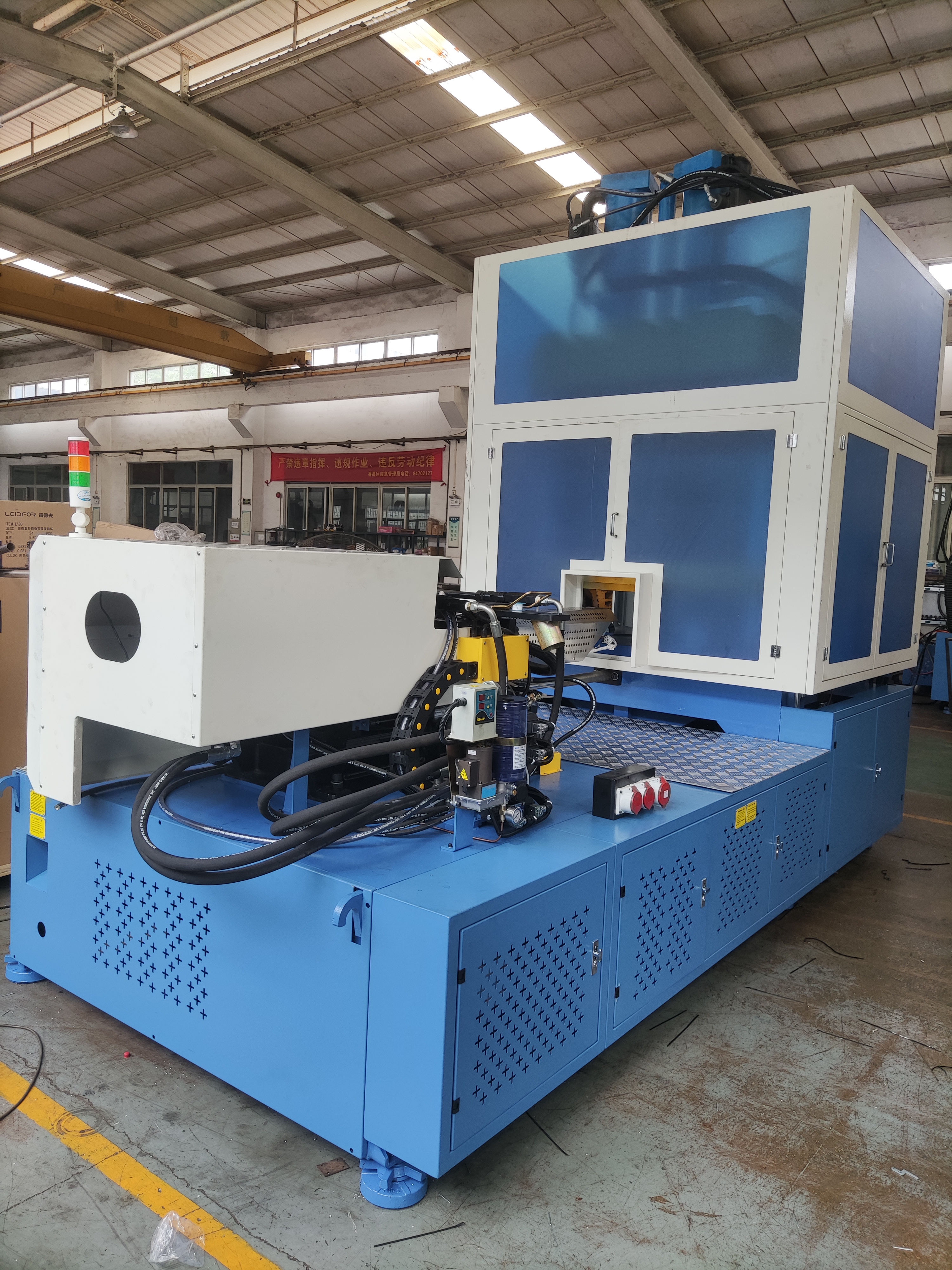
When assessing new machinery, the clamping force stands as a primary technical specification. Usually measured in tons, this force must be robust enough to keep the mold securely closed during intense high-pressure injection phases. Should the tonnage be insufficient, the mold may separate slightly. This results in dimensional inaccuracies or unwanted flash that ruins the entire batch.
Engineers calculate the required clamping force by multiplying the projected area of the containers by the cavity pressure. However, buyers must be cautious. Over-sizing the machine leads to unnecessary capital expenditure and excessive energy drain. Additionally, the physical footprint of the apparatus is a critical financial factor. Cleanroom floor space is among the most expensive real estate in any manufacturing facility. A compact, optimized design allows manufacturers to maximize their cleanroom yield without sacrificing output capacity.
Production requirements heavily dictate equipment sizing. The 100ml bottle remains an absolute industry standard for liquid medications, encompassing cough syrups, pediatric suspensions, and liquid antacids. When selecting a 100ml Pharmaceutical Container ISBM Machine, production managers must meticulously evaluate specific cavity configurations and hydraulic response times.
Specifically, producing this volume on a medium-tonnage platform typically involves a 6-cavity or 8-cavity mold setup. Buyers need to analyze the cycle time against the required hourly output. A well-optimized 6-cavity setup running a 15-second cycle yields exactly 1,440 bottles per hour. Ensuring the injection unit can continuously deliver the exact shot weight for this multi-cavity configuration without thermal degradation is crucial for maintaining steady production.
Uniform wall thickness is vital to prevent weak spots that could rupture during transport, filling, or terminal sterilization. Achieving this uniformity requires microscopic control over both the injection pressure and the stretch rod velocity. If the injection speed fluctuates, the preform suffers from uneven material distribution.
During the blowing phase, the stretch rod must descend at a highly controlled, programmable rate to distribute the polymer evenly across the mold cavity. Advanced platforms utilize servo-driven stretch rods. These provide exact speed profiles adjustable down to the millimeter, ensuring absolute consistency across every single batch produced.
Pharmaceutical packaging equipment operates under the watchful eyes of strict regulatory frameworks, notably international Good Manufacturing Practices. A reliable Pharmaceutical Bottle Making Machine must be constructed from the ground up using non-contaminating materials. All components that come into incidental contact with the raw resin or the clean air stream above the open bottles must be crafted from FDA-approved materials, such as 316L stainless steel.
Beyond material selection, the physical design must avoid horizontal surfaces where dust can accumulate. Utilizing sloped architecture allows for easy washdown and sanitization. Furthermore, any lubricants used in the moving parts must carry food-grade certification to aggressively mitigate the risk of chemical contamination.
Integrating heavy industrial machinery into an ISO-certified cleanroom requires a careful evaluation of particulate generation. Most medical packaging environments demand an ISO Class 7 or Class 8 standard. To achieve this, buyers should prioritize machines featuring fully enclosed molding areas that easily connect to localized high-efficiency particulate air filtration units.
Traditional hydraulic machines pose a severe risk due to potential oil leaks and aerosolized oil mists, which can instantly compromise a sterile environment. Therefore, all-electric or hybrid servo-driven systems are strongly recommended. By eliminating exposed hydraulics in the molding zone, these models utilize clean, electric servomotors for clamping and stretching operations. This effectively safeguards cleanroom integrity.
The medical industry relies heavily on a diverse portfolio of polymers, each chosen for highly specific chemical and physical traits. An optimal manufacturing platform must possess the thermal flexibility and specialized screw design to process multiple pharmaceutical-grade resins without issue.
Polyethylene Terephthalate is the undisputed champion for oral liquid medications and vitamins due to its glass-like clarity and excellent carbon dioxide barrier. Polypropylene, on the other hand, is the material of choice for IV fluid bottles and ophthalmic solutions that require terminal sterilization. It easily withstands 121-degree Celsius autoclaving without deforming. For cutting-edge biologics and pre-filled syringes, the machine must handle Cyclo Olefin Polymers, which offer extreme purity and shatter resistance but require highly sensitive processing parameters.
Different medical-grade plastics exhibit vastly different melting points and thermal degradation thresholds. For example, when switching from standard resins to advanced copolymers, operators must carefully manage the drying and melting process. Even trace moisture or slight overheating can ruin the optical clarity and generate toxic byproducts.
To combat this, the equipment must feature advanced proportional-integral-derivative temperature controllers across the injection barrel. The conditioning station must allow for zoned heating, applying distinctly different temperatures to the neck, body, and base of the preform. This targeted thermal management accommodates the specific stretch characteristics of the chosen plastic, preventing acetaldehyde generation and ensuring structural integrity.
In the realm of medical packaging, the neck finish is arguably the most critical anatomical feature of the bottle. It serves as the primary interface between the container and the closure system. To prevent catastrophic leakage, oxidation, or contamination of the drug, the neck must be molded with flawless precision.
This is where investing in a premium Pharmaceutical Container Injection Stretch Blow Molding Machine truly pays off. Because the neck is formed during the initial high-pressure injection phase and remains firmly clamped in the neck ring throughout the entire blowing process, thermal distortion is entirely prevented. Buyers must verify that the apparatus can consistently hold tight tolerances of plus or minus 0.1 millimeters. Such microscopic accuracy is legally mandatory for the reliable application of child-resistant closures and tamper-evident drop bands.
Even with highly precise mechanics, quality assurance cannot be left to human visual inspection alone. Modern manufacturing demands that equipment seamlessly integrates with inline automated vision inspection systems. These high-speed camera arrays scan every single bottle as it is ejected onto the outfeed conveyor.
If the central control system communicates directly with the vision system, it can instantly trigger a pneumatic rejection gate. This ensures that any container displaying cosmetic blemishes, carbonized black spots, or uneven wall distribution is discarded before it ever reaches the sterile packaging line. The result is a guaranteed perfect yield for the end-user.
The inherent complexity of the 1-step process necessitates an exceptionally intuitive human-machine interface. Operators must be empowered to monitor injection pressures, adjust stretch speeds, and track cycle times in real-time without navigating confusing sub-menus.
For pharmaceutical compliance, the interface should support data logging capabilities that meet strict regulatory requirements regarding electronic records. This includes strict user authentication, secure audit trails, and the inability to alter historical production data. A multi-language touchscreen with built-in diagnostic tools helps technicians quickly identify the root cause of an alarm, drastically reducing troubleshooting downtime.
Contract manufacturing organizations rarely have the luxury of producing a single bottle size year-round. A facility might run 50ml diagnostic vials on Monday and need to switch to 200ml suspension bottles by Thursday. In these dynamic environments, machine downtime acts as a massive financial drain.
Implementing Single-Minute Exchange of Die protocols is highly beneficial. Instead of wrestling with heavy wrenches for hours, modern tool-less quick-release mechanisms allow a single technician to swap injection cavities, stretch rods, and blow molds rapidly. Machines engineered for fast changeovers can compress setup times from an entire shift down to under two hours, significantly maximizing overall equipment effectiveness.
When drafting a procurement budget, it is vital to recognize that the initial purchase price represents only a fraction of the total cost of ownership. Over a standard ten-year lifespan, electrical consumption will account for a staggering portion of operating expenses.
Legacy hydraulic machines run their pumps continuously, wasting massive amounts of power even when idle. In contrast, modern servo-driven hydraulic or fully electric machines draw power exclusively when mechanical movement is required. These advanced systems can slash energy consumption by up to fifty percent, lowering monthly utility overhead and dramatically improving the facility carbon footprint.
Resin costs constitute a relentless ongoing operational expenditure. Because the process is inherently flash-free, it naturally saves a significant volume of resin compared to extrusion methods, which routinely generate massive scrap in the form of pinched-off tails and necks.
To further drive down waste, evaluating the hot runner system is critical. A highly precise, thermally balanced hot runner minimizes drool and stringing at the injection gate. This prevents the formation of solid plastic sprues that would otherwise require regrinding or disposal. By combining zero-scrap production with aggressive energy efficiency, manufacturers typically realize a return on investment within eighteen to thirty-six months.
Acquiring industrial manufacturing equipment is not a single, isolated transaction. It is the beginning of a long-term operational partnership. Buyers must rigorously investigate the manufacturer credentials. Partnering with a supplier of a high-quality Pharmaceutical Bottle Making Machine ensures you are working with experts who intimately understand the nuances of installation, operational, and performance qualifications required by global health authorities.
Unplanned machine downtime can paralyze an entire supply chain, potentially leading to critical medicine shortages in the market. To safeguard against this, ensure that the supplier offers comprehensive, on-site operator training during the commissioning phase.
Furthermore, verify the strength of their global technical support infrastructure. The manufacturer must guarantee the rapid dispatch of proprietary spare parts. Remote diagnostic capabilities are now a necessity, allowing factory engineers to troubleshoot software or sensor anomalies securely over the internet without waiting days for a field technician to arrive on-site.
Choosing the right pharmaceutical packaging equipment requires a meticulous evaluation process. Facility leaders must expertly balance precision engineering, cleanroom compliance, material flexibility, and long-term cost efficiency to ensure seamless daily operations.
By looking beyond the initial price tag and focusing on total cost of ownership, advanced automation, and defect reduction, you secure a platform that protects your financial bottom line. More importantly, investing in high-quality machinery guarantees the safety, purity, and efficacy of the medical products delivered to vulnerable patients worldwide.
Ready to upgrade your cleanroom production line? For industry-leading platforms that meet all the rigorous standards discussed above, explore the JASU ISBM machine lineup. Review your specific volumetric goals and request a custom machinery quote today to find the perfect manufacturing solution tailored to your specialized medical container designs.
Injection Blow Molding is typically used for smaller, simpler bottles and involves a two-step process without biaxial stretching. Injection Stretch Blow Molding adds a mechanical stretching step using a stretch rod. This biaxial stretching aligns the polymer chains, providing superior optical clarity, enhanced gas barrier properties, and greater mechanical strength. This makes it the ideal choice for high-quality pharmaceutical containers.
Yes. By exchanging the injection molds, stretch rods, and blow molds, a single platform can produce a wide variety of sizes and shapes. However, buyers must ensure that the maximum clamping force and injection shot capacity can comfortably accommodate their largest planned bottle, while still remaining energy-efficient enough to run smaller sizes profitably.
A dedicated setup for a 100ml volume usually involves a medium-tonnage machine equipped with a multi-cavity mold optimized specifically for medical-grade resin. This configuration maximizes hourly output while strictly maintaining the tight neck tolerances and wall thickness uniformity legally required for liquid medicines.
Absolutely. High-quality platforms are engineered specifically for cleanroom compliance. Buyers should look for all-electric or hybrid servo models featuring enclosed moving parts, stainless steel contact surfaces, and zero exposed hydraulics. This specific architecture prevents oil atomization and particulate contamination, easily satisfying strict ISO regulatory requirements.
While the exact financial timeline varies based on production volume, localized resin costs, and the initial machine price, most high-efficiency systems offer a return within eighteen to thirty-six months. This rapid return is primarily driven by massive electrical energy savings, zero-scrap production, reduced labor costs via automation, and drastically lower defect rates compared to legacy equipment.
The 1-step process mitigates contamination by completing the entire injection, conditioning, and blowing cycle within a single enclosed machine. Because the preform never leaves the sterile environment of the machine to be stored or transported in bins, the risk of dust, human contact, or airborne particulates entering the container is completely eliminated.
When properly maintained and operated within specified tonnage limits, a high-quality servo-driven machine can easily operate efficiently for ten to fifteen years. Routine maintenance of the hot runner systems, regular calibration of the servo motors, and adherence to cleanroom sanitation protocols will significantly extend the operational life of the equipment.
